

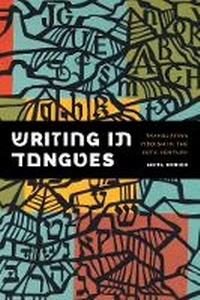
Writing in Tongues
Translating Yiddish in the Twentieth Century
Published on 1. February 2014
Book
Hardback
182 pages
978-0-295-99296-9 (ISBN)
Description
Writing in Tongues examines the complexities of translating Yiddish literature at a time when the Yiddish language is in decline. After the Holocaust, Soviet repression, and American assimilation, the survival of traditional Yiddish literature depends on translation, yet a few Yiddish classics have been translated repeatedly while many others have been ignored. Anita Norich traces historical and aesthetic shifts through versions of these canonical texts, and she argues that these works and their translations form an enlightening conversation about Jewish history and identity.
Reviews / Votes
"An excellent book . . . at no point is the discussion overly technical. First presented as part of the prestigious Stroum Lectures at the University of Washington, the chapter-lectures that make up Writing in Tongues are aimed at a general-but-educated audience. Norich writes clearly and simplifies abstruse ideas."- Eitan Kensy (Forward)
More details
Series
Language
English
Place of publication
Seattle
United States
Target group
College/higher education
Illustrations
1 illus.
Dimensions
Height: 229 mm
Width: 152 mm
Weight
408 gr
ISBN-13
978-0-295-99296-9 (9780295992969)
Copyright in bibliographic data and cover images is held by Nielsen Book Services Limited or by the publishers or by their respective licensors: all rights reserved.
Schweitzer Classification
Other editions
Additional editions
E-Book
02/2014
1st Edition
University of Washington Press
€29.49
Available for download
Person
Anita Norich is professor of English and Judaic studies at the University of Michigan.
Content
Preface
Acknowledgments
1. Translation Theory and Practice: The Yiddish Difference
2. How Tevye Learned to Fiddle
3. Remembering Jews: Translating Yiddish after the Holocaust
4. Returning to and from the Ghetto: Yankev Glatshteyn
5. Concluding Lines and Conclusions
Appendix A / Anna Margolin's "Maris tfile" in Yiddish and Translations
Appendix B / Twelve Translations of Yankev Glatshteyn's "A gute nakht, velt"
Notes
Bibliography
Index
Acknowledgments
1. Translation Theory and Practice: The Yiddish Difference
2. How Tevye Learned to Fiddle
3. Remembering Jews: Translating Yiddish after the Holocaust
4. Returning to and from the Ghetto: Yankev Glatshteyn
5. Concluding Lines and Conclusions
Appendix A / Anna Margolin's "Maris tfile" in Yiddish and Translations
Appendix B / Twelve Translations of Yankev Glatshteyn's "A gute nakht, velt"
Notes
Bibliography
Index