

Filippino Lippi and Rome
Published on 10. March 2026
Book
Hardback
160 pages
978-0-300-28647-2 (ISBN)
Description
A reconsideration of Filippino Lippi's transformative Roman period and the ensuing evolution of his innovative style, as reflected in his Holy Family tondo in Cleveland-a masterpiece that exemplifies this pivotal phase in his career
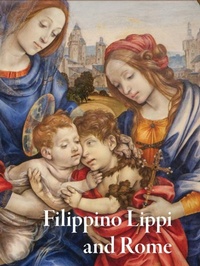
Between 1488 and 1493, leading Florentine artist Filippino Lippi (ca. 1457-1504) relocated to Rome to complete his celebrated frescoes in the funerary chapel of Neapolitan cardinal Oliviero Carafa in the major Dominican church of Santa Maria Sopra Minerva. During this time, Filippino also painted a magnificent tondo for Carafa: The Holy Family with Saint John the Baptist and Saint Margaret. Focusing on this seminal work in his oeuvre, Filippino Lippi and Rome traces the arc of the painter's artistic practice before, during, and after his Roman period, illuminating the evolution of his processes and iconographic ingenuities. This in-depth study presents new scholarship on the inspiration Filippino found in the Eternal City and how The Holy Family tondo-the only known independent work produced by Filippino in Rome-influenced artists from Raffaellino del Garbo to Jan Gossaert to Leonardo da Vinci. Moreover, the essays and catalogue entries in this volume draw on recent technical analyses that had, for the first time, revealed the tondo's underdrawing and pentimenti, shedding new light on Filippino's painting techniques. These texts are accompanied by a chronicle of the work's rediscovery at the start of the nineteenth century and the dramatic turn of events that led to its acquisition by the Cleveland Museum of Art in 1932.
Distributed for the Cleveland Museum of Art
Exhibition Schedule:
Cleveland Museum of Art
(November 30, 2025-February 22, 2026)
Between 1488 and 1493, leading Florentine artist Filippino Lippi (ca. 1457-1504) relocated to Rome to complete his celebrated frescoes in the funerary chapel of Neapolitan cardinal Oliviero Carafa in the major Dominican church of Santa Maria Sopra Minerva. During this time, Filippino also painted a magnificent tondo for Carafa: The Holy Family with Saint John the Baptist and Saint Margaret. Focusing on this seminal work in his oeuvre, Filippino Lippi and Rome traces the arc of the painter's artistic practice before, during, and after his Roman period, illuminating the evolution of his processes and iconographic ingenuities. This in-depth study presents new scholarship on the inspiration Filippino found in the Eternal City and how The Holy Family tondo-the only known independent work produced by Filippino in Rome-influenced artists from Raffaellino del Garbo to Jan Gossaert to Leonardo da Vinci. Moreover, the essays and catalogue entries in this volume draw on recent technical analyses that had, for the first time, revealed the tondo's underdrawing and pentimenti, shedding new light on Filippino's painting techniques. These texts are accompanied by a chronicle of the work's rediscovery at the start of the nineteenth century and the dramatic turn of events that led to its acquisition by the Cleveland Museum of Art in 1932.
Distributed for the Cleveland Museum of Art
Exhibition Schedule:
Cleveland Museum of Art
(November 30, 2025-February 22, 2026)
More details
Language
English
Place of publication
United States
Target group
College/higher education
Product notice
Cloth over boards
Illustrations
125 color illus.
Dimensions
Height: 312 mm
Width: 237 mm
Thickness: 19 mm
Weight
1245 gr
ISBN-13
978-0-300-28647-2 (9780300286472)
Copyright in bibliographic data and cover images is held by Nielsen Book Services Limited or by the publishers or by their respective licensors: all rights reserved.
Schweitzer Classification