

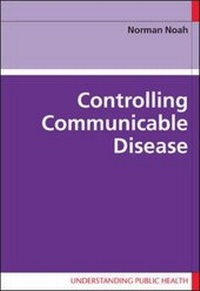
Controlling Communicable Disease
Published on 16. June 2006
Book
Paperback/Softback
256 pages
978-0-335-21844-8 (ISBN)
Description
Optimism that communicable diseases are no longer a threat is clearly misplaced. New diseases, such as HIV, have appeared and some chronic conditions, such as gastric ulcers, have been shown to be caused by infectious agents. This book is about controlling such diseases, a task that is impossible without surveillance, knowledge of basic microbiology and multi-disciplinary public health teams. The book examines the challenges facing different countries regarding:
Surveillance
Outbreak investigation
Vaccines
Specific infections including hepatitis, TB, influenza and gastroenteritis
Series Editors: Rosalind Plowman and Nicki Thorogood.
Surveillance
Outbreak investigation
Vaccines
Specific infections including hepatitis, TB, influenza and gastroenteritis
Series Editors: Rosalind Plowman and Nicki Thorogood.
More details
Other editions
New editions
Liza Cragg | Will Nutland | James Rudge
Applied Communicable Disease Control
Book
09/2018
Open University Press
€39.50
Shipment within 15-20 days
Person
Professor of Public Health and the London School of Hygiene and Tropical Medicine. He specialises in the epidemiology of infectious disease, especially surveillance, although he has also published widely on outbreaks and vaccines. His other professional interests include the hygiene of skin piercing, and he has produced national guidelines for acupuncturists, tattooists, body piercers, ear piercers, beauty therapists and hairdressers.
Content
Overview of the book SECTION 1 SURVEILLANCE
Chapter 1:General Principles of Surveillance
Chapter 2:Implementing A Surveillance System
Chapter 3:European and International Surveillance
Chapter 4:Some Exercises In Surveillance
SECTION 2 OUTBREAKS
Chapter 5:Epidemiological investigation of an outbreak
Chapter 6:Management of an Outbreak
Chapter 7:Analytical approach to an outbreak - hep A
SECTION 3 VACCINES
Chapter 8:Introduction to Immunisation: assessing need
Chapter 9:Evaluation of New Vaccines
Chapter 10:Delivery of Immunisation Programmes and immunisation policy
Chapter 11:Vaccine Efficacy and Effectiveness
Chapter 12:Surveillance of vaccination programmes: the post-implementation phase
Chapter 13:When poverty is their ally - a practical exercise
SECTION 4: TOPICAL THEMES AND INFECTIONS
Chapter 14:Influenza and other Respiratory viruses
Chapter 15:Tuberculosis
Chapter 16:Gastrointestinal infections and food poisoning
Chapter 17:Hepatitis Viruses A, B, C, D, E
Chapter 18:HIV and Sexually Transmitted Infections
Chapter 19: Hospital-acquired infection
GLOSSARY
Chapter 1:General Principles of Surveillance
Chapter 2:Implementing A Surveillance System
Chapter 3:European and International Surveillance
Chapter 4:Some Exercises In Surveillance
SECTION 2 OUTBREAKS
Chapter 5:Epidemiological investigation of an outbreak
Chapter 6:Management of an Outbreak
Chapter 7:Analytical approach to an outbreak - hep A
SECTION 3 VACCINES
Chapter 8:Introduction to Immunisation: assessing need
Chapter 9:Evaluation of New Vaccines
Chapter 10:Delivery of Immunisation Programmes and immunisation policy
Chapter 11:Vaccine Efficacy and Effectiveness
Chapter 12:Surveillance of vaccination programmes: the post-implementation phase
Chapter 13:When poverty is their ally - a practical exercise
SECTION 4: TOPICAL THEMES AND INFECTIONS
Chapter 14:Influenza and other Respiratory viruses
Chapter 15:Tuberculosis
Chapter 16:Gastrointestinal infections and food poisoning
Chapter 17:Hepatitis Viruses A, B, C, D, E
Chapter 18:HIV and Sexually Transmitted Infections
Chapter 19: Hospital-acquired infection
GLOSSARY