

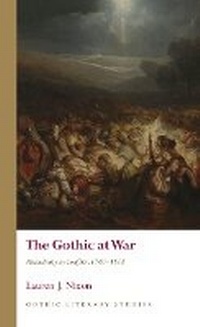
The Gothic at War
Masculinity in Conflict, 1760 - 1818
Published on 15. June 2025
Book
Hardback
272 pages
978-1-83772-264-8 (ISBN)
Description
This is an in depth exploration of how the Gothic literature boom of the late-eighteenth century was a response and reaction to the expansion of the British empire, and to the continued periods of war in the second half of the century. The Gothic has often been discussed in relation to the French Revolution as a literature of terror, but The Gothic at War demonstrates how the works of Gothic writers such as Horace Walpole, Charlotte Smith and Ann Radcliffe were also a literature of conflict. This study places a particular focus on masculinity and national identity, analysing how the representations of war and the figure of the soldier in the Gothic of the era allowed women writers in particular to explore anxieties about manliness and nationality.
More details
Series
Language
English
Place of publication
Wales
United Kingdom
Target group
College/higher education
Illustrations
Not illustrated
Dimensions
Height: 216 mm
Width: 138 mm
ISBN-13
978-1-83772-264-8 (9781837722648)
DOI
10.1234/b11951
Copyright in bibliographic data and cover images is held by Nielsen Book Services Limited or by the publishers or by their respective licensors: all rights reserved.
Schweitzer Classification
Other editions
Additional editions
E-Book
06/2025
1st Edition
University of Wales Press
€33.49
Available for download
Person
Lauren J. Nixon works for the Directorate of Research Culture and Environment at Nottingham Trent University. She co-hosts The Ghoul Guides, a podcast creating Gothic pop-culture content.
Content
Introduction: Reclaiming Ancient Glories?: Military masculinity and the rise of the Gothic
Chapter One: 'His gallant and indefatigable behaviour': Horace Walpole, Henry Seymour Conway, and finding the soldier in The Castle of Otranto
Chapter Two: Champions of Virtue: Effeminacy, chivalry and national virtue in Clara Reeve's The Old English Baron
Chapter Three: 'That which is right': Fashioning the soldier as hero in the early works of Ann Radcliffe
Chapter Four: 'Tinsel ornaments': Revolution, Gothic realties, and Charlotte Smith's anti-war novels
Chapter Five: 'He is just what a young man ought [not] to be': Anxiety, conflict and failed masculinity in Ann Radcliffe's The Mysteries of Udolpho
Chapter Six: 'I am not what I am': Fractured masculinities and female distress in The Midnight Bell and Clermont
Conclusion: 'This comes of the peace': War and the Gothic beyond the Napoleonic
Bibliography
Chapter One: 'His gallant and indefatigable behaviour': Horace Walpole, Henry Seymour Conway, and finding the soldier in The Castle of Otranto
Chapter Two: Champions of Virtue: Effeminacy, chivalry and national virtue in Clara Reeve's The Old English Baron
Chapter Three: 'That which is right': Fashioning the soldier as hero in the early works of Ann Radcliffe
Chapter Four: 'Tinsel ornaments': Revolution, Gothic realties, and Charlotte Smith's anti-war novels
Chapter Five: 'He is just what a young man ought [not] to be': Anxiety, conflict and failed masculinity in Ann Radcliffe's The Mysteries of Udolpho
Chapter Six: 'I am not what I am': Fractured masculinities and female distress in The Midnight Bell and Clermont
Conclusion: 'This comes of the peace': War and the Gothic beyond the Napoleonic
Bibliography