


Governing Thirdness
State, Society, and Non-Binary Identities in Pakistan
Published on 16. June 2022
Book
Hardback
238 pages
978-1-316-51671-3 (ISBN)
Description
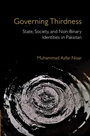
Khawaja Sira of Pakistan are a heterogeneous group of marginalized gender nonconforming individuals who defy traditional notions of gender and sexuality. Based on ethnographic fieldwork in Lahore, Pakistan, Governing Thirdness provides important insights about the identity, marginalization and governance of the Khawaja Sira as they try to live an unliveable life. Taking a broad view of governance, this book includes a comprehensive analysis of governance of the Khawaja Sira across legal, social and administrative institutions. It also argues that labels like third gender and transgender fails to account for the gender fluid lives and multiple types of individuals who identify as Khawaja Sira, yet these categories, largely imported from the west, are used without much thought to govern this heterogeneous group.
More details
Language
English
Place of publication
Cambridge
United Kingdom
Illustrations
Worked examples or Exercises
Dimensions
Height: 235 mm
Width: 157 mm
Thickness: 18 mm
Weight
504 gr
ISBN-13
978-1-316-51671-3 (9781316516713)
Copyright in bibliographic data and cover images is held by Nielsen Book Services Limited or by the publishers or by their respective licensors: all rights reserved.
Schweitzer Classification
Other editions
Additional editions
E-Book
03/2022
Cambridge University Press
€92.49
Available for download
Person
Muhammad Azfar Nisar is an Assistant Professor of Public Policy & Administration at the Suleman Dawood School of Business, Lahore University of Management Sciences, where he is also the Director of Center for Governance and Public Management. His research focuses on issues related to policy implementation, public administration, health policy, gender identity, and governance.
Content
1. Governance, thirdness and the Khawaja Sira of Pakistan; 2. Governing thirdness through religion, history and language; Section I. Social Governance: 3. Governing thirdness in the family; 4. Governance in the Khawaja Sira community; Section II. Legal Governance: 5. Governing thirdness by law; 6. Resisting legal thirdness; Section III. Bureaucratic Governance: 7. Governing thirdness at the bureaucratic offices; 8. Governing thirdness at work; 9. Governing thirdness on the street; 10. Resisting bureaucratic governance of thirdness; 11. Waste, governance and inclusion; Bibliography; Index.