

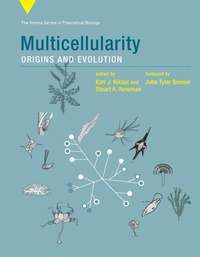
Multicellularity
Origins and Evolution
Published on 7. June 2022
Book
Paperback/Softback
328 pages
978-0-262-54585-3 (ISBN)
Description
Scholars consider the origins and consequences of the evolution of multicellularity, addressing a range of organisms, experimental protocols, theoretical concepts, and philosophical issues.
The evolution of multicellularity raises questions regarding genomic and developmental commonalities and discordances, selective advantages and disadvantages, physical determinants of development, and the origins of morphological novelties. It also represents a change in the definition of individuality, because a new organism emerges from interactions among single cells. This volume considers these and other questions, with contributions that explore the origins and consequences of the evolution of multicellularity, addressing a range of topics, organisms, and experimental protocols.
Each section focuses on selected topics or particular lineages that present a significant insight or challenge. The contributors consider the fossil record of the paleontological circumstances in which animal multicellularity evolved; cooptation, recurrent patterns, modularity, and plausible pathways for multicellular evolution in plants; theoretical approaches to the amoebozoa and fungi (cellular slime molds having long provided a robust model system for exploring the evolution of multicellularity), plants, and animals; genomic toolkits of metazoan multicellularity; and philosophical aspects of the meaning of individuality in light of multicellular evolution.
Contributors
Maja Adamska, Argyris Arnellos, Juan A. Arias, Eugenio Azpeitia, Mariana Benítez, Adriano Bonforti, John Tyler Bonner, Peter L. Conlin, A. Keith Dunker, Salva Duran-Nebreda, Ana E. Escalante, Valeria Hernández-Hernández, Kunihiko Kaneko, Andrew H. Knoll, Stephan G. König, Daniel J. G. Lahr, Ottoline Leyser, Alan C. Love, Raul Montañez, Emilio Mora van Cauwelaert, Alvaro Moreno, Vidyanand Nanjundiah, Aurora M. Nedelcu, Stuart A. Newman, Karl J. Niklas, William C. Ratcliff, Iñaki Ruiz-Trillo, Ricard Solé
The evolution of multicellularity raises questions regarding genomic and developmental commonalities and discordances, selective advantages and disadvantages, physical determinants of development, and the origins of morphological novelties. It also represents a change in the definition of individuality, because a new organism emerges from interactions among single cells. This volume considers these and other questions, with contributions that explore the origins and consequences of the evolution of multicellularity, addressing a range of topics, organisms, and experimental protocols.
Each section focuses on selected topics or particular lineages that present a significant insight or challenge. The contributors consider the fossil record of the paleontological circumstances in which animal multicellularity evolved; cooptation, recurrent patterns, modularity, and plausible pathways for multicellular evolution in plants; theoretical approaches to the amoebozoa and fungi (cellular slime molds having long provided a robust model system for exploring the evolution of multicellularity), plants, and animals; genomic toolkits of metazoan multicellularity; and philosophical aspects of the meaning of individuality in light of multicellular evolution.
Contributors
Maja Adamska, Argyris Arnellos, Juan A. Arias, Eugenio Azpeitia, Mariana Benítez, Adriano Bonforti, John Tyler Bonner, Peter L. Conlin, A. Keith Dunker, Salva Duran-Nebreda, Ana E. Escalante, Valeria Hernández-Hernández, Kunihiko Kaneko, Andrew H. Knoll, Stephan G. König, Daniel J. G. Lahr, Ottoline Leyser, Alan C. Love, Raul Montañez, Emilio Mora van Cauwelaert, Alvaro Moreno, Vidyanand Nanjundiah, Aurora M. Nedelcu, Stuart A. Newman, Karl J. Niklas, William C. Ratcliff, Iñaki Ruiz-Trillo, Ricard Solé
More details
Series
Language
English
Place of publication
Cambridge (Massachusetts)
United States
Publishing group
MIT Press Ltd
Product notice
Paperback (trade)
Illustrations
54 B&W ILLUS.
Dimensions
Height: 229 mm
Width: 178 mm
Thickness: 18 mm
Weight
562 gr
ISBN-13
978-0-262-54585-3 (9780262545853)
Copyright in bibliographic data and cover images is held by Nielsen Book Services Limited or by the publishers or by their respective licensors: all rights reserved.
Schweitzer Classification
Other editions
Additional editions
E-Book
02/2016
MIT Press
€48.99
Available for download
Persons
Karl Niklas is Professor of Plant Biology at Cornell University.
Stuart Newman is Professor of Cell Biology and Anatomy at New York Medical College.
Karl Niklas is Professor of Plant Biology at Cornell University.
Stuart Newman is Professor of Cell Biology and Anatomy at New York Medical College.
Karl Niklas is Professor of Plant Biology at Cornell University.
Stuart Newman is Professor of Cell Biology and Anatomy at New York Medical College.
Stuart Newman is Professor of Cell Biology and Anatomy at New York Medical College.
Karl Niklas is Professor of Plant Biology at Cornell University.
Stuart Newman is Professor of Cell Biology and Anatomy at New York Medical College.
Karl Niklas is Professor of Plant Biology at Cornell University.
Stuart Newman is Professor of Cell Biology and Anatomy at New York Medical College.