

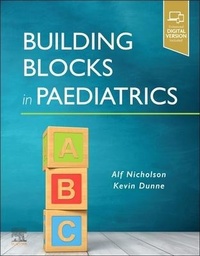
Building Blocks in Paediatrics
Published on 12. September 2022
Book
Paperback/Softback
420 pages
978-0-323-83421-6 (ISBN)
Description
This book from experienced paediatricians Professor Alf Nicholson and Professor Kevin Dunne covers the essential elements needed throughout the career of those who treat children and adolescents.
Based on the current paediatric training curriculum, this book includes the core basics (section 1), the various symptom-based presentations (section 2) all with input from renowned sub-specialists in Paediatrics, the common presentations relating to age that are seen in primary care (section 3) and the skills you need to have to be a successful trainee or consultant in Paediatrics (section 4). All of the chapters have high quality clinical and radiology images as appropriate and have additional typical case scenarios to highlight the learning points.
This book is unique in that it caters for undergraduate students through to postgraduate trainees in paediatrics or general practice, and the working GP or consultant.
Clinical vignettes to highlight key learning points
Over 90 case scenarios sprinkled throughout the book with clinical pearls, interpretation of investigations and pitfalls to avoid for each scenario
List of key points to be obtained from a consultation to support doctors in the clinic
All key procedures in neonatology and paediatrics are covered
Problem-solving practice to test knowledge
Section 4 hosts unique chapters not least safe practice, dealing with uncertainty, the avoidance of errors, ethical dilemmas, ECG and laboratory interpretation of results, neonatal and paediatric procedures and critical journal reading
High-quality clinical pictures, cardiac pictures, ECGs and radiology images to support learning
Content suitable for students, GPs and specialists
Includes 20 podcasts
Based on the current paediatric training curriculum, this book includes the core basics (section 1), the various symptom-based presentations (section 2) all with input from renowned sub-specialists in Paediatrics, the common presentations relating to age that are seen in primary care (section 3) and the skills you need to have to be a successful trainee or consultant in Paediatrics (section 4). All of the chapters have high quality clinical and radiology images as appropriate and have additional typical case scenarios to highlight the learning points.
This book is unique in that it caters for undergraduate students through to postgraduate trainees in paediatrics or general practice, and the working GP or consultant.
Clinical vignettes to highlight key learning points
Over 90 case scenarios sprinkled throughout the book with clinical pearls, interpretation of investigations and pitfalls to avoid for each scenario
List of key points to be obtained from a consultation to support doctors in the clinic
All key procedures in neonatology and paediatrics are covered
Problem-solving practice to test knowledge
Section 4 hosts unique chapters not least safe practice, dealing with uncertainty, the avoidance of errors, ethical dilemmas, ECG and laboratory interpretation of results, neonatal and paediatric procedures and critical journal reading
High-quality clinical pictures, cardiac pictures, ECGs and radiology images to support learning
Content suitable for students, GPs and specialists
Includes 20 podcasts
Reviews / Votes
"Everything the medical student and trainee doctor needs is here, from the basics of taking a history and examination of children and teenagers through to core specialist knowledge (such as congenital heart disease) through to ethics and prevention. Each condition is described by an expert yet in an uncomplicated and pragmatic way, providing a brief summary of the key conditions, common findings and diagnostic dilemmas, and practical management. This is as true of the most specialised chapters as for general chapters on toddlers and adolescents.Possibly the most useful I suspect will be the excellent chapters based around problems or symptoms. The series of 'The Child with' chapters on Cough/Diarrhoea/Fever/Frequent Infections and so on, will be particularly useful for GPs I imagine, and will also provide paediatricians with sensible approaches to these common clinical presentations. I was particularly gratified to see obesity, mental health and adolescent medicine given so much space, recognising the importance of each of these in modern clinical child health.
I loved the many practical examples, showing the humanity and years of experience of the writers. The chapter entitled 'Frequent Flyers in the toddler years' is full of this wisdom and I can imagine many general practitioners (which I was once extremely briefly) and paediatric trainees keeping this section particularly to hand for ready reference. My favourite section was 'A toddler who just will not sleep'.
I thoroughly recommend this book and believe it will give readers continuing value through their undergraduate and post-graduate years." -Professor Russell Viner CBE , Former RCPCH President (2018-2021), Professor of Adolescent Health, UCL Institute of Child Health
"It is a very approachable book and immensely practical. It is well laid out and well illustrated, easy to read and comprehensive enough for the GP or the general paediatrician. The book is full of experience and wisdom and will resonate hugely with GPs. It is absolute gold dust for doctors in the training grades, both in general practice and paediatrics." -David Misselbrook, https://bjgplife.com/book-review-building-blocks-in-paediatrics/
More details
Language
English
Place of publication
Philadelphia
United States
Target group
College/higher education
Dimensions
Height: 217 mm
Width: 278 mm
Thickness: 18 mm
Weight
936 gr
ISBN-13
978-0-323-83421-6 (9780323834216)
Copyright in bibliographic data and cover images is held by Nielsen Book Services Limited or by the publishers or by their respective licensors: all rights reserved.
Schweitzer Classification
Persons
Content
SECTION 1 The Core Essentials
1. The Big Picture in Child Health
2. Taking a History
3. The Paediatric Examination
4. The Newborn and the Six-Week Examination
5. Feeding Issues and Faltering Growth
6. Growth and Puberty
7. Understanding Childhood and Adolescent Obesity
SECTION 2 A Symptom-Based Approach
8. Common Problems in Newborns
9. Evaluating the Dysmorphic Child
10. Anaemia - The Pale Child
11. Congenital Heart Disease
12. The Child With a Cough
13. The Child With Diarrhoea
14. Diabetes Mellitus in Childhood and Adolescence
15. The Child With a Fever
16. Food Allergies in Children
17. The Child With Frequent Infections
18. The Child With Headaches
19. Inborn Errors of Metabolism
20. Joint Pains in Childhood
21. Problems Relating to the Kidneys
22. Neurodisability
23. The Child With a Rash
24. Safeguarding Infants and Children
25. The Child With a Seizure
26. Severe Illness in Infancy and Childhood
27. Surgical Problems in Infancy and Childhood
SECTION 3 Paediatrics in Everyday Practice
28. Common Presentations in Infancy
29. Frequent Flyers in the Toddler Years
30. Issues in School-Going Children
31. Adolescent Health
SECTION 4 The Skills Required to Be a Successful Paediatrician
32. Clinical Reasoning and the Clinical Consultation
33. Learning From Clinical Events
34. Illness Without Disease
35. Professionalism, Advocacy and Ethics in Child Health
36. Interpretation of Laboratory Results
37. ECG Interpretation
38. Critical Appraisal of the Literature
39. Practical Procedures in Neonatology and Paediatrics
1. The Big Picture in Child Health
2. Taking a History
3. The Paediatric Examination
4. The Newborn and the Six-Week Examination
5. Feeding Issues and Faltering Growth
6. Growth and Puberty
7. Understanding Childhood and Adolescent Obesity
SECTION 2 A Symptom-Based Approach
8. Common Problems in Newborns
9. Evaluating the Dysmorphic Child
10. Anaemia - The Pale Child
11. Congenital Heart Disease
12. The Child With a Cough
13. The Child With Diarrhoea
14. Diabetes Mellitus in Childhood and Adolescence
15. The Child With a Fever
16. Food Allergies in Children
17. The Child With Frequent Infections
18. The Child With Headaches
19. Inborn Errors of Metabolism
20. Joint Pains in Childhood
21. Problems Relating to the Kidneys
22. Neurodisability
23. The Child With a Rash
24. Safeguarding Infants and Children
25. The Child With a Seizure
26. Severe Illness in Infancy and Childhood
27. Surgical Problems in Infancy and Childhood
SECTION 3 Paediatrics in Everyday Practice
28. Common Presentations in Infancy
29. Frequent Flyers in the Toddler Years
30. Issues in School-Going Children
31. Adolescent Health
SECTION 4 The Skills Required to Be a Successful Paediatrician
32. Clinical Reasoning and the Clinical Consultation
33. Learning From Clinical Events
34. Illness Without Disease
35. Professionalism, Advocacy and Ethics in Child Health
36. Interpretation of Laboratory Results
37. ECG Interpretation
38. Critical Appraisal of the Literature
39. Practical Procedures in Neonatology and Paediatrics