

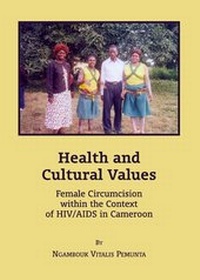
Health and Cultural Values
Female Circumcision within the Context of HIV/AIDS in Cameroon
Published on 8. December 2010
Book
Hardback
275 pages
978-1-4438-2642-6 (ISBN)
Description
This book provides a nuanced analysis of the transformations that the ritual cutting of Female Circumcision (FC) recently underwent within the changing medical and institutional context of the HIV/AIDS pandemic among Ejagham tribes in Southwest Cameroon.Based on local level ethnography, it captures the multivocal perspectives and agency of participants thereby putting to question the uncritical feminist stance that "Third World Women" lack agency and are chattel. As the highest rite of patriarchy, the quintessential icon of gendered personhood and femininity, FC remains salient even when it is no longer the criterion for membership into the Moninkim secret society especially within the new medical and institutional context of the HIV/AIDS pandemic because it is intertwined with the whole cultural political economy of the Ejaghams. The commercialization of this feminine institution charged with feminine personhood through its spectacular performances (enacting matrimonial relations) within and beyond the Ejagham locale is evidence of its continuous centrality in the life world of participants. By focusing on health alone, anti-HIV/AIDS and anti-FC interventions by both the state and civil society actors miss the point. FC is increasingly becoming a human, social, gender rights and development issue calling for a multi-pronged development approach. The threat of the HIV/AIDS pandemic led to ferocious intergenerational debates over moral values about female inordinate sexuality and to the double appropriation of the concept of human security. Conservatives maintain that FC tempers women's sexuality and is therefore a useful mechanism to keep women in matrimonial service, a moral check on inordinate sexuality and a ''native'' antidote against the scourge of the pandemic. Anti-FC advocates point to the bloodletting entailed by the ritual procedures as fuelling the spread of the pandemic through the spread of diseases with HIV/AIDS inclusive among participants. A third group of cultural insiders opt for the cautious appropriation of modernity while simultaneously maintaining tradition: medicalisation of the ritual procedures. By reducing the complexity and nuances of the ritual cutting to health alone, anti-FC activism has instead produced a backlash marked by simultaneous contestation and practice. Paradoxically, the anti-FC campaigns have resulted in the privatization of FC on increasingly younger girls. However, the recent waiving of the ritual cutting as a precondition for membership into the Moninkim cult-because of the ageing of the initial initiates, the health risk of the HIV/AIDS pandemic and anti-FC advocacy campaigns by local NGOs-shows that change is underway. Simultaneously, inter-tribal marriages with members of non-circumcising tribes and romantic love relationships beyond the purview of the traditional patriarchal orbit have led younger lovers increasingly to seek mutually satisfying love relationships for which FC, a "virtuous cut," becomes an obstacle.
More details
Edition
Unabridged edition
Language
English
Place of publication
Newcastle upon Tyne
United Kingdom
Target group
Professional and scholarly
Edition type
Unabridged edition
Product notice
With dust jacket
Dimensions
Height: 212 mm
Width: 148 mm
ISBN-13
978-1-4438-2642-6 (9781443826426)
Copyright in bibliographic data and cover images is held by Nielsen Book Services Limited or by the publishers or by their respective licensors: all rights reserved.
Schweitzer Classification
Other editions
Additional editions
Ngambouk Vitalis Pemunta
Health and Cultural Values
Female Circumcision within the Context of HIV/AIDS in Cameroon
E-Book
01/2011
1st Edition
Cambridge Scholars Publishing
€106.79
Available for download
Person
Ngambouk Vitalis Pemunta completed his PhD in Sociology and Anthropology from the Central European University Budapest, Hungary in 2009. He has been an academic and a consultant for various NGOs in both Cameroon and Hungary thereby "cross-pollinating" between the spheres of anthropology and development, theory and practice. His research interests revolve around knowledge, gender, power, globalisation, health and the anthropology of Africa.