

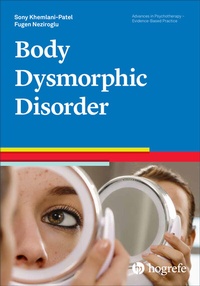
Body Dysmorphic Disorder
1st Edition
Published on 29. April 2022
Book
Paperback/Softback
VIII, 106 pages
978-0-88937-500-0 (ISBN)
Description
This volume provides a user-friendly, evidence-based guide to the diagnosis, phenomenology, etiology, and treatment of body dysmorphic disorder (BDD). New and seasoned clinicians can learn about the foundations of CBT for BDD as well as the rationale and instructions for modifying the approach to meet the differences in symptoms found in this client group. The book explores techniques for treatment engagement, including adjusting therapeutic style, appropriate utilization of behavioral and cognitive therapy, family involvement, and motivational interviewing techniques. Other issues associated with BDD are also highlighted: poor insight, comorbidity, concerning rates of suicidality, and ambivalence regarding treatment.
The authors outline step-by-step instructions for numerous novel and advanced treatment strategies, including perceptual re-training, attentional training, acceptance and commitment approaches, and ways to manage ongoing desire for cosmetic surgery. Detailed case examples are presented with corresponding treatment guidelines to highlight the variety in clinical presentation and corresponding treatment approaches. Printable tools in the appendices can be used in daily practice.
Reviews / Votes
Clear, comprehensive, reliable, and practical help on treating body dysmorphic disorder from an authoritative source.-by David Veale, Consultant Psychiatrist, South London and Maudsley NHS Trust and Professor in Cognitive Behavioural Psychotherapies, King's College London, UK. ; A heartfelt thank-you to the authors for a thorough review of body dysmorphic disorder that is filled with diagnostic and assessment criteria, treatment recommendations, and case examples. This book is a one-stop-shop for all that you need to know about working with individuals with BDD, and is a must-have on the shelf for supervisors and professors as they offer their students and trainees the best resources available for this condition.-by Patrick B. McGrath, PhD, Chief Clinical Officer at NOCD; Fellow at ABCT; Scientific and Clinical Advisory Board Member at the International OCD Foundation.; Written for both practicing clinicians and students, this book offers the reader a thoughtful, in-depth conceptualization of this complex and often misunderstood psychiatric illness. Steeped in evidence-based theory and treatment, the authors highlight utilization of a multimodal psychotherapeutic approach with particular attention given to cognitive-behavioral therapy, widely recognized as the gold standard for body dysmorphic disorder..-by Scott Granet, LCSW, Author of Body Dysmorphic Disorder, Mine and Yours: A Personal and Clinical PerspectiveAll prices
More details
Series
Edition
2022
Language
English
Place of publication
Toronto
Canada
Target group
Professional and scholarly
Clinical psychologists, psychiatrists, psychotherapists, and
counselors, as well as students.
Product notice
Klappenbroschur
Dimensions
Height: 250 mm
Width: 173 mm
Thickness: 8 mm
Weight
260 gr
ISBN-13
978-0-88937-500-0 (9780889375000)
DOI
10.1027/00500-000
Schweitzer Classification
Other editions
Additional editions
Fugen Neziroglu | Sony Khemlani-Patel
Body Dysmorphic Disorder
E-Book
02/2022
1st Edition
Hogrefe Publishing
€21.99
Available for download
Fugen Neziroglu | Sony Khemlani-Patel
Body Dysmorphic Disorder
E-Book
02/2022
1st Edition
Hogrefe Publishing
€21.99
Available for download
Persons
Sony Khemlani-Patel, PhD, is a licensed psychologist with over 20 years of experience in the treatment of obsessive-compulsive related disorders. She is clinical director of the Bio-Behavioral Institute in Great Neck, NY, and on the scientific and clinical advisory board of the International Obsessive Compulsive Disorder Foundation. She has presented and published extensively in the areas of body dysmorphic and obsessive-compulsive related disorders and has coauthored two self-help books.
Fugen Neziroglu, PhD, ABPP, ABBP, is a board-certified behavior and cognitive psychologist and leading researcher in obsessive-compulsive related disorders. She is the cofounder and executive director of the Bio Behavioral Institute in Great Neck, NY, as well as adjunct professor, Department of Psychology, Hofstra University and Hofstra Medical School. She is on the scientific and clinical advisory board of the International Obsessive Compulsive Disorder Foundation and the Anxiety and Depression Association of America, and president of OCD New York.
Fugen Neziroglu, PhD, ABPP, ABBP, is a board-certified behavior and cognitive psychologist and leading researcher in obsessive-compulsive related disorders. She is the cofounder and executive director of the Bio Behavioral Institute in Great Neck, NY, as well as adjunct professor, Department of Psychology, Hofstra University and Hofstra Medical School. She is on the scientific and clinical advisory board of the International Obsessive Compulsive Disorder Foundation and the Anxiety and Depression Association of America, and president of OCD New York.
Content
1 Description
1.1 Terminology
1.2 History
1.3 Obsessive-Compulsive and Related
Disorders
1.4 Definition
1.4.1 Specifiers
1.4.2 Insight
1.5 Normal Concerns Versus BDD
1.6 Symptomatology
1.7 Epidemiology
1.8 Gender Differences
1.9 Onset, Course, and Prognosis
1.10 Functional Impairment
1.11 Suicidality
1.12 Quality of Life
1.13 Comorbidity and Differential Diagnosis
1.13.1 Depression
1.13.2 Social Anxiety
1.13.3 Obsessive-Compulsive Disorder
1.13.4 Personality Disorders
1.13.5 Anorexia Nervosa
1.13.6 Excoriation Disorder (Skin Picking)
1.13.7 Olfactory Reference Syndrome
1.14 Teasing and Bullying
1.15 History of Abuse
1.16 Diagnostic Procedures and Documentation
1.16.1 Diagnostic Interviews
1.16.2 Symptom Severity Measures
1.16.3 Insight Measures
1.17 Summary
2 Theories and Models
2.1 Biological Theories
2.1.1 Neurochemical Theories
2.1.2 Neuroanatomical Theories
2.1.3 Neuropsychological Models
2.2 Psychological Theories
2.2.1 Evolutionary Theory
2.2.2 Learning Theory
2.2.3 Cognitive Behavior Model Based on
Social Learning
2.2.4 The Self as an Aesthetic Object
2.3 Summary
3 Diagnosis and Treatment Indications
3.1 Therapist Variables in Initial Sessions
3.2 Diagnostic Assessment
3.2.1 Connection Between Preoccupation
and Compulsive and Avoidance
Behaviors
3.2.2 Typical Day
3.3 How to Discuss and Conceptualize the
Disorder
3.4 Addressing Need for Cosmetic Surgery
3.5 Establishing Treatment Goals
3.6 Psychoeducation
3.7 Identifying the Appropriate Treatment
3.7.1 Medication for BDD
3.8 Summary
4 Treatment
4.1 Methods of Treatment
4.1.1 Assessment
4.1.2 Psychoeducation
4.1.3 Treatment Orientation and
Engagement
4.1.4 Cognitive Behavior Therapy for BDD
4.1.5 Perceptual Retraining
4.2 Mechanisms of Action
4.3 Efficacy and Prognosis
4.4 Variations and Combinations of Methods
4.4.1 Attentional Training Technique and
Task Concentration
4.4.2 Cognitive Remediation
4.4.3 Third Wave Therapies
4.4.4 Addressing Trauma and Loss
4.4.5 Addressing Skin Picking and Hair
Pulling
4.4.6 Self-Surgery
4.4.7 Addressing Poor Quality of Life
4.4.8 Maintenance and Relapse Prevention
4.5 Problems Carrying Out the Treatments
4.5.1 Addressing Desire for Cosmetic
Surgery
4.5.2 Addressing Suicidality
4.5.3 Nonadherence to Treatmen
4.5.4 Family Involvement and Accommodation
4.6 Multicultural Issues in Treatment
4.7 Summary
5 Case Vignettes
5.1 Case Vignette 1: Post Accident Preoccupation
With Nose
5.2 Case Vignette 2: Preoccupation With
Facial Shape and Muscle Dysmorphia
5.3 Case Vignette 3: Preoccupation With Skin
Accompanied by Skin Picking
6 Further Reading
7 References
8 Appendix: Tools and Resources
1.1 Terminology
1.2 History
1.3 Obsessive-Compulsive and Related
Disorders
1.4 Definition
1.4.1 Specifiers
1.4.2 Insight
1.5 Normal Concerns Versus BDD
1.6 Symptomatology
1.7 Epidemiology
1.8 Gender Differences
1.9 Onset, Course, and Prognosis
1.10 Functional Impairment
1.11 Suicidality
1.12 Quality of Life
1.13 Comorbidity and Differential Diagnosis
1.13.1 Depression
1.13.2 Social Anxiety
1.13.3 Obsessive-Compulsive Disorder
1.13.4 Personality Disorders
1.13.5 Anorexia Nervosa
1.13.6 Excoriation Disorder (Skin Picking)
1.13.7 Olfactory Reference Syndrome
1.14 Teasing and Bullying
1.15 History of Abuse
1.16 Diagnostic Procedures and Documentation
1.16.1 Diagnostic Interviews
1.16.2 Symptom Severity Measures
1.16.3 Insight Measures
1.17 Summary
2 Theories and Models
2.1 Biological Theories
2.1.1 Neurochemical Theories
2.1.2 Neuroanatomical Theories
2.1.3 Neuropsychological Models
2.2 Psychological Theories
2.2.1 Evolutionary Theory
2.2.2 Learning Theory
2.2.3 Cognitive Behavior Model Based on
Social Learning
2.2.4 The Self as an Aesthetic Object
2.3 Summary
3 Diagnosis and Treatment Indications
3.1 Therapist Variables in Initial Sessions
3.2 Diagnostic Assessment
3.2.1 Connection Between Preoccupation
and Compulsive and Avoidance
Behaviors
3.2.2 Typical Day
3.3 How to Discuss and Conceptualize the
Disorder
3.4 Addressing Need for Cosmetic Surgery
3.5 Establishing Treatment Goals
3.6 Psychoeducation
3.7 Identifying the Appropriate Treatment
3.7.1 Medication for BDD
3.8 Summary
4 Treatment
4.1 Methods of Treatment
4.1.1 Assessment
4.1.2 Psychoeducation
4.1.3 Treatment Orientation and
Engagement
4.1.4 Cognitive Behavior Therapy for BDD
4.1.5 Perceptual Retraining
4.2 Mechanisms of Action
4.3 Efficacy and Prognosis
4.4 Variations and Combinations of Methods
4.4.1 Attentional Training Technique and
Task Concentration
4.4.2 Cognitive Remediation
4.4.3 Third Wave Therapies
4.4.4 Addressing Trauma and Loss
4.4.5 Addressing Skin Picking and Hair
Pulling
4.4.6 Self-Surgery
4.4.7 Addressing Poor Quality of Life
4.4.8 Maintenance and Relapse Prevention
4.5 Problems Carrying Out the Treatments
4.5.1 Addressing Desire for Cosmetic
Surgery
4.5.2 Addressing Suicidality
4.5.3 Nonadherence to Treatmen
4.5.4 Family Involvement and Accommodation
4.6 Multicultural Issues in Treatment
4.7 Summary
5 Case Vignettes
5.1 Case Vignette 1: Post Accident Preoccupation
With Nose
5.2 Case Vignette 2: Preoccupation With
Facial Shape and Muscle Dysmorphia
5.3 Case Vignette 3: Preoccupation With Skin
Accompanied by Skin Picking
6 Further Reading
7 References
8 Appendix: Tools and Resources