

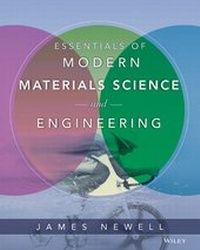
Essentials of Modern Materials Science and Engineering
1st Edition
Will be published approx. on 9. January 2009
Book
Paperback/Softback
368 pages
978-0-471-75365-0 (ISBN)
Description
While other materials science books focus heavily on metals, Newell's Material Science and Engineering offers a unique approach that emphasizes modern materials such as polymers, ceramics, and composites. The book explores the key concepts and fundamentals that are needed to make informed decisions in the field. The importance of economics in decision-making and consideration of the entire life cycle of products are themes that are also integrated throughout the chapters. Engineers will be able to use this as a reference for the materials selection issues that they'll deal with throughout their careers.
More details
Product info
PB
Edition
1., Auflage
Language
English
Place of publication
New York
United States
Target group
Professional and scholarly
Product notice
Paperback (trade)
Unsewn / adhesive bound
Dimensions
Height: 251 mm
Width: 201 mm
Thickness: 15 mm
Weight
590 gr
ISBN-13
978-0-471-75365-0 (9780471753650)
Schweitzer Classification
Person
Dr. James A. Newell is a professor of engineering at Rowan University. He received his PhD in engineering concentrating in polymers from Clemson in 1994. In 1997, he was named as the Dow Outstanding New Faculty Member by the North Midwest section of the American Society for Engineering Education (ASEE). In 2001, he received the Ray Fahien Award from ASEE for contributions to Chemical Engineering education. Along with Kevin Dahm, he also received the 2001 Professional Interest Council Group III (PIC-III) Best Paper Award at the 2001 ASEE conference in Albuquerque.
Content
1. Introduction.
Why Study Materials Science?
What Issues Impact Materials Selection and Design?
What Choices Are Available?
2. Structure in Materials.
How Are Atoms Arranged in Materials?
How Are Crystals Measured?
How Do Crystals Form and Grow?
What Kinds of Flaws Are Present in Crystals and What Do They Affect?
What New Developments Are Happening with Crystals and Crystal Structures?
3. Measurement of Mechanical Properties.
How Do I Know How to Measure Properties?
What Properties Can Be Measured, and What Do They Tell Me?
Will I Get the Same Result Every Time I Run a Specific Test?
Why Do Materials Fail Under Stress?
How Do Mechanical Properties Change Over Time?
4. Metals.
How Do You Work with Metals?
What Advantages Do Alloys Offer?
What Limitations Do Metals Have?
What Happens to Metals after Their Commercial Life?
5. Polymers
What Are Polymers?
How Are Polymer Chains Formed?
What Influences the Properties of Polymers?
How Are Polymers Processed into Commercial Products?
What Happens to Polymers When They Are Discarded?
6. Ceramics and Carbon Materials.
What Are Ceramic Materials?
What Are the Industrial Uses of Ceramics?
What Happens to Ceramic Materials at the End of Their Useful Lives?
Is Graphite a Polymer or a Ceramic?
Do Other Carbon Materials Offer Unusual Properties?
7. Composites.
What Are Composite Materials, and How Are They Made?
What Happens to Obsolete Composites?
8. Electronic and Optical Materials.
How Do Electrons Flow through Metals?
What Happens When There Are No Free Electrons?
How Do Electronic Devices Operate?
What Other Electrical Behaviors Do Some Materials Display?
What Are Optical Properties, and Why Do They Matter?
9. Biomaterials and Biological Materials.
What Types of Materials Interact with Biological Systems?
What Biological Materials Provide Structural Support, and What Biomaterials Interact with or Replace Them?
What Biomaterials Serve a Nonstructural Function in the Body?
What Ethical Issues Are Unique to Biomaterials?
Appendix A: Major Producers of Metals and Polymers.
Appendix B: Properties of Major Metals and Alloys.
Glossary.
Index.