

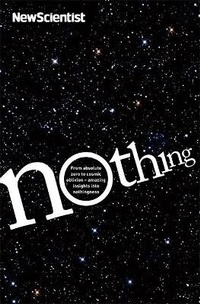
Nothing
From absolute zero to cosmic oblivion -- amazing insights into nothingness
Published in 2016
Book
Paperback/Softback
256 pages
978-1-4736-4270-6 (ISBN)
Description
Zero, zip, nada, zilch. It's all too easy to ignore the fascinating possibilities of emptiness and non-existence, and we may well wonder what there is to say about nothing. But scientists have known for centuries that nothing is the key to understanding absolutely everything, from why particles have mass to the expansion of the universe; without nothing we'd be precisely nowhere.
With chapters by 22 science writers, including top names such as Ian Stewart, Marcus Chown, Helen Pilcher, Nigel Henbest, Michael Brooks, Linda Geddes, Paul Davies, Jo Marchant and David Fisher, this fascinating and intriguing book revels in a subject that has tantalised the finest minds for centuries, and shows there's more to nothing than meets the eye.
With chapters by 22 science writers, including top names such as Ian Stewart, Marcus Chown, Helen Pilcher, Nigel Henbest, Michael Brooks, Linda Geddes, Paul Davies, Jo Marchant and David Fisher, this fascinating and intriguing book revels in a subject that has tantalised the finest minds for centuries, and shows there's more to nothing than meets the eye.
Zero, zip, nada, zilch. It's all too easy to ignore the fascinating possibilities of emptiness and non-existence, and we may well wonder what there is to say about nothing. But scientists have known for centuries that nothing is the key to understanding absolutely everything, from why particles have mass to the expansion of the universe; without nothing we'd be precisely nowhere.
With chapters by 22 science writers, including top names such as Ian Stewart, Marcus Chown, Helen Pilcher, Nigel Henbest, Michael Brooks, Linda Geddes, Paul Davies, Jo Marchant and David Fisher, this fascinating and intriguing book revels in a subject that has tantalised the finest minds for centuries, and shows there's more to nothing than meets the eye.
More details
Language
English
Place of publication
United Kingdom
Publishing group
John Murray Press
Product notice
Paperback (UK-B)
Dimensions
Height: 197 mm
Width: 130 mm
Thickness: 18 mm
Weight
200 gr
ISBN-13
978-1-4736-4270-6 (9781473642706)
Copyright in bibliographic data and cover images is held by Nielsen Book Services Limited or by the publishers or by their respective licensors: all rights reserved.
Schweitzer Classification
Other editions
Additional editions
E-Book
09/2016
John Murray Learning
€3.99
Available for download
Person
Since the first magazine was published in 1956, New Scientist has established a world-beating reputation for exploring and uncovering the latest developments and discoveries in science and technology, placing them in context and exploring what they mean for the future. Each week through a variety of different channels, including print, online, social media and more, New Scientist reaches over four million highly engaged readers - over a million readers for the print magazine alone.
Since the first magazine was published in 1956, New Scientist has established a world-beating reputation for exploring and uncovering the latest developments and discoveries in science and technology, placing them in context and exploring what they mean for the future. Each week through a variety of different channels, including print, online, social media and more, New Scientist reaches over four million highly engaged readers - over a million readers for the print magazine alone.
Since the first magazine was published in 1956, New Scientist has established a world-beating reputation for exploring and uncovering the latest developments and discoveries in science and technology, placing them in context and exploring what they mean for the future. Each week through a variety of different channels, including print, online, social media and more, New Scientist reaches over four million highly engaged readers - over a million readers for the print magazine alone.