

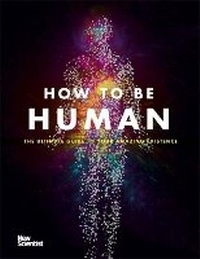
How to Be Human
The Ultimate Guide to Your Amazing Existence
Published on 21. September 2017
Book
Hardback
272 pages
978-1-4736-2928-8 (ISBN)
Description
If you thought you knew who you were, THINK AGAIN.
Did you know that half your DNA isn't human? That somebody, somewhere has exactly the same face? Or that most of your memories are fiction?
What about the fact that you are as hairy as a chimpanzee, various parts of your body don't belong to you, or that you can read other people's minds? Do you really know why you blush, yawn and cry? Why 90 per cent of laughter has nothing to do with humour? Or what will happen to your mind after you die?
You belong to a unique, fascinating and often misunderstood species. How to be Human is your guide to making the most of it.
Did you know that half your DNA isn't human? That somebody, somewhere has exactly the same face? Or that most of your memories are fiction?
What about the fact that you are as hairy as a chimpanzee, various parts of your body don't belong to you, or that you can read other people's minds? Do you really know why you blush, yawn and cry? Why 90 per cent of laughter has nothing to do with humour? Or what will happen to your mind after you die?
You belong to a unique, fascinating and often misunderstood species. How to be Human is your guide to making the most of it.
More details
Language
English
Place of publication
United Kingdom
Publishing group
John Murray Press
Dimensions
Height: 248 mm
Width: 196 mm
Thickness: 28 mm
Weight
1040 gr
ISBN-13
978-1-4736-2928-8 (9781473629288)
Copyright in bibliographic data and cover images is held by Nielsen Book Services Limited or by the publishers or by their respective licensors: all rights reserved.
Schweitzer Classification
Other editions
Additional editions
E-Book
09/2017
1st Edition
John Murray
€3.99
Available for download
Person
Since 1956, New Scientist has established a world-beating reputation for exploring and uncovering the latest developments and discoveries in science and technology, placing them in context and exploring what they mean for the future. Each week through a variety of different channels, including print, online, social media and more, New Scientist reaches over 5 million highly engaged readers around the world.
Follow New Scientist on Twitter: @newscientist
Follow New Scientist on Twitter: @newscientist