


Tragic Form in Shakespeare
Published on 21. December 1972
Book
Hardback
426 pages
978-0-691-06217-4 (ISBN)
Description
A "symbolist" approach has dominated Shakespearean criticism for many years, but Ruth Nevo believes that the emphasis on static and pictorial aspects has obscured the essentially dynamic nature of dramatic expression and this study of the development of Shakespeare's tragic form is offered to correct the imbalance.
From detailed analyses of each of Shakespeare's ten tragedies emerges a characteristic structure-a five-phased movement of discovery-that articulates and orders the traditional components of tragedy. This sequence is one of predicament, psychomachia, peripeteia, perspectives of irony and pathos, and catastrophe. It is a continuous, accumulative, and consummatory one, rather than a simple up-down movement or even a more complex thesis-antithesis-synthesis. Inheriting a five-act model and its developed rationale, Shakespeare used it to express an ever richer and more complex tragic experience. As the protagonist's life unfolds before us, the development of his tragic recognition is coextensive with the whole of the action.
Originally published in 1972.
The Princeton Legacy Library uses the latest print-on-demand technology to again make available previously out-of-print books from the distinguished backlist of Princeton University Press. These editions preserve the original texts of these important books while presenting them in durable paperback and hardcover editions. The goal of the Princeton Legacy Library is to vastly increase access to the rich scholarly heritage found in the thousands of books published by Princeton University Press since its founding in 1905.
From detailed analyses of each of Shakespeare's ten tragedies emerges a characteristic structure-a five-phased movement of discovery-that articulates and orders the traditional components of tragedy. This sequence is one of predicament, psychomachia, peripeteia, perspectives of irony and pathos, and catastrophe. It is a continuous, accumulative, and consummatory one, rather than a simple up-down movement or even a more complex thesis-antithesis-synthesis. Inheriting a five-act model and its developed rationale, Shakespeare used it to express an ever richer and more complex tragic experience. As the protagonist's life unfolds before us, the development of his tragic recognition is coextensive with the whole of the action.
Originally published in 1972.
The Princeton Legacy Library uses the latest print-on-demand technology to again make available previously out-of-print books from the distinguished backlist of Princeton University Press. These editions preserve the original texts of these important books while presenting them in durable paperback and hardcover editions. The goal of the Princeton Legacy Library is to vastly increase access to the rich scholarly heritage found in the thousands of books published by Princeton University Press since its founding in 1905.
More details
Series
Language
English
Place of publication
New Jersey
United States
Target group
Professional and scholarly
Product notice
Trade binding
Weight
680 gr
ISBN-13
978-0-691-06217-4 (9780691062174)
Copyright in bibliographic data is held by Nielsen Book Services Limited or its licensors: all rights reserved.
Schweitzer Classification
Other editions
Additional editions
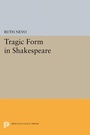
Ruth Nevo
Tragic Form in Shakespeare
E-Book
05/2015
1st Edition
Princeton University Press
€73.49
Available for download