

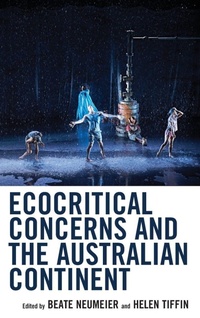
Ecocritical Concerns and the Australian Continent
Published on 8. November 2019
Book
Hardback
310 pages
978-1-4985-6401-4 (ISBN)
Description
Ecocritical Concerns and the Australian Continent investigates literary, historical, anthropological, and linguistic perspectives in connection with activist engagements. The necessary cross-fertilization between these different perspectives throughout this volume emerges in the resonances between essays exploring recurring concerns ranging from biodiversity and preservation policies to the devastating effects of the mining industries, to present concerns and futuristic visions of the effects of climate change. Of central concern in all of these contexts is the impact of settler colonialism and an increasing turn to indigenous knowledge systems. A number of chapters engage with questions of ecological imperialism in relation to specific sociohistorical moments and effects, probing early colonial encounters between settlers and indigenous people, or rereading specific forms of colonial literature. Other essays take issue with past and present constructions of indigeneity in different contexts, as well as with indigenous resistance against such ascriptions, while the importance of an understanding of indigenous notions of "care for country" is taken up from a variety of different disciplinary angles in terms of interconnectedness, anchoredness, living country, and living heritage.
Reviews / Votes
This is a timely and wide-ranging interdisciplinary volume that offers both breadth and depth in its expert coverage of contemporary ecocritical issues in Australia. It comprises an important collection of essays that will be essential reading for environmental humanities scholars and all those concerned with the global and local effects of the Anthropocene. -- Sue Kossew, Monash University The book does a splendid job in opening up important and inspiring conversations-between writers and scholars, ecocritical as well as postcolonial critics, literary studies, cultural studies, linguistics, and history. A timely must-read for everyone interested in research on Australia and the Environmental Humanities that exemplifies why postcolonial studies should be inherently ecocritical while ecocriticism is inherently postcolonial. -- Roman Bartosch, University of Cologne This timely and topical volume, with contributions from leading figures in the field, demonstrates the value of ecocritical studies for understanding human agency in a time of environmental crisis. The Australian focus reveals vital global themes including the significance of Indigenous knowledge for the past and future. -- Paul Arthur, Edith Cowan UniversityMore details
Series
Language
English
Place of publication
United States
Publishing group
Bloomsbury Publishing Plc
Target group
Professional and scholarly
Dimensions
Height: 235 mm
Width: 157 mm
Thickness: 21 mm
Weight
605 gr
ISBN-13
978-1-4985-6401-4 (9781498564014)
Copyright in bibliographic data and cover images is held by Nielsen Book Services Limited or by the publishers or by their respective licensors: all rights reserved.
Schweitzer Classification
Other editions
Additional editions
E-Book
11/2019
1st Edition
Lexington Books
€98.99
Available for download
E-Book
11/2019
1st Edition
Lexington Books
€98.99
Available for download
Persons
Beate Neumeier is professor of English literature at the University of Koln in Germany.
Helen Tiffin is adjunct professor of post-colonial and animal studies at the University of New England, Australia.
Helen Tiffin is adjunct professor of post-colonial and animal studies at the University of New England, Australia.
Content
Acknowledgments
Introduction
Beate Neumeier
Section 1: Politics of the Land and Indigenous Knowledge
1 The Museumesque in Pristine Wilderness
Alexis Wright
2 The Smooth Spaceof theNomads: IndigenousOutopia, IndigenousHeterotopia
and the Exampleof Australia
Norbert Finzsch
3 From Reverence to Rampage: Care for Country vs. Ruthless Exploitation
Catherine Laudine
Section 2: Colonial Legacies and Current Environmental Concerns
4 Australian Conservation Policies and the Owls of Lord Howe Island
Helen Tiffin
5Biological Colonisation in the Land of Flowers
Anna Haebich
6 Moving Trees and Trading Melons: Reconstructing Local Knowledge and Settler Practices in 1840s South Australia
Eva Bischoff
Section 3: Ecocriticism and Fieldwork
7 Ecologies of the Otherwise: Glimpses of Australia after the Resources Boom
Carsten Wergin
8 On The Beaten Track: Ambiguous Wilderness in the Tourist Space of Indigenous Australia Anke Tonnaer
9 Yan-nha?u Language of the Crocodile Islands: Anchoredness, Kin, and Country
Dany Adone, Melanie Brueck, Bentley James
Section 4: Ecocritical Approaches to Colonial Art
10 Reconstructing Representations: 'Australia' as Ecocritical Andragogy
CA Cranston
11 Killing and Sentiment in the Colonial Australian Kangaroo Hunt Narrative
Ken Gelder and Rachael Weaver
12 Marriage, Mining and Environmental Destruction in Nineteenth-Century Fiction about Australia
Philip Mead
Section 5: Ecocritical Concerns Across Contemporary Arts: Indigenous Voices in Fiction, Poetry and Performing Arts
13 Performing the Anthropocene: Marrugeku's Cut the Sky
Helen Gilbert
14 Corporate Interest and the Power of Mines in Indigenous Writing and Film:
Alexis Wright's Carpentaria (2006) and Ivan Sen's Goldstone (2016)
Victoria Herche and David Kern
15 Defying the 'Ecological Indian': The Urban Ecopoetry of Samuel Wagan Watson
Katrin Althans
Section 6: Coda - Crossing Boundaries
16 Australia's Great Barrier Reef: Two Personal Accounts
Helen Tiffin and Sandra Williams
About the Contributors
Introduction
Beate Neumeier
Section 1: Politics of the Land and Indigenous Knowledge
1 The Museumesque in Pristine Wilderness
Alexis Wright
2 The Smooth Spaceof theNomads: IndigenousOutopia, IndigenousHeterotopia
and the Exampleof Australia
Norbert Finzsch
3 From Reverence to Rampage: Care for Country vs. Ruthless Exploitation
Catherine Laudine
Section 2: Colonial Legacies and Current Environmental Concerns
4 Australian Conservation Policies and the Owls of Lord Howe Island
Helen Tiffin
5Biological Colonisation in the Land of Flowers
Anna Haebich
6 Moving Trees and Trading Melons: Reconstructing Local Knowledge and Settler Practices in 1840s South Australia
Eva Bischoff
Section 3: Ecocriticism and Fieldwork
7 Ecologies of the Otherwise: Glimpses of Australia after the Resources Boom
Carsten Wergin
8 On The Beaten Track: Ambiguous Wilderness in the Tourist Space of Indigenous Australia Anke Tonnaer
9 Yan-nha?u Language of the Crocodile Islands: Anchoredness, Kin, and Country
Dany Adone, Melanie Brueck, Bentley James
Section 4: Ecocritical Approaches to Colonial Art
10 Reconstructing Representations: 'Australia' as Ecocritical Andragogy
CA Cranston
11 Killing and Sentiment in the Colonial Australian Kangaroo Hunt Narrative
Ken Gelder and Rachael Weaver
12 Marriage, Mining and Environmental Destruction in Nineteenth-Century Fiction about Australia
Philip Mead
Section 5: Ecocritical Concerns Across Contemporary Arts: Indigenous Voices in Fiction, Poetry and Performing Arts
13 Performing the Anthropocene: Marrugeku's Cut the Sky
Helen Gilbert
14 Corporate Interest and the Power of Mines in Indigenous Writing and Film:
Alexis Wright's Carpentaria (2006) and Ivan Sen's Goldstone (2016)
Victoria Herche and David Kern
15 Defying the 'Ecological Indian': The Urban Ecopoetry of Samuel Wagan Watson
Katrin Althans
Section 6: Coda - Crossing Boundaries
16 Australia's Great Barrier Reef: Two Personal Accounts
Helen Tiffin and Sandra Williams
About the Contributors