

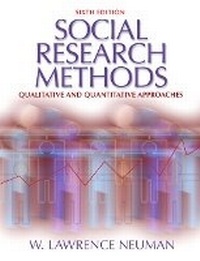
Social Research Methods
Qualitative and Quantitative Approaches: International Edition
6th Edition
Published on 17. October 2005
Book
Paperback/Softback
600 pages
978-0-205-46531-6 (ISBN)
Description
This highly regarded text presents a comprehensive and balanced introduction to both qualitative and quantitative approaches to social research, emphasizing the benefits of combining various approaches. Dozens of new examples from actual research studies help illustrate concepts and methods.
More details
Edition
6th edition
Language
English
Place of publication
United States
Publishing group
Pearson Education (US)
Target group
Professional and scholarly
Dimensions
Height: 178 mm
Width: 249 mm
Thickness: 22 mm
Weight
842 gr
ISBN-13
978-0-205-46531-6 (9780205465316)
Copyright in bibliographic data and cover images is held by Nielsen Book Services Limited or by the publishers or by their respective licensors: all rights reserved.
Schweitzer Classification
Other editions
New editions

W. Lawrence Neuman
Social Research Methods
Qualitative and Quantitative Approaches: International Edition
Book
11/2010
7th Edition
Pearson
€212.42
Article exhausted; check for reprint
Previous edition

W. Lawrence Neuman
Social Research Methods
Qualitative and Quantitative Approaches: International Edition
Book
08/2002
5th Edition
Pearson
€63.32
Article exhausted; check for reprint
Person
W. Lawrence Neuman James is professor of sociology and Asian Studies coordinator at University of Wisconsin-Whitewater. His M.A. and Ph.D. were earned at the University of Wisconsin-Madison. He has authored seven books and published 35 articles and book chapters, which have appeared in Social Problems, Sociological Inquiry, Social Science Quarterly, American Sociological Review, Critical Asian Studies, Teaching Sociology, The Journal of Contemporary Asia, Sociological Quarterly, and other journals . He is a former president of the Wisconsin Sociological Association. Neuman has received his university's highest award for research, the Chancellor's Award for service to students with disabilities, as well as the the Wisconsin Sociological Association's Outstanding Service Award, and the College of Letters and Sciences awards for outstanding teaching, excellence in research, and outstanding service.
Content
Each chapter begins with an Introduction and ends with Conclusion, Key Terms, Review Questions and Notes.
Preface.
I. FOUNDATIONS.
1. Science and Research.
Alternatives to Social Research.
How Science Works.
Qualitative and Quantitative Social Research.
Steps of the Research Process.
Why Conduct Social Research.
2. Dimensions of Research.
Dimensions of Research.
Audience for and Use of Research
The Purpose of research
The Time Dimension in Research
Data Collection Techniques Used.
3. Theory and Research.
What Is Theory?
Social Theory versus Ideology.
The Parts of Theory.
Aspects of Theory.
The Dynamic Duo.
4. The Meanings of Methodology.
The Three Approaches.
Positivist Social Science.
Interpretative Social Science.
Critical Social Science.
Feminist and Postmodern Research.
5. The Literature Review and Ethical Concerns.
The Literature Review.
Ethics in Social Research.
II. PLANNING AND PREPARATION.
6. Qualitative and Quantitative Research Designs.
Triangulation.
Qualitative and Quantitative Orientations Toward Research.
Qualitative Design Issues.
Quantitative Design Issues.
7. Qualitative and Quantitative Measurement.
Why Measure?
Qualitative and Quantitative Measurement.
Parts of the Measurement Process.
Reliability and Validity.
A Guide to Quantitative Measurement.
Index Construction.
Scales.
8. Qualitative and Quantitative Sampling.
Nonprobability Sampling.
Probability Sampling.
III. QUANTITATIVE DATA COLLECTION AND ANALYSIS.
9. Experimental Research.
Random Assignment.
Experimental Design Logic.
Internal and External Validity.
Practical Considerations.
Results of Experimental Research: Making Comparisons.
A Word on Ethics.
10. Survey Research.
The Logic of Survey Research.
Constructing the Questionnaire.
Types of Surveys: Advantages and Disadvantages.
Interviewing.
Computer-Assisted Pilot-Testing and Web Surveys
The Ethical Survey.
11. Nonreactive Research and Secondary Analysis.
Nonreactive Measurement.
Content Analysis.
Existing Statistics/Documents and Secondary Analysis.
Issues of Inference and Theory Testing.
12. Analysis of Quantitative Data.
Dealing with Data.
Results with One Variable.
Results with Two Variables.
More than Two Variables.
Inferential Statistics.
IV. QUALITATIVE DATA COLLECTION AND ANALYSIS.
13. Field Research.
The Logic of Field Research.
Choosing a Site and Gaining Access.
Relations in the Field.
Observing and Collecting Data.
The Field Research Interview.
Leaving the Field.
Ethical Dilemmas of Field Research.
14. Historical-Comparative Research.
The Logic of Historical Comparative Research.
Steps in a Historical-Comparative Research Project.
Data and Evidence in Historical Context.
Comparative Research.
Equivalence in Historical Comparative Research.
15. Analysis of Qualitative Data.
Comparing Methods of Data Analysis.
Coding and Concept Formation.
Analytic Strategies for Qualitative Data.
What Is Not Seen.
Other Tools.
V. COMMUNICATING WITH OTHERS.
16. Writing the Research Report and the Politics of Social Research.
Introduction.
The Research Report.
The Politics of Social Research.
Objectivity and Value Freedom.
Conclusion.
Appendices.
Appendix A: American Sociological Association Code of Ethics.
Appendix B: Table of Randomly Selected Five Digit Numbers.
Appendix C: Sample of Data Archives and Resources.
Appendix D: Measurement Theory.
Appendix E: Evaluation Research.
Glossary.
Bibliography.
Name Index.
Subject Index.
Scholarly Journals in the Social Sciences in English.
Preface.
I. FOUNDATIONS.
1. Science and Research.
Alternatives to Social Research.
How Science Works.
Qualitative and Quantitative Social Research.
Steps of the Research Process.
Why Conduct Social Research.
2. Dimensions of Research.
Dimensions of Research.
Audience for and Use of Research
The Purpose of research
The Time Dimension in Research
Data Collection Techniques Used.
3. Theory and Research.
What Is Theory?
Social Theory versus Ideology.
The Parts of Theory.
Aspects of Theory.
The Dynamic Duo.
4. The Meanings of Methodology.
The Three Approaches.
Positivist Social Science.
Interpretative Social Science.
Critical Social Science.
Feminist and Postmodern Research.
5. The Literature Review and Ethical Concerns.
The Literature Review.
Ethics in Social Research.
II. PLANNING AND PREPARATION.
6. Qualitative and Quantitative Research Designs.
Triangulation.
Qualitative and Quantitative Orientations Toward Research.
Qualitative Design Issues.
Quantitative Design Issues.
7. Qualitative and Quantitative Measurement.
Why Measure?
Qualitative and Quantitative Measurement.
Parts of the Measurement Process.
Reliability and Validity.
A Guide to Quantitative Measurement.
Index Construction.
Scales.
8. Qualitative and Quantitative Sampling.
Nonprobability Sampling.
Probability Sampling.
III. QUANTITATIVE DATA COLLECTION AND ANALYSIS.
9. Experimental Research.
Random Assignment.
Experimental Design Logic.
Internal and External Validity.
Practical Considerations.
Results of Experimental Research: Making Comparisons.
A Word on Ethics.
10. Survey Research.
The Logic of Survey Research.
Constructing the Questionnaire.
Types of Surveys: Advantages and Disadvantages.
Interviewing.
Computer-Assisted Pilot-Testing and Web Surveys
The Ethical Survey.
11. Nonreactive Research and Secondary Analysis.
Nonreactive Measurement.
Content Analysis.
Existing Statistics/Documents and Secondary Analysis.
Issues of Inference and Theory Testing.
12. Analysis of Quantitative Data.
Dealing with Data.
Results with One Variable.
Results with Two Variables.
More than Two Variables.
Inferential Statistics.
IV. QUALITATIVE DATA COLLECTION AND ANALYSIS.
13. Field Research.
The Logic of Field Research.
Choosing a Site and Gaining Access.
Relations in the Field.
Observing and Collecting Data.
The Field Research Interview.
Leaving the Field.
Ethical Dilemmas of Field Research.
14. Historical-Comparative Research.
The Logic of Historical Comparative Research.
Steps in a Historical-Comparative Research Project.
Data and Evidence in Historical Context.
Comparative Research.
Equivalence in Historical Comparative Research.
15. Analysis of Qualitative Data.
Comparing Methods of Data Analysis.
Coding and Concept Formation.
Analytic Strategies for Qualitative Data.
What Is Not Seen.
Other Tools.
V. COMMUNICATING WITH OTHERS.
16. Writing the Research Report and the Politics of Social Research.
Introduction.
The Research Report.
The Politics of Social Research.
Objectivity and Value Freedom.
Conclusion.
Appendices.
Appendix A: American Sociological Association Code of Ethics.
Appendix B: Table of Randomly Selected Five Digit Numbers.
Appendix C: Sample of Data Archives and Resources.
Appendix D: Measurement Theory.
Appendix E: Evaluation Research.
Glossary.
Bibliography.
Name Index.
Subject Index.
Scholarly Journals in the Social Sciences in English.