


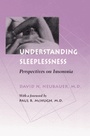
Understanding Sleeplessness
Perspectives on Insomnia
Published on 12. December 2003
Book
Hardback
208 pages
978-0-8018-7326-3 (ISBN)
Description
Seemingly the most natural and necessary of pursuits, a good night's sleep eludes a remarkable number of people-up to 50 percent of the general population, according to studies, while 10 to 15 percent suffer from severe or chronic sleep disorders. Because the causes and nature of sleeplessness are so many and varied-and often as elusive as sleep itself-the diagnosis and treatment require a flexible, multifaceted approach-and this is precisely what David N. Neubauer lays out in Understanding Sleeplessness. Building on the "four perspectives" conceptualized by McHugh and Slavney in The Perspectives of Psychiatry, Neubauer offers a much-needed explanation of the diverse ways of understanding what insomnia is and what should be done about it. He begins by surveying what is currently known about the mechanisms of "normal sleep" and, in this light, describing the problems of defining, assessing, and measuring insomnia. Drawing examples from patients studied at the Johns Hopkins Sleep Disorders Center, Neubauer then applies each of the four perspectives-diseases, dimensions, behaviors, life stories-to the varied kinds and degrees of sleeplessness.
Finally, calling on the full range of perspectives on insomnia, he outlines an integrated approach to evaluation and treatment. His work will be of great interest and value to those who study and treat sleeplessness and to those who wish to understand this widespread and vexing problem.
Finally, calling on the full range of perspectives on insomnia, he outlines an integrated approach to evaluation and treatment. His work will be of great interest and value to those who study and treat sleeplessness and to those who wish to understand this widespread and vexing problem.
Reviews / Votes
While aimed at clinicians, this book's conversational style and anecdotal examples will appeal to lay readers, too. Troubled sleepers will find plenty of good reasons to make an appointment with the doctor. Books for Sleepless Nights 2005 An excellent and creative integration of psychiatric theory and sleep medicine. Journal of Clinical Sleep Medicine 2005More details
Language
English
Place of publication
Baltimore, MD
United States
Target group
College/higher education
Professional and scholarly
Product notice
sewn/stitched
Cloth over boards
Illustrations
6 s/w Abbildungen
6 Illustrations, black and white
Dimensions
Height: 241 mm
Width: 154 mm
Thickness: 20 mm
Weight
413 gr
ISBN-13
978-0-8018-7326-3 (9780801873263)
DOI
10.56021/9780801873263
Copyright in bibliographic data and cover images is held by Nielsen Book Services Limited or by the publishers or by their respective licensors: all rights reserved.
Schweitzer Classification
Other editions
Additional editions
E-Book
01/2005
Johns Hopkins University Press
€39.49
Available for download
Persons
David N. Neubauer, M.D., is an assistant professor in the Department of Psychiatry and Behavioral Sciences at the Johns Hopkins University School of Medicine and associate director of the Johns Hopkins Sleep Disorders Center.
Content
Contents:Foreword, by Paul R. McHugh, MD1. The Problems with Insomnia 2. Normal Sleep: What We Know and How We Know It 3. Sleep as a Motivated Behavior 4. The Dimensions of Sleep 5. Life as the Context of Sleep 6. Insomnia as a Symptom or a Disease 7. Evaluation and Treatment: The Need for Integration
"With this book, Neubauer provides a coherent approach to the study of insomnia. (Indeed, he has in the process provided a model for the study of other psychiatric complaints.) Here is a thorough, case-illustrated account of the links tying insomnia to the characteristics of normal sleep-links of a kind that give significance to this common complaint and reveal it as a problem in life to be studied in psychological terms familiar to all psychiatrists."-Paul R. McHugh M.D., from the foreword