

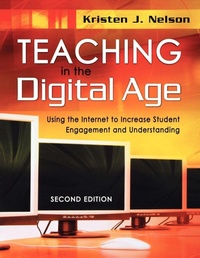
Teaching in the Digital Age
Using the Internet to Increase Student Engagement and Understanding
2nd Edition
Published on 12. November 2007
Book
Paperback/Softback
168 pages
978-1-4129-5566-9 (ISBN)
Description
"An excellent resource that gives teachers-both novice and veteran-ideas on how to integrate technology into the classroom, even if the teacher is a regular user! This second edition will become a good friend for those who want to use the Internet in their teachings."
-Amie Brown, Reading and Language Arts Teacher
Coosa Middle School, Rome, GA
"Through technology, students can learn using tools they are comfortable with and that will help them develop skills for greater productivity in a global society. With theory from this book, teachers can model Internet activities for creativity and engaged learning for higher student achievement!"
-Beverly R. Plein, Technology Facilitator
Benjamin Franklin Middle School, Teaneck, NJ
Connect brain-compatible learning with the Internet to encourage active student involvement!
In Teaching in the Digital Age, Second Edition, Kristen Nelson illustrates how teaching and learning are strengthened when Web resources are integrated with brain-based instruction to meet students' individual learning needs.
The author supplies the tools and framework for using Internet-based, brain-friendly activities to promote students' comprehension across content areas. This practical how-to book demonstrates how teachers can design their own projects to enhance information literacy while deepening students' understanding of critical concepts and skills. Offering an updated list of Web sites, the second edition assists educators by providing:
Internet assignments to develop skills in interpersonal exchange, information gathering and analysis, and problem solving
Standards-based lesson plans that build on student strengths
Assessment rubrics to identify learning needs
This text is an invaluable handbook that combines educational theory, instructional practice, digital literacy, and current brain-based research to encourage student engagement and increase achievement for all learners.
-Amie Brown, Reading and Language Arts Teacher
Coosa Middle School, Rome, GA
"Through technology, students can learn using tools they are comfortable with and that will help them develop skills for greater productivity in a global society. With theory from this book, teachers can model Internet activities for creativity and engaged learning for higher student achievement!"
-Beverly R. Plein, Technology Facilitator
Benjamin Franklin Middle School, Teaneck, NJ
Connect brain-compatible learning with the Internet to encourage active student involvement!
In Teaching in the Digital Age, Second Edition, Kristen Nelson illustrates how teaching and learning are strengthened when Web resources are integrated with brain-based instruction to meet students' individual learning needs.
The author supplies the tools and framework for using Internet-based, brain-friendly activities to promote students' comprehension across content areas. This practical how-to book demonstrates how teachers can design their own projects to enhance information literacy while deepening students' understanding of critical concepts and skills. Offering an updated list of Web sites, the second edition assists educators by providing:
Internet assignments to develop skills in interpersonal exchange, information gathering and analysis, and problem solving
Standards-based lesson plans that build on student strengths
Assessment rubrics to identify learning needs
This text is an invaluable handbook that combines educational theory, instructional practice, digital literacy, and current brain-based research to encourage student engagement and increase achievement for all learners.
Reviews / Votes
"Demonstrates how the Internet can add to your depth of instruction. As a teacher who does not use the Internet to its fullest, this book contributes very well!" -- Dawn Butler, Language Arts Teacher "Through the use of technology, students can learn to use tools they are comfortable with and that will help them develop skills for greater productivity in a global society. With theory from this book, teachers can model Internet activities for creativity and engaged learning for higher student achievement!" -- Beverly R. Plein, Technology Facilitator "An excellent resource that gives both novice and veteran teachers ideas on how to integrate technology into the classroom. This second edition will become a good friend to those who want to use the Internet in their teachings!" -- Amie Brown, Reading and Language Arts Teacher "Quite simply essential reading for any modern teacher. No teacher's library is complete without this fine manual." -- California Bookwatch, December 2007 "Although the book is written for the practicing classroom teacher, it will also be useful for the school administrator who wants to create stronger Internet learning activities in the school." -- Education Libraries, Spring 2008, Vol. 30(3)More details
Edition
2nd Revised edition
Language
English
Place of publication
Thousand Oaks
United States
Publishing group
SAGE Publications Inc
Target group
Professional and scholarly
Edition type
Revised edition
Dimensions
Height: 280 mm
Width: 216 mm
Thickness: 9 mm
Weight
440 gr
ISBN-13
978-1-4129-5566-9 (9781412955669)
Copyright in bibliographic data and cover images is held by Nielsen Book Services Limited or by the publishers or by their respective licensors: all rights reserved.
Schweitzer Classification
Other editions
Additional editions
Kristen J. Nelson
Teaching in the Digital Age
Using the Internet to Increase Student Engagement and Understanding
Book
12/2007
2nd Edition
Corwin Press Inc
€90.57
Article exhausted; check different version
Previous edition
Book
06/2001
1st Edition
Corwin Press Inc
€45.99
Article exhausted; check for reprint
Person
Kristen J. Nelson is the author of numerous books in the education field, including Teaching in the Digital Age and Developing Students' Multiple Intelligences. She works for a large suburban school district in Orange County, California. Nelson has been an elementary and middle school teacher before becoming an educational administrator.
Content
Preface
Acknowledgments
About the Author
Introduction
The Scope of This Book
1. Designing Internet-Based Activities
What Does a Well-Designed Internet Activity Look Like?
Understanding by Design Framework
Nine Steps to a Successful Internet-Based Project
Example Lesson: Getting Started
Taking It to the Classroom: So Many Ways to Be Smart!
2. Connecting Brain-Compatible Learning, Multiple Intelligences, and the Internet
Brain-Compatible Learning
Multiple Intelligences Theory
The Internet
3. Assessing Internet-Based Activities
Assessment: The Great Debate
Performance Tasks: Six Facets of Understanding Rubrics
Rubrics
4. Using the Internet to Strengthen Interpersonal Skills
The History of the Internet
Taking It to the Classroom: What Is the Internet?
Searching for Information: Search Engines
Taking It to the Classroom: Getting to Know Search Engines
Favorites and Web Site Notebooks
Electronic Mail
Interpersonal Exchange Activities
Taking It to the Classroom: Reflective Writing
5. Enhancing Information-Gathering and Analysis Skills
Information Literacy Skills
Taking It to the Classroom: Mini-Research Project
Information-Gathering and Analysis Activities
Taking It to the Classroom: What Makes Good Writing Good?
Taking It to the Classroom: Virtual Field Trips
6. Improving Questioning and Problem-Solving Skills
Uncoverage
Questioning
Problem-Solving Activities
Taking It to the Classroom: Social Action Project
Appendix A: Web Site Addresses
Appendix B: Rubrics
Notes
Bibliography
Index
Acknowledgments
About the Author
Introduction
The Scope of This Book
1. Designing Internet-Based Activities
What Does a Well-Designed Internet Activity Look Like?
Understanding by Design Framework
Nine Steps to a Successful Internet-Based Project
Example Lesson: Getting Started
Taking It to the Classroom: So Many Ways to Be Smart!
2. Connecting Brain-Compatible Learning, Multiple Intelligences, and the Internet
Brain-Compatible Learning
Multiple Intelligences Theory
The Internet
3. Assessing Internet-Based Activities
Assessment: The Great Debate
Performance Tasks: Six Facets of Understanding Rubrics
Rubrics
4. Using the Internet to Strengthen Interpersonal Skills
The History of the Internet
Taking It to the Classroom: What Is the Internet?
Searching for Information: Search Engines
Taking It to the Classroom: Getting to Know Search Engines
Favorites and Web Site Notebooks
Electronic Mail
Interpersonal Exchange Activities
Taking It to the Classroom: Reflective Writing
5. Enhancing Information-Gathering and Analysis Skills
Information Literacy Skills
Taking It to the Classroom: Mini-Research Project
Information-Gathering and Analysis Activities
Taking It to the Classroom: What Makes Good Writing Good?
Taking It to the Classroom: Virtual Field Trips
6. Improving Questioning and Problem-Solving Skills
Uncoverage
Questioning
Problem-Solving Activities
Taking It to the Classroom: Social Action Project
Appendix A: Web Site Addresses
Appendix B: Rubrics
Notes
Bibliography
Index