

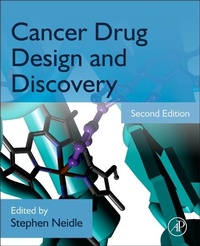
Cancer Drug Design and Discovery
2nd Edition
Published on 5. December 2013
Book
Hardback
640 pages
978-0-12-396521-9 (ISBN)
Description
Cancer Drug Design and Discovery, Second Edition is an important reference on the underlying principles for the design and subsequent development of new anticancer small molecule agents. New chapters have been added to this edition on areas of particular interest and therapeutic promise, including cancer genomics and personalized medicine, DNA-targeted agents and more. This book includes several sections on the basic and applied science of cancer drug discovery and features those drugs that are now approved for human use and are in the marketplace, as well as those that are still under development. By highlighting some of the general principles involved in taking molecules through basic science to clinical development, this book offers a complete and authoritative reference on the design and discovery of anticancer drugs for translational scientists and clinicians involved in cancer research.
Reviews / Votes
"...offers unique information on the discovery and design of new anticancer agents, covering recent notable successes resulting from the human genome and cancer genomics projects...an excellent reference for translational researchers interested in cancer biology and medicine as well as students in pharmacy, pharmacology, or medicinal and biological chemistry..." --Anticancer Research 34, 2014"The second edition of this book walks readers through the myriad cancer drugs and their molecular targets, with a special emphasis on past, present, and future drug design efforts... the book examines both drugs currently in the clinic and those merely on the drawing board...This comprehensive update of the 2008 edition will serve student or experienced cancer researchers well as a reference on anticancer drug development." Rating: 4 Stars --Doody.com, March 21, 2014
"Specialists in cancer and pharmaceuticals, most in academic settings, look at basic principles of cancer drugs, methodology, drugs in the clinic, new agents, and the reality of cancer drugs in the clinic...They do include many case studies, and some chapters provide questions for classroom use." --ProtoView.com, February 2014
More details
Edition
2nd edition
Language
English
Place of publication
San Diego
United States
Publishing group
Elsevier Science Publishing Co Inc
Target group
Professional and scholarly
Translational researchers and clinicians interested in modern drug discovery, cancer biology and medicine, as well as graduate and undergraduate students in pharmacy, pharmacology or medicinal and biological chemistry.
Product notice
sewn/stitched
Cloth over boards
Illustrations
Illustrated
Dimensions
Height: 244 mm
Width: 195 mm
Thickness: 43 mm
Weight
1564 gr
ISBN-13
978-0-12-396521-9 (9780123965219)
Copyright in bibliographic data and cover images is held by Nielsen Book Services Limited or by the publishers or by their respective licensors: all rights reserved.
Schweitzer Classification
Other editions
Previous edition
Stephen Neidle
Cancer Drug Design and Discovery
Book
11/2007
Academic Press
€86.65
Article exhausted; check for reprint
Person
Stephen Neidle is an Emeritus Professor of Chemical Biology at University College London, where he has also been the Director of Research in the School of Pharmacy. He has published over 500 primary papers and reviews and is a principal inventor on 14 patent filings. He has also written and edited several books on nucleic acids and anti-cancer drugs.
Content
Introduction - Stephen Neidle
Foreword - Hilary Calvert
Part I. Basic Principles and methodology
Modern cancer drug discovery: integrating targets, technologies and treatments - Paul Workman and
Ian Collins
Pharmacogenomics and personalised medicines in cancer treatment - Wei-Peng Yong, Ross Soo and
Federico Innocenti
Structural biology and anticancer drug design - Puja Pathuri, David Norton, Henriette Willems,
Dominic Tisi and Harren Jhoti
Part II. Drugs in the laboratory and clinic
Temozolomide: from cytotoxic to molecularly-targeted agent - Malcolm Stevens
Temozolomide: patents and the perils of invention - Malcolm Stevens
A new generation of cell-targeted drugs for cancer treatment - Paola B. Arimondo, Nicolas Guilbaud
and Christian Bailly
Inhibition of DNA repair as a therapeutic target - Stephany Veuger and Nicola J Curtin
Inhibitors of tumour angiogenesis - Adrian L. Harris and Daniele G Generali
The Renaissance of CYP17 Inhibitors for the Treatment of Prostate Cancer - Qingzhong Hu and Rolf
W. Hartmann
Apoptosis in Cancer: Mechanisms, Deregulation and Therapeutic Targeting - Zahid H Siddik
Targeting the MDM2-p53 protein-protein interaction: design, discovery and development of novel
anticancer agents - Ian R Hardcastle
Targeting altered metabolism - emerging cancer therapeutic strategy - Minsuh Seo, Robert Blake
Crochet and Yong-Hwan Lee
Inhibitors of the Phosphatidylinositol 3-kinase (PI3K) Pathway - William A Denny and Gordon W.
Rewcastle
Antibody-drug conjugates delivering DNA cytotoxics - John A Hartley
Inhibition of telomerase: promise, progress and potential pitfalls - Christopher G. Tomlinson, Scott B.
Cohen and Tracy M. Bryan
Targeting B-RAF: the discovery and development of B-RAF inhibitors - Phillip A Harris
Part III. The reality of cancer drugs in the clinic
Failure Modes in Anticancer Drug Discovery and Development - Richard A. Walgren and
Christopher. A. Slapak
Anticancer drug registration and regulation: current challenges and possible solutions - David
Taylor, Erling Donnelly and Silvia Chioato
Foreword - Hilary Calvert
Part I. Basic Principles and methodology
Modern cancer drug discovery: integrating targets, technologies and treatments - Paul Workman and
Ian Collins
Pharmacogenomics and personalised medicines in cancer treatment - Wei-Peng Yong, Ross Soo and
Federico Innocenti
Structural biology and anticancer drug design - Puja Pathuri, David Norton, Henriette Willems,
Dominic Tisi and Harren Jhoti
Part II. Drugs in the laboratory and clinic
Temozolomide: from cytotoxic to molecularly-targeted agent - Malcolm Stevens
Temozolomide: patents and the perils of invention - Malcolm Stevens
A new generation of cell-targeted drugs for cancer treatment - Paola B. Arimondo, Nicolas Guilbaud
and Christian Bailly
Inhibition of DNA repair as a therapeutic target - Stephany Veuger and Nicola J Curtin
Inhibitors of tumour angiogenesis - Adrian L. Harris and Daniele G Generali
The Renaissance of CYP17 Inhibitors for the Treatment of Prostate Cancer - Qingzhong Hu and Rolf
W. Hartmann
Apoptosis in Cancer: Mechanisms, Deregulation and Therapeutic Targeting - Zahid H Siddik
Targeting the MDM2-p53 protein-protein interaction: design, discovery and development of novel
anticancer agents - Ian R Hardcastle
Targeting altered metabolism - emerging cancer therapeutic strategy - Minsuh Seo, Robert Blake
Crochet and Yong-Hwan Lee
Inhibitors of the Phosphatidylinositol 3-kinase (PI3K) Pathway - William A Denny and Gordon W.
Rewcastle
Antibody-drug conjugates delivering DNA cytotoxics - John A Hartley
Inhibition of telomerase: promise, progress and potential pitfalls - Christopher G. Tomlinson, Scott B.
Cohen and Tracy M. Bryan
Targeting B-RAF: the discovery and development of B-RAF inhibitors - Phillip A Harris
Part III. The reality of cancer drugs in the clinic
Failure Modes in Anticancer Drug Discovery and Development - Richard A. Walgren and
Christopher. A. Slapak
Anticancer drug registration and regulation: current challenges and possible solutions - David
Taylor, Erling Donnelly and Silvia Chioato