


The Dark Side of Management
Will be published approx. on 18. June 2010
Book
Paperback/Softback
212 pages
978-1-60752-263-8 (ISBN)
Description
Mirroring a parallel movement in psychology, one recent trend in the study of organizations has been an increased focus on positive management and organizational behavior. However, while contributing to an enhanced understanding of organizational phenomena, this focus tends to ignore negative aspects of workplace behavior, which can have very serious consequences for individuals, groups, and organizations. Given what many of us have seen over the past year in terms of the handling (mis-handling) of downsizing, restructuring, and compensation, it seems clear that the darker side of management is a topic of great concern.
Thus, Volume 8 of Research in Management is devoted to exploring what has been called "The Dark Side" of management and organizational behavior. It includes seven chapters that are written by leading experts on a diverse range of topics, including abusive supervision attributions, dysfunctional mentors, destructive executives, social exclusion, public and private deviance, instrumental counterproductive behavior, and an examination of the difference between abusive and supportive leadership.
Each of these chapters makes a unique contribution to understanding negative workplace behavior and each should stimulate a future stream of research in the same or related domains. Comments by the editors are also provided, highlighting other areas where the study of "dark side" behavior and phenomena would seem particularly beneficial for the advancement of knowledge about organizations and their effective functioning.
Thus, Volume 8 of Research in Management is devoted to exploring what has been called "The Dark Side" of management and organizational behavior. It includes seven chapters that are written by leading experts on a diverse range of topics, including abusive supervision attributions, dysfunctional mentors, destructive executives, social exclusion, public and private deviance, instrumental counterproductive behavior, and an examination of the difference between abusive and supportive leadership.
Each of these chapters makes a unique contribution to understanding negative workplace behavior and each should stimulate a future stream of research in the same or related domains. Comments by the editors are also provided, highlighting other areas where the study of "dark side" behavior and phenomena would seem particularly beneficial for the advancement of knowledge about organizations and their effective functioning.
More details
Series
Language
English
Place of publication
Charlotte
United States
Publishing group
Emerald Publishing Inc
Target group
Professional and scholarly
Dimensions
Height: 234 mm
Width: 156 mm
Thickness: 12 mm
Weight
330 gr
ISBN-13
978-1-60752-263-8 (9781607522638)
Copyright in bibliographic data and cover images is held by Nielsen Book Services Limited or by the publishers or by their respective licensors: all rights reserved.
Schweitzer Classification
Other editions
Additional editions
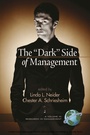
Linda L. Neider | Chester A. Schriesheim
The 'Dark' Side of Management
E-Book
06/2010
1st Edition
Information Age Publishing
from
€62.33
Available for download
Persons
Content
Foreword; Linda L. Neider and Chester A. Schriesheim.
Chapter 1. Mentors Gone Wild!: When Mentoring Relationships Become Dysfunctional or Abusive; Pamela L. Perrewe, Kelly L. Zellars, Laci M. Rogers, Denise Breaux, and Angela M. Young.
Chapter 2. One Bad Apple: The Role of Destructive Executives in Organizations; Alexa A. Perryman, David Sikora, and Gerald R. Ferris.
Chapter 3. Abusive and Supportive Leadership: Two Sides of the Same Coin? Chester A. Schriesheim and Linda L. Neider.
Chapter 4. An Attributional Analysis of Employees' Responses to Abusive Supervision; Denise M. Breaux, Bennett J. Tepper, Jon C. Carr and Robert G. Folger.
Chapter 5. Instrumental Counterproductive Work Behavior and the Theory of Planned Behavior: A Cold Cognitive Approach to Complement Hot Affective Theories of CWB; Suzy Fox and Paul E. Spector.
Chapter 6. Controlling A, While Hoping for B: Deviance Deterrence and Public Versus Private Deviance; Bradley J. Alge, Erica L. Anthony, Jackie Rees and Karthik Kannan.
Chapter 7. Social Networks, Groups, and Social Exclusion: Combining Sociometric and Psychometric Approaches to Understanding Social Exclusion in Organizational Settings; Travis J. Grosser, Chris M. Sterling, Kristin D. Scott and Giuseppe (Joe) Labianca.
Biographies of the Contributors.
Chapter 1. Mentors Gone Wild!: When Mentoring Relationships Become Dysfunctional or Abusive; Pamela L. Perrewe, Kelly L. Zellars, Laci M. Rogers, Denise Breaux, and Angela M. Young.
Chapter 2. One Bad Apple: The Role of Destructive Executives in Organizations; Alexa A. Perryman, David Sikora, and Gerald R. Ferris.
Chapter 3. Abusive and Supportive Leadership: Two Sides of the Same Coin? Chester A. Schriesheim and Linda L. Neider.
Chapter 4. An Attributional Analysis of Employees' Responses to Abusive Supervision; Denise M. Breaux, Bennett J. Tepper, Jon C. Carr and Robert G. Folger.
Chapter 5. Instrumental Counterproductive Work Behavior and the Theory of Planned Behavior: A Cold Cognitive Approach to Complement Hot Affective Theories of CWB; Suzy Fox and Paul E. Spector.
Chapter 6. Controlling A, While Hoping for B: Deviance Deterrence and Public Versus Private Deviance; Bradley J. Alge, Erica L. Anthony, Jackie Rees and Karthik Kannan.
Chapter 7. Social Networks, Groups, and Social Exclusion: Combining Sociometric and Psychometric Approaches to Understanding Social Exclusion in Organizational Settings; Travis J. Grosser, Chris M. Sterling, Kristin D. Scott and Giuseppe (Joe) Labianca.
Biographies of the Contributors.