

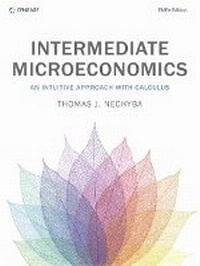
Intermediate Microeconomics
An Intuitive Approach with Calculus
Published on 14. March 2018
Book
Paperback/Softback
896 pages
978-1-4737-5900-8 (ISBN)
Description
This EMEA adaptation of Thomas Nechyba's popular text presents a European, Middle East and African perspective, whilst also being fully updated. This exciting new edition follows Professor Nechyba's five primary goals for any microeconomics course by presenting the subject as a way of looking at the world, showing students how and why the world works, how to think more clearly and develop conceptual thinking skills, and by providing a flexible learning style and a roadmap for further study. Each chapter follows the A and B structure developed by Professor Nechyba, allowing students to explore an intuitive approach in Part A and then focus on how the intuitive approach can be represented mathematically in Part B. This edition is also available as a MindTap with additional assessments, a Graph Builder and video graph presentations. It is also available with Aplia, a comprehensive online learning assessment tool with autograded randomised questions to test students' understanding.
More details
Language
English
Place of publication
London
United Kingdom
Target group
College/higher education
Dimensions
Height: 30 mm
Width: 196 mm
Thickness: 260 mm
Weight
1670 gr
ISBN-13
978-1-4737-5900-8 (9781473759008)
Copyright in bibliographic data and cover images is held by Nielsen Book Services Limited or by the publishers or by their respective licensors: all rights reserved.
Schweitzer Classification
Other editions
Previous edition

Walter Nicholson | Christopher Snyder | Robert Stewart
Microeconomic Theory
Book
04/2015
Cengage Learning EMEA
€116.71
Shipment within 15-20 days
Person
Thomas J. Nechyba is Professor of Economics at the Sanford School of Public Policy, Duke University, US. At Duke, he has previously served as Director of Undergraduate Studies and as Department Chair and currently directs the Economics Center for Teaching (EcoTeach) as well as Duke's Social Science Research Institute. In addition to his activities in the US, he has lectured internationally in Europe, Latin America and New Zealand.
Content
Chapter 0: Foundational Preliminaries (web-based chapter)
Chapter 1: Introduction
PART 1: Utility-Maximizing Choice: Consumers, Workers and Savers
Chapter 2: A Consumer's Economic Circumstances
Chapter 3: Economic Circumstances in Labour and Financial Markets
Chapter 4: Tastes and Indifference Curves
Chapter 5: Different Types of Tastes
Chapter 6: Doing the Best We Can
Chapter 7: Income and Substitution Effects in Consumer Goods Markets
Chapter 8: Wealth and Substitution Effects in Labour and Capital Markets
Chapter 9: Demand for Goods and Supply of Labour and Capital
Chapter 10: Consumer Surplus and Deadweight Loss
PART 2: Profit-Maximizing Choice: Producers or Firms
Chapter 11: One Input and One Output: A Short-Run Producer Model
Chapter 12: Production with Multiple Inputs
Chapter 13: Production Decisions in the Short and Long Run
PART 3: Competitive Markets and the Invisible Hand
Chapter 14: Competitive Market Equilibrium
Chapter 15: The Invisible Hand and the First Welfare Theorem
Chapter 16: General Equilibrium
Chapter 17: Choice and Markets in the Presence of Risk
PART 4: Distortions of the Invisible Hand in Competitive Markets
Chapter 18: Elasticities, Price-Distorting Policies and Non-Price Rationing
Chapter 19: Distortionary Taxes and Subsidies
Chapter 20: Prices and Distortions across Markets
Chapter 21: Externalities in Competitive Markets
Chapter 22: Asymmetric Information in Competitive Markets
PART 5: Distortions of the Invisible Hand from Strategic Decisions
Chapter 23: Monopoly
Chapter 24: Strategic Thinking and Game Theory
Chapter 25: Oligopoly
Chapter 26: Product Differentiation and Innovation in Markets
Chapter 27: Public Goods
Chapter 28: Governments and Politics
PART 6: Considering How to Make the World a Better Place
Chapter 29: What Is Good? Challenges from Psychology and Philosophy
Chapter 30: Balancing Government, Civil Society, and Markets
Chapter 1: Introduction
PART 1: Utility-Maximizing Choice: Consumers, Workers and Savers
Chapter 2: A Consumer's Economic Circumstances
Chapter 3: Economic Circumstances in Labour and Financial Markets
Chapter 4: Tastes and Indifference Curves
Chapter 5: Different Types of Tastes
Chapter 6: Doing the Best We Can
Chapter 7: Income and Substitution Effects in Consumer Goods Markets
Chapter 8: Wealth and Substitution Effects in Labour and Capital Markets
Chapter 9: Demand for Goods and Supply of Labour and Capital
Chapter 10: Consumer Surplus and Deadweight Loss
PART 2: Profit-Maximizing Choice: Producers or Firms
Chapter 11: One Input and One Output: A Short-Run Producer Model
Chapter 12: Production with Multiple Inputs
Chapter 13: Production Decisions in the Short and Long Run
PART 3: Competitive Markets and the Invisible Hand
Chapter 14: Competitive Market Equilibrium
Chapter 15: The Invisible Hand and the First Welfare Theorem
Chapter 16: General Equilibrium
Chapter 17: Choice and Markets in the Presence of Risk
PART 4: Distortions of the Invisible Hand in Competitive Markets
Chapter 18: Elasticities, Price-Distorting Policies and Non-Price Rationing
Chapter 19: Distortionary Taxes and Subsidies
Chapter 20: Prices and Distortions across Markets
Chapter 21: Externalities in Competitive Markets
Chapter 22: Asymmetric Information in Competitive Markets
PART 5: Distortions of the Invisible Hand from Strategic Decisions
Chapter 23: Monopoly
Chapter 24: Strategic Thinking and Game Theory
Chapter 25: Oligopoly
Chapter 26: Product Differentiation and Innovation in Markets
Chapter 27: Public Goods
Chapter 28: Governments and Politics
PART 6: Considering How to Make the World a Better Place
Chapter 29: What Is Good? Challenges from Psychology and Philosophy
Chapter 30: Balancing Government, Civil Society, and Markets