

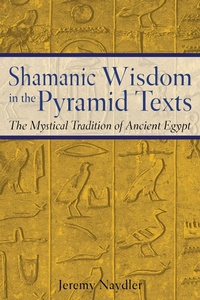
Shamanic Wisdom in the Pyramid Texts
The Mystical Tradition of Ancient Egypt
Will be published approx. on 9. December 2004
Book
Paperback/Softback
480 pages
978-0-89281-755-9 (ISBN)
Description
A radical reinterpretation of the Pyramid Texts as shamanic mystical wisdom rather than funerary rituals
* Reveals the mystical nature of Egyptian civilization denied by orthodox Egyptologists
* Examines the similarity between the pharaoh's afterlife voyage and shamanic journeying
* Shows shamanism to be the foundation of the Egyptian mystical tradition
To the Greek philosophers and other peoples of the ancient world, Egypt was regarded as the home of a profound mystical wisdom. While there are many today who still share that view, the consensus of most Egyptologists is that no evidence exists that Egypt possessed any mystical tradition whatsoever. Jeremy Naydler's radical reinterpretation of the Pyramid Texts--the earliest body of religious literature to have survived from ancient Egypt--places these documents into the ritual context in which they belong.
Until now, the Pyramid Texts have been viewed primarily as royal funerary texts that were used in the liturgy of the dead pharaoh or to aid him in his afterlife journey. This emphasis on funerary interpretation has served only to externalize what were actually experiences of the living, not the dead, king. In order to understand the character and significance of the extreme psychological states the pharaoh experienced--states often involving perilous encounters with alternate realities--we need to approach them as spiritual and religious phenomena that reveal the extraordinary possibilities of human consciousness. It is the shamanic spiritual tradition, argues Naydler, that is the undercurrent of the Pyramid Texts and that holds the key to understanding both the true nature of these experiences and the basis of ancient Egyptian mysticism.
* Reveals the mystical nature of Egyptian civilization denied by orthodox Egyptologists
* Examines the similarity between the pharaoh's afterlife voyage and shamanic journeying
* Shows shamanism to be the foundation of the Egyptian mystical tradition
To the Greek philosophers and other peoples of the ancient world, Egypt was regarded as the home of a profound mystical wisdom. While there are many today who still share that view, the consensus of most Egyptologists is that no evidence exists that Egypt possessed any mystical tradition whatsoever. Jeremy Naydler's radical reinterpretation of the Pyramid Texts--the earliest body of religious literature to have survived from ancient Egypt--places these documents into the ritual context in which they belong.
Until now, the Pyramid Texts have been viewed primarily as royal funerary texts that were used in the liturgy of the dead pharaoh or to aid him in his afterlife journey. This emphasis on funerary interpretation has served only to externalize what were actually experiences of the living, not the dead, king. In order to understand the character and significance of the extreme psychological states the pharaoh experienced--states often involving perilous encounters with alternate realities--we need to approach them as spiritual and religious phenomena that reveal the extraordinary possibilities of human consciousness. It is the shamanic spiritual tradition, argues Naydler, that is the undercurrent of the Pyramid Texts and that holds the key to understanding both the true nature of these experiences and the basis of ancient Egyptian mysticism.
Reviews / Votes
"Erudite, rigorously developed, impeccably supported, observing all scholarly ground rules, yet revolutionary in its implications. This book should engage serious readers the world over." * John Anthony West, author of The Serpent in the Sky: The High Wisdom of Ancient Egypt * "A splendid melding of fine scholarship and passionate engagement with themes that are vitally important to us today. It is must reading not only for lovers of Egypt, students of shamanism and religion, and modern practitioners of soul travel, but for all of us who hunger for the real history of humanity's encounters with the more-than-human." * Robert Moss, author of Dreamgates: An Explorer's Guide to the Worlds of Soul, Imagination, and * "A fabulously convincing piece of work." * Normandi Ellis, author of Awakening Osiris * "This is an important book for it places our focus for understanding these ancient texts where it should be, upon profound human experience." * Michael Baigent, Caduceus, Issue #66 * ". . . the Pyramid texts are revealed as initiatory texts that give voice to a potent shamanic wisdom, which provides the key to understanding both the true nature of these experiences and the basis of ancient Egyptan mysticism." * The Journal of Esoterica, July 2006 * "A model of how to engage with religious literature and, still more widely, with the sacred dimension of life. . . . Serves as a mirror to our own consciousness, reflecting back to us objective spiritual realities which have fallen out of contemporary discourse, and waking us up to deeper layers of our own humanity. . . . An essential book for all of us who long to experience the greater possibilities of the human psyche." * Jules Cashford, Temenos Academy Review * "An invaluable contribution to the dialogue about the mysteries of ancient Egypt." * Rosicrucian Digest *More details
Edition
Original edition
Language
English
Place of publication
Rochester
United States
Product notice
Paperback (trade)
Illustrations
135 b&w illustrations
Dimensions
Height: 229 mm
Width: 153 mm
Thickness: 30 mm
Weight
776 gr
ISBN-13
978-0-89281-755-9 (9780892817559)
Copyright in bibliographic data and cover images is held by Nielsen Book Services Limited or by the publishers or by their respective licensors: all rights reserved.
Schweitzer Classification
Other editions
Additional editions
E-Book
12/2004
Simon + Schuster LLC
€20.76
Available for download
Person
Jeremy Naydler, is a philosopher who has for many years been interested in the religious life of ancient cultures, receiving his doctorate in religious studies at the University of Kent, Canterbury. He is the author of Temple of the Cosmos: The Ancient Egyptian Experience of the Sacred and Goethe on Science. He lives in Oxford, England.
Content
Preface and Acknowledgments
Abbreviations
Part One
Mysticism in Ancient Egypt
1 Introduction: The Encounter with the Sacred
Religious Egypt
Mysticism and Ancient Egypt
A Question of Boundaries
Subjective Engagement
Shamanism in Relation to Ancient Egyptian Religion
The Call to Awakening
2 Egyptology: The Death and Rebirth of Mysticism in Ancient Egypt
Mysticism and the Realm of Death
Egyptology: Mysticism Denied
The Knowledge of the Egyptians
The Idea of Progress
Were the Egyptians Practical Rather Than Mystical?
The Rebirth of Egyptian Mysticism
3 The Mystical versus the Funerary Interpretation of Ancient Egyptian Religion
A Clash of Views
Mysticism and the Experience of Death
The Eleusinian Mysteries and Other Mystery Religions
The Funerary Interpretation of the Osiris Myth
The Mystical Embrace of Osiris and Horus
The Sed Festival
4 The Pyramids as the Locus of Secret Rites
The Living in Relation to the Dead
The Meaning of the Sed Festival
The Sed Festival and the Step Pyramids
Fourth Dynasty Pyramids and the Sed Festival
Fifth and Sixth Dynasty Pyramids and the Sed Festival
The Pyramid Texts and the Sed Festival
5 A Question of Method
Phenomenology and the Ideal of Presuppositionless Inquiry
On Approaching the Phenomena with Empathy
The Challenge to Phenomenology
Standing Reductionism on Its Head
A Question of Motivation
Part Two
The Shamanic Roots of the Pyramid Texts
6 The Pyramid of Unas
The Pyramid Texts
The Pyramid Temples and Causeway of Unas
The Pyramid of Unas
Location of Texts
The Interpretation of the Pyramid Texts
7 The Sarcophagus Chamber Texts
The North-Wall Offering Liturgy
The Twelve South-to-East-Wall Texts (Utts. 213-24)
The Passage between the Chambers
The East Gable (Utts. 204-5, 207, 209, 210-12)
8 The Antechamber Texts
The West Gable (Utts. 247-53)
The Fifteen West-to-South-Wall Texts (Utts. 254-58, 260-63, 267-72)
The Eleven North-Wall Texts (Utts. 302-12)
9 From the Antechamber to the Entrance Corridor
The East Gable (Utts. 273-76)
The Snake Spells (Utts. 277-99 and Utts. 226-43)
The Two Remaining East-Wall Utterances (Utts. 300-301)
The Entrance Corridor (Utts. 313-21)
10 The Recovery of Ancient Egyptian Mysticism
The Features of Ancient Egyptian Mysticism
The Phenomenological Approach to Ancient Egyptian Religion
Ancient Egypt and Western Esotericism
Appendices
1 Summary of Utterances in the Pyramid of Unas
2 List of Utterances in the Five Double-Chamber Pyramids at Saqqara
Notes
Bibliography
Illustration Credits
Index
Abbreviations
Part One
Mysticism in Ancient Egypt
1 Introduction: The Encounter with the Sacred
Religious Egypt
Mysticism and Ancient Egypt
A Question of Boundaries
Subjective Engagement
Shamanism in Relation to Ancient Egyptian Religion
The Call to Awakening
2 Egyptology: The Death and Rebirth of Mysticism in Ancient Egypt
Mysticism and the Realm of Death
Egyptology: Mysticism Denied
The Knowledge of the Egyptians
The Idea of Progress
Were the Egyptians Practical Rather Than Mystical?
The Rebirth of Egyptian Mysticism
3 The Mystical versus the Funerary Interpretation of Ancient Egyptian Religion
A Clash of Views
Mysticism and the Experience of Death
The Eleusinian Mysteries and Other Mystery Religions
The Funerary Interpretation of the Osiris Myth
The Mystical Embrace of Osiris and Horus
The Sed Festival
4 The Pyramids as the Locus of Secret Rites
The Living in Relation to the Dead
The Meaning of the Sed Festival
The Sed Festival and the Step Pyramids
Fourth Dynasty Pyramids and the Sed Festival
Fifth and Sixth Dynasty Pyramids and the Sed Festival
The Pyramid Texts and the Sed Festival
5 A Question of Method
Phenomenology and the Ideal of Presuppositionless Inquiry
On Approaching the Phenomena with Empathy
The Challenge to Phenomenology
Standing Reductionism on Its Head
A Question of Motivation
Part Two
The Shamanic Roots of the Pyramid Texts
6 The Pyramid of Unas
The Pyramid Texts
The Pyramid Temples and Causeway of Unas
The Pyramid of Unas
Location of Texts
The Interpretation of the Pyramid Texts
7 The Sarcophagus Chamber Texts
The North-Wall Offering Liturgy
The Twelve South-to-East-Wall Texts (Utts. 213-24)
The Passage between the Chambers
The East Gable (Utts. 204-5, 207, 209, 210-12)
8 The Antechamber Texts
The West Gable (Utts. 247-53)
The Fifteen West-to-South-Wall Texts (Utts. 254-58, 260-63, 267-72)
The Eleven North-Wall Texts (Utts. 302-12)
9 From the Antechamber to the Entrance Corridor
The East Gable (Utts. 273-76)
The Snake Spells (Utts. 277-99 and Utts. 226-43)
The Two Remaining East-Wall Utterances (Utts. 300-301)
The Entrance Corridor (Utts. 313-21)
10 The Recovery of Ancient Egyptian Mysticism
The Features of Ancient Egyptian Mysticism
The Phenomenological Approach to Ancient Egyptian Religion
Ancient Egypt and Western Esotericism
Appendices
1 Summary of Utterances in the Pyramid of Unas
2 List of Utterances in the Five Double-Chamber Pyramids at Saqqara
Notes
Bibliography
Illustration Credits
Index