

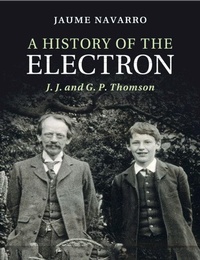
A History of the Electron
J. J. and G. P. Thomson
Published on 28. March 2019
Book
Paperback/Softback
194 pages
978-1-108-72443-2 (ISBN)
Description
Two landmarks in the history of physics are the discovery of the particulate nature of cathode rays (the electron) by J. J. Thomson in 1897 and the experimental demonstration by his son G. P. Thomson in 1927 that the electron exhibits the properties of a wave. Together, the Thomsons are two of the most significant figures in modern physics, both winning Nobel prizes for their work. This book presents the intellectual biographies of the father-and-son physicists, shedding new light on their combined understanding of the nature of electrons and, by extension, of the continuous nature of matter. It is the first text to explore J. J. Thomson's early and later work, as well as the role he played in G. P. Thomson's education as a physicist and how he reacted to his son's discovery of electron diffraction. This fresh perspective will interest academics and graduate students working in the history of early twentieth-century physics.
Reviews / Votes
'... a scholarly and readable account of developments that underlie modern chemistry ... Navarro's thoughtful narrative should appeal to both historians and chemists.' Chemistry WorldMore details
Language
English
Place of publication
Cambridge
United Kingdom
Target group
College/higher education
Product notice
Paperback (trade)
Illustrations
Worked examples or Exercises; 12 Halftones, unspecified; 12 Halftones, black and white
Dimensions
Height: 246 mm
Width: 189 mm
Thickness: 11 mm
Weight
391 gr
ISBN-13
978-1-108-72443-2 (9781108724432)
Copyright in bibliographic data and cover images is held by Nielsen Book Services Limited or by the publishers or by their respective licensors: all rights reserved.
Schweitzer Classification
Other editions
Additional editions
Book
09/2012
Cambridge University Press
€172.00
Shipment within 15-20 days
Person
Jaume Navarro is Ikerbasque Research Professor at the University of the Basque Country, San Sebastian. He trained in physics, philosophy and the history of science, and has an international research record having spent several years at the University of Cambridge, Imperial College London, the Max Planck Institute for the History of Science and the University of Exeter.
Content
Introduction; 1. The early years in Manchester and Cambridge; 2. J. J. Thomson's early work in Cambridge: a continuous and all-embracing physics; 3. The ether and the corpuscle: from waves to particles; 4. On creeds and policies: the corpuscular theory of matter; 5. Father and son. Old and new physics; 6. The electron in Aberdeen: from particle to wave; Index.