


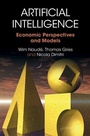
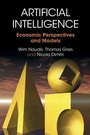
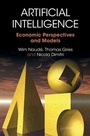
Artificial Intelligence
Economic Perspectives and Models
Published on 30. May 2024
Book
Hardback
378 pages
978-1-009-48308-7 (ISBN)
Description
Is Artificial Intelligence a more significant invention than electricity? Will it result in explosive economic growth and unimaginable wealth for all, or will it cause the extinction of all humans? Artificial Intelligence: Economic Perspectives and Models provides a sober analysis of these questions from an economics perspective. It argues that to better understand the impact of AI on economic outcomes, we must fundamentally change the way we think about AI in relation to models of economic growth. It describes the progress that has been made so far and offers two ways in which current modelling can be improved: firstly, to incorporate the nature of AI as providing abilities that complement and/or substitute for labour, and secondly, to consider demand-side constraints. Outlining the decision-theory basis of both AI and economics, this book shows how this, and the incorporation of AI into economic models, can provide useful tools for safe, human-centered AI.
Reviews / Votes
'Could AI be a game changer for economics and the economy? This is the main question that this book examines in depth. The authors have managed to keep the language accessible to various audiences without forgetting technical rigor. The analysis of AI, from both the consumer and producer sides, points out possible ways for humanity to take advantage of the new opportunities opened up by this new technology while avoiding its risks.' Tiago Neves Sequeira, Professor of Economics, University of Coimbra 'This book presents a very thorough discussion of the connections between artificial intelligence and the economy, with a refreshing forward-looking perspective. It covers fundamentals, important implications of digital technologies on societal aspects, innovation, and policy. I completely agree with the authors' statement '[big data] can better inform policy makers for a positive impact on their actions and citizens' well-being,' and strongly recommend this piece to help navigate a future enhanced by artificial intelligence.' Ricardo Vinuesa, Associate Professor at KTH Royal Institute of TechnologyMore details
Language
English
Place of publication
Cambridge
United Kingdom
Product notice
sewn/stitched
Cloth over boards
Illustrations
Worked examples or Exercises
Dimensions
Height: 229 mm
Width: 152 mm
Thickness: 22 mm
Weight
671 gr
ISBN-13
978-1-009-48308-7 (9781009483087)
Copyright in bibliographic data and cover images is held by Nielsen Book Services Limited or by the publishers or by their respective licensors: all rights reserved.
Schweitzer Classification
Other editions
Additional editions
E-Book
05/2024
Cambridge University Press
€42.99
Available for download
Book
05/2024
Cambridge University Press
€42.00
Shipment within 15-20 days
E-Book
05/2024
Cambridge University Press
€42.99
Available for download
Persons
Wim Naudé is an economist, author, and entrepreneur. He has held appointments at Oxford University and the United Nations University (UNU) and has been a visiting faculty member at Brown University's Brown International Advanced Research Institutes. He has published widely in scientific journals, and has authored and edited books published by Palgrave Macmillan, Oxford University Press, and Routledge. He is ranked by Stanford University /Elsevier amongst the top 2 percent of scientists in the world.
Content
1. Introduction; 2. Artificial Intelligence and economics: a gentle introduction; 3. Artificial Intelligence and the economics of decision-making; 4. Artificial Intelligence in the production factor; 5. Artificial Intelligence, growth and inequality; 6. Investing in Artificial Intelligence: breakthroughs and backlashes; 7. Artificial Intelligence arms races as innovation contests; 8. Directing Artificial Intelligence innovation and diffusion; 9. Artificial Intelligence, big data and public policy; 10. The future of Artificial Intelligence and implications for economics.