

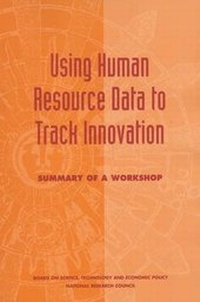
Using Human Resource Data to Track Innovation
Summary of a Workshop
Published on 5. August 2002
Book
Paperback/Softback
80 pages
978-0-309-08424-6 (ISBN)
Description
Despite the fact that technology is embodied in human as well as physical capital and that interactions among technically trained people are critical to innovation and technology diffusion, data on scientists, engineers and other professionals have not been adequately exploited to illuminate the productivity of and changing patterns in innovation. STEP convened a workshop to examine how data on qualifications and career paths, mobility, cross sector relationships, and the structure of work in firms could shed light on issues of research productivity, interactions among private and public sector institutions, and other aspects of innovation.
More details
Language
English
Place of publication
Washington
United States
Target group
Professional and scholarly
Product notice
Paperback (trade)
Unsewn / adhesive bound
Dimensions
Height: 228 mm
Width: 163 mm
Thickness: 5 mm
Weight
141 gr
ISBN-13
978-0-309-08424-6 (9780309084246)
Copyright in bibliographic data and cover images is held by Nielsen Book Services Limited or by the publishers or by their respective licensors: all rights reserved.
Schweitzer Classification
Other editions
Additional editions
National Research Council | Policy and Global Affairs | Board on Science
Using Human Resource Data to Track Innovation
Summary of a Workshop
E-Book
08/2002
1st Edition
National Academies Press
€39.99
Available for download
Persons
Stephen A. Merrill and Michael McGeary, Editors, National Research Council
Content
1 Front Matter; 2 Executive Summary; 3 1. What Role for Human Resource Data in Tracking Information?; 4 2. Principal Sources of Human Resource Data; 5 3. Research Applications of Human Resource Data; 6 4. Enhancing the Utility of Human Resource Data; 7 References; 8 Appendix A: Workshop Program; 9 Appendix B: Workshop Participants; 10 Appendix C: 'Using Human Resource Data to Illuminate Innovation and Research Utilization' by Paula Stephen