

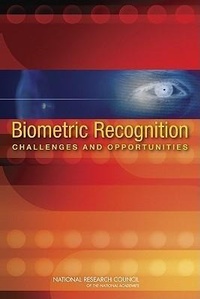
Biometric Recognition
Challenges and Opportunities
Published on 12. November 2010
Book
Paperback/Softback
182 pages
978-0-309-14207-6 (ISBN)
Description
Biometric recognition--the automated recognition of individuals based on their behavioral and biological characteristic--is promoted as a way to help identify terrorists, provide better control of access to physical facilities and financial accounts, and increase the efficiency of access to services and their utilization. Biometric recognition has been applied to identification of criminals, patient tracking in medical informatics, and the personalization of social services, among other things. In spite of substantial effort, however, there remain unresolved questions about the effectiveness and management of systems for biometric recognition, as well as the appropriateness and societal impact of their use. Moreover, the general public has been exposed to biometrics largely as high-technology gadgets in spy thrillers or as fear-instilling instruments of state or corporate surveillance in speculative fiction. Now, as biometric technologies appear poised for broader use, increased concerns about national security and the tracking of individuals as they cross borders have caused passports, visas, and border-crossing records to be linked to biometric data.
A focus on fighting insurgencies and terrorism has led to the military deployment of biometric tools to enable recognition of individuals as friend or foe. Commercially, finger-imaging sensors, whose cost and physical size have been reduced, now appear on many laptop personal computers, handheld devices, mobile phones, and other consumer devices. Biometric Recognition: Challenges and Opportunities addresses the issues surrounding broader implementation of this technology, making two main points: first, biometric recognition systems are incredibly complex, and need to be addressed as such. Second, biometric recognition is an inherently probabilistic endeavor. Consequently, even when the technology and the system in which it is embedded are behaving as designed, there is inevitable uncertainty and risk of error. This book elaborates on these themes in detail to provide policy makers, developers, and researchers a comprehensive assessment of biometric recognition that examines current capabilities, future possibilities, and the role of government in technology and system development.
A focus on fighting insurgencies and terrorism has led to the military deployment of biometric tools to enable recognition of individuals as friend or foe. Commercially, finger-imaging sensors, whose cost and physical size have been reduced, now appear on many laptop personal computers, handheld devices, mobile phones, and other consumer devices. Biometric Recognition: Challenges and Opportunities addresses the issues surrounding broader implementation of this technology, making two main points: first, biometric recognition systems are incredibly complex, and need to be addressed as such. Second, biometric recognition is an inherently probabilistic endeavor. Consequently, even when the technology and the system in which it is embedded are behaving as designed, there is inevitable uncertainty and risk of error. This book elaborates on these themes in detail to provide policy makers, developers, and researchers a comprehensive assessment of biometric recognition that examines current capabilities, future possibilities, and the role of government in technology and system development.
More details
Series
Language
English
Place of publication
Washington
United States
Target group
Professional and scholarly
Product notice
Paperback (trade)
Unsewn / adhesive bound
Dimensions
Height: 226 mm
Width: 152 mm
Thickness: 15 mm
Weight
386 gr
ISBN-13
978-0-309-14207-6 (9780309142076)
Copyright in bibliographic data and cover images is held by Nielsen Book Services Limited or by the publishers or by their respective licensors: all rights reserved.
Schweitzer Classification
Other editions
Additional editions
National Research Council | Division on Engineering and Physical Sciences | Computer Science and Telec
Biometric Recognition
Challenges and Opportunities
E-Book
11/2010
1st Edition
National Academies Press
€77.99
Available for download
Content
1 Front Matter; 2 Summary; 3 1 Introduction and Fundamental Concepts; 4 2 Engineering Biometric Systems; 5 3 Lessons from Other Large-Scale Systems; 6 4 Cultural, Social, and Legal Considerations; 7 5 Research Opportunities and the Future of Biometrics; 8 Appendixes; 9 Appendix A: Biosketches of Committee Members and Staff; 10 Appendix B: Watch-List Operational Performance and List Size: A First-Cut Analysis; 11 Appendix C: Statement of Task; 12 Appendix D: Testing and Evaluation Examples; 13 Appendix E: The Biometrics Standards Landscape