


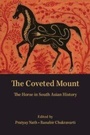
The Coveted Mount
The Horse in South Asian History
Will be published approx. on 31. August 2026
Book
Paperback/Softback
286 pages
978-1-009-70066-5 (ISBN)
Description
From the Asvamedha sacrifice to the mounted police, modernist paintings to the medieval cavalry, oceanic trade to urban transport - horses have occupied a prominent position in almost every sphere of human history in South Asia. The Coveted Mount brings a holistic analysis of the compelling history of this human-nonhuman relationship from prehistory to the twenty-first century. The essays in this book unravel the role of the horse in gift exchanges, colonial cities, astrological knowledge, military campaigns, modern art, political culture, religious belief, veterinary sciences, and oceanic commerce. They do so by interpreting colonial records, ancient epics, epigraphic records, medieval coins, temple friezes, modern art, stone and terracotta sculptures, imperial chronicles, equestrian treatises, and wall paintings. In the process, the essays reveal South Asia's historical connections with the world. Overall, this richly illustrated book shows how, when, and why the horse became the coveted mount of South Asian societies
More details
Language
English
Place of publication
Cambridge
United Kingdom
Target group
College/higher education
Product notice
Paperback (trade)
Illustrations
Worked examples or Exercises
ISBN-13
978-1-009-70066-5 (9781009700665)
Copyright in bibliographic data is held by Nielsen Book Services Limited or its licensors: all rights reserved.
Schweitzer Classification
Other editions
Additional editions
Book
approx. 08/2026
Cambridge University Press
€111.50
Not yet published
Persons
Pratyay Nath is Associate Professor of History, Ashoka University. He is the author of Climate of Conquest: War, Environment, and Empire in Mughal North India (2019) and co-editor of The Early Modern in South Asia: Querying Modernity, Periodization, and History (2022). He is one of the editors of The Medieval History Journal. Ranabir Chakravarti is Professor of Ancient History (Retired), Jawaharlal Nehru University. He is the author of Trade and Traders in Early Indian Society (2020, third edition), Exploring Early India, up to c. A.D. 1300 (2016), and The Pull towards the Coast and Other Essays: The Indian Ocean History and the Subcontinent before 1500 CE (2020).
Content
List of Illustrations; List of Tables; Note on Transliteration; Preface; 1. Introduction: A Brief History of the Horse in South Asia from Prehistory to the Present Ranabir Chakravarti and Pratyay Nath; 2. Galloping towards Brahmanization: Horse and Kingship in the Mahabharata and the Ramaya?a Kanad Sinha; 3. South Asia's Early Interactions and Experiences with the Equine World Ranabir Chakravarti; 4. Situating Horses in the Trade and Politics of Peninsular India, c. 600-1500 Suchandra Ghosh; 5. Between Faith and Fat?: The Horse across Islamicate West Asia and South Asia Kashshaf Ghani; 6. The Logistics of Equine Maritime Transportation: Containing, Watering, and Feeding Horses in Medieval Indian Ocean Trade Elizabeth Lambourn; 7. The Pony Predicament: Equestrian Economy and Courtly Culture in the Mughal Empire Pratyay Nath; 8. Colours and Whorls: The Sanskrit Salihotra Tradition of Horse Treatises in Persian Eva Orthmann; 9. Horses in Unlikely Places: Equine Histories from Early Modern Assam Nandita Goswami; 10. The Horse of Myth and the Horse of History in a Mid-Eighteenth Century Chatri in Jhunjhunu, Rajasthan Saumya Agarwal; 11. From the Marathas to the British: The Waning of the Horse Warriors in Eighteenth-Century India Kaushik Roy; 12. Breeding Equine Animals in Colonial India: Abolition of the 'Bengal Studs' and Its Aftermath, c. 1870s-1920s Aritri Chakrabarti; 13. Paths of Ponies: Labour, Logistics, and the State in Modern Kashmir Inayatullah Din; 14. Run, Pull, Stop: Harnessing Horse Power in Colonial Calcutta Kaustubh Mani Sengupta; 15. Cantering through the Canvas: The Horse in Modern Indian Art Ella Datta; Appendix: The Horse Rabindranath Tagore, translation by Palash Baran Pal; List of Contributors; Index.