

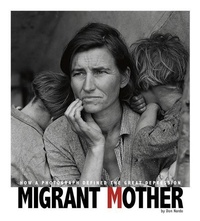
Migrant Mother
How a Photograph Defined the Great Depression
Published on 1. December 2010
Book
Hardback
64 pages
978-0-7565-4397-6 (ISBN)
Description
In the 1930s, photographer Dorothea Lange traveled the American West documenting the experiences of those devastated by the Great Depression. She wanted to use the power of the image to effect political change, but even she could hardly have expected the effect that a simple portrait of a worn-looking woman and her children would have on history. This image, taken at a migrant workers camp in Nipomo, California, would eventually come to be seen as the very symbol of the Depression. The photograph helped reveal the true cost of the disaster on human lives and shocked the U.S. government into providing relief for the millions of other families devastated by the Depression.
More details
Series
Language
English
Place of publication
United States
Target group
Children/juvenile
US School Grade: Kindergarten, Reading Age: From 10 to 12 years, Interest Age: From 10 to 12 years
Product notice
sewn/stitched
Paper over boards
Illustrations
Illustrations, color; Illustrations, black and white
Dimensions
Height: 266 mm
Width: 237 mm
Thickness: 10 mm
Weight
452 gr
ISBN-13
978-0-7565-4397-6 (9780756543976)
Copyright in bibliographic data and cover images is held by Nielsen Book Services Limited or by the publishers or by their respective licensors: all rights reserved.
Schweitzer Classification