

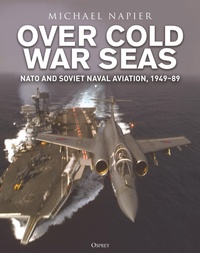
Over Cold War Seas
NATO and Soviet Naval Aviation, 1949-89
Published on 22. May 2025
Book
Hardback
320 pages
978-1-4728-6552-6 (ISBN)
Description
Michael Napier describes the naval air power deployed by NATO, Warsaw Pact and neutral countries throughout the Cold War.
In 1949, an Iron Curtain was drawn across Europe, and the Cold War that ensued between the Western North Atlantic Treaty Organization (NATO) countries and the Soviet-dominated Warsaw Pact lasted through to the fall of the Berlin Wall in 1989. NATO and Warsaw Pact naval forces spread over the world's oceans, and the powerful forces of the US Navy's Second Fleet patrolled the North Atlantic, while the Sixth Fleet was positioned in the Mediterranean. The age of the nuclear-powered supercarrier arrived in 1957 with the USS Forrestal, while the Soviet Union's first aircraft carrier, the Kiev, was commissioned in 1975.
In Over Cold War Seas, respected aviation author Michael Napier examines the naval air power of the major combatant forces as it developed from 1949 through to 1989. All the major naval aircraft types are covered, both fixed wing and helicopters, which entered service in the 1950s for light transport or rescue duties and evolved into multi-purpose machines capable of performing anti-submarine and airborne early warning missions. This detailed text is supported by a wide range of first-hand accounts of operational flying during the Cold War, as well as over 220 high-quality, contemporary images.
In 1949, an Iron Curtain was drawn across Europe, and the Cold War that ensued between the Western North Atlantic Treaty Organization (NATO) countries and the Soviet-dominated Warsaw Pact lasted through to the fall of the Berlin Wall in 1989. NATO and Warsaw Pact naval forces spread over the world's oceans, and the powerful forces of the US Navy's Second Fleet patrolled the North Atlantic, while the Sixth Fleet was positioned in the Mediterranean. The age of the nuclear-powered supercarrier arrived in 1957 with the USS Forrestal, while the Soviet Union's first aircraft carrier, the Kiev, was commissioned in 1975.
In Over Cold War Seas, respected aviation author Michael Napier examines the naval air power of the major combatant forces as it developed from 1949 through to 1989. All the major naval aircraft types are covered, both fixed wing and helicopters, which entered service in the 1950s for light transport or rescue duties and evolved into multi-purpose machines capable of performing anti-submarine and airborne early warning missions. This detailed text is supported by a wide range of first-hand accounts of operational flying during the Cold War, as well as over 220 high-quality, contemporary images.
Reviews / Votes
Over Cold War Seas provides a well-written, highly engaging account of its subject - Napier writes in a very readable manner... There is much in this book to appeal to the enthusiast, academic or those with a professional interest in maritime matters. * The Naval Review *More details
Language
English
Place of publication
United Kingdom
Publishing group
Bloomsbury Publishing PLC
Product notice
sewn/stitched
Cloth over boards
With dust jacket
Illustrations
Fully illustrated with over 240 images throughout in colour and black and white
Dimensions
Height: 248 mm
Width: 197 mm
Thickness: 32 mm
Weight
1148 gr
ISBN-13
978-1-4728-6552-6 (9781472865526)
Copyright in bibliographic data and cover images is held by Nielsen Book Services Limited or by the publishers or by their respective licensors: all rights reserved.
Schweitzer Classification
Other editions
Additional editions
E-Book
05/2025
1st Edition
Osprey Publishing
€32.99
Available for download
Person
Michael Napier is an experienced author with ten published titles to his name, five of which have been published by Osprey, including The Royal Air Force: A Centenary of Operations, In Cold War Skies, Korean Air War, Flashpoints and Afghan Air Wars. He is an ex-RAF Tornado strike/attack pilot who saw front-line service during the Cold War as well as combat experience over Iraq.
Content
Introduction
Chapter 1: Readiness to Defend Ourselves - 1949-59
Chapter 2: Control of the Seas - 1960-69
Chapter 3: The Flag of the Soviet Navy - 1970-79
Chapter 4: A Common Goal - 1980-89
Chapter 5: The Neutrality of a Port - 1949-89
Afterword: Changing in our Favour
Appendix 1: Abbreviations & Acronyms
Appendix 2: Special Arms Systems
Appendix 3: A Culture of Innovation and Creativity
Bibliography
Index
Acknowledgements
Chapter 1: Readiness to Defend Ourselves - 1949-59
Chapter 2: Control of the Seas - 1960-69
Chapter 3: The Flag of the Soviet Navy - 1970-79
Chapter 4: A Common Goal - 1980-89
Chapter 5: The Neutrality of a Port - 1949-89
Afterword: Changing in our Favour
Appendix 1: Abbreviations & Acronyms
Appendix 2: Special Arms Systems
Appendix 3: A Culture of Innovation and Creativity
Bibliography
Index
Acknowledgements