

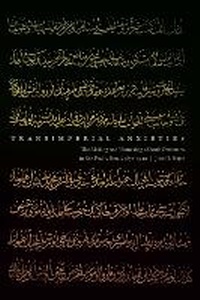
Transimperial Anxieties
The Making and Unmaking of Arab Ottomans in Sao Paulo, Brazil, 1850-1940
Published on 1. June 2023
Book
Hardback
356 pages
978-1-4962-1468-3 (ISBN)
Description
From the late 1850s to the 1940s, multiple colonial projects, often in tension with each other, influenced the formation of local, transimperial, and transnational political identities of Arab Ottoman subjects in the eastern Mediterranean and the Western Hemisphere. Arab Ottoman men, women, and their descendants were generally accepted as whites in a racially stratified Brazilian society. Local anxieties about color and race among white Brazilians and European immigrants, however, soon challenged the white racial status the Brazilian state afforded to Arab Ottoman immigrants.
In Transimperial Anxieties JosE D. Najar analyzes how overlapping transimperial processes of migration and return, community conflicts, and social adaption shaped the gendered, racial, and ethnic identity politics surrounding Arab Ottoman subjects and their descendants in Brazil. Upon arrival to the Brazilian Empire, Arab Ottoman subjects were referred to as turcos, an all-encompassing ethnic identity encased in Islamophobia and antisemitism, which forced the immigrants to renegotiate their identities in order to secure the possibility of upward mobility and national belonging. By exploring the relationship between race and gender in negotiating international and interimperial politics and law, national identity, and religion, Transimperial Anxieties advances understanding of the local and global forces shaping the lives of Arab Ottoman immigrants and their descendants in Brazil, and their reciprocity to state structure.
In Transimperial Anxieties JosE D. Najar analyzes how overlapping transimperial processes of migration and return, community conflicts, and social adaption shaped the gendered, racial, and ethnic identity politics surrounding Arab Ottoman subjects and their descendants in Brazil. Upon arrival to the Brazilian Empire, Arab Ottoman subjects were referred to as turcos, an all-encompassing ethnic identity encased in Islamophobia and antisemitism, which forced the immigrants to renegotiate their identities in order to secure the possibility of upward mobility and national belonging. By exploring the relationship between race and gender in negotiating international and interimperial politics and law, national identity, and religion, Transimperial Anxieties advances understanding of the local and global forces shaping the lives of Arab Ottoman immigrants and their descendants in Brazil, and their reciprocity to state structure.
Reviews / Votes
"By weighing in on so many of the questions that have long animated scholarship on Arab immigration to Brazil, Transimperial Anxieties makes a significant contribution."-Bryan Pitts, Hispanic American Historical Review "[Transimperial Anxieties] is an excellent examination of Arab Ottoman migration to Brazil that highly contributes to the understanding of how this country has the largest population of Arab descendants outside of the Middle East."-Rosana Barbosa, Americas "Through police records, court cases, diplomatic correspondence, and the Brazilian press, Najar presents a plethora of sources through which to rethink Syrian-Lebanese ideas about empire, whiteness, and gender in Brazil."-Michael Rom, H-LatAm "Transimperial Anxieties is an important contribution to the field of Middle East mobility studies. The imperial lens proposed to think through Brazil's early reception of Ottoman subjects is a new and exciting frame for Middle Eastern mobilities in the region. The rich and diverse sources, skillfully set in conversation, highlight important transitions shaping mobile subjects' horizons and identify novel and relevant intersections between their circulations and Brazilian imperial and republican economic and social formations. The author's attention to the gendered dimensions of Brazilian and Syrian Lebanese citizenship in Brazil, to the erasure of women's labor from family narratives of upward mobility, and to the deployment of gendered Islamophobia in repatriation requests are all novel and welcome."-Camila Pastor, author of The Mexican Mahjar: Transnational Maronites, Jews, and Arabs under the French MandateMore details
Language
English
Place of publication
Lincoln
United States
Target group
Professional and scholarly
Product notice
Cloth over boards
Illustrations
4 maps, 7 tables, index
Dimensions
Height: 229 mm
Width: 152 mm
ISBN-13
978-1-4962-1468-3 (9781496214683)
Copyright in bibliographic data and cover images is held by Nielsen Book Services Limited or by the publishers or by their respective licensors: all rights reserved.
Schweitzer Classification
Other editions
Additional editions
Jose D. Najar
Transimperial Anxieties
The Making and Unmaking of Arab Ottomans in Sao Paulo, Brazil, 1850-1940
E-Book
06/2023
1st Edition
University of Nebraska Press
€76.49
Available for download
Person
JosE D. Najar is an assistant professor of history at Southern Illinois University-Carbondale.