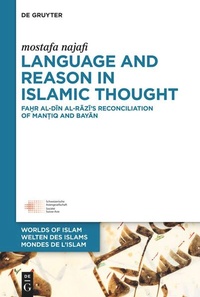
Language and Reason in Islamic Thought
Description
This study delves into Fakhr al-Din al-Razi's (1149-1210) theory of language, a pivotal yet underexplored facet of his intellectual legacy. Moving beyond his interactions with the Avicennian tradition, it positions al-Razi as an independent thinker. The work examines two often misinterpreted dimensions of his thought: his assertion that all concepts are self-evident, challenging traditional epistemology on conceptualization ( ta?awwur ) as advanced by Abu Na?r al-Farabi (870-950) and Ibn Sina (980-1037), and his refinement of ?Abd-l-Qahir al-Gurgani's (1009-1078) theory of linguistic composition ( na?m ), emphasizing language's expressive capacity ( bayan ) and the Qur?an's unique linguistic structure. By analyzing these facets, the study reconstructs al-Razi's comprehensive framework for understanding linguistic phenomena, bridging the Greek-inspired falsafa tradition and the rich Arabic linguistic heritage. This exploration offers scholars and students a nuanced perspective on Islamic intellectual history, highlighting al-Razi's role in harmonizing diverse traditions and advancing a profound theory of linguistic understanding. This theory is essential for engaging with al-Razi's extensive written heritage.
More details
Other editions
Additional editions