

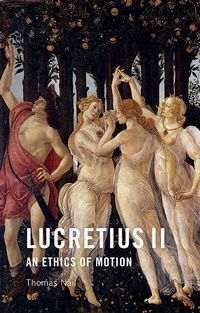
Lucretius II
An Ethics of Motion
73rd Edition
Published on 14. April 2020
Book
Hardback
240 pages
978-1-4744-6663-9 (ISBN)
Description
Human suffering, the fear of death, war, poverty, ecological destruction and social inequality: almost 2,000 ago Lucretius proposed an ethics of motion as simple and stunning solution to these ethical problems. Thomas Nail argues that Lucretius was the first to locate the core of all these ethical ills in our obsession with stasis, our fear of movement and our hatred of matter. Instead of trying to transcend nature with our minds, escape it with our immortal souls and dominate it with our technologies, Lucretius was perhaps the first in the Western tradition to forcefully argue for a completely materialist, immanent and naturalistic ethics based on moving well with and as nature. If we want to survive and live well on this planet, Lucretius taught us, our best chance is not to struggle against nature but to embrace it and facilitate its movement.
Reviews / Votes
Nail's approach to Lucretius' philosophy is quite successful in defining ethics of motion and correlating ethics with life, death, knowledge, aesthetics, and ecology. The methodology, the honorifics, and the structure of Lucretius II: An Ethics of Motion help readers follow the narration and rediscover Lucretius as an ancient philosopher in a combination of the contemporary perspective. I offer people to read Lucretius II: An Ethics of Motion without a doubt if they have concerns about humanity's applications of nature and life itself from an ethical questioning. After reading this book, readers will have new ways of criticizing motion through a philosophical posthumanist philosophy. -- Didem Yilmaz * Journal of Posthumanism * More than just a study of Lucretius, Nail provides a stunning reading of an already fascinating philosopher. By attending carefully to Lucretius's poetics Nail opens an alternative history of philosophy that makes sense of the turbulent present. Rather than a world and beings that undergo motion, motion provides a way of accounting for the genesis of the world. Nail's originally and beautifully composed account of motion generates an ethics worthy of the twenty-first century, allowing us to think of instability as an opportunity for thinking our world anew. -- Claire Colebrook, Penn State University With Lucretius II, Thomas Nail continues his project of re-reading Lucretius' De rerum natura in a startlingly new fashion-as a foundational text in the philosophy of movement. Here Nail, in his own words, 'unfolds another dimension' of Lucretius' text, offering through close-reading and translation of the Latin original a compelling, contemporary ethics and aesthetics of movement. The results of Nail's labor are breathtaking: traditional pieties of scholarship (such as Lucretius' slavish devotion to Epicurus or Epicurean ethics) fall by the wayside, replaced by a Lucretius truly of and for the twenty-first century. -- Wilson H. Shearin, University of MiamiMore details
Edition
73,961 edition
Language
English
Place of publication
Edinburgh
United Kingdom
Target group
Professional and scholarly
Product notice
sewn/stitched
Cloth over boards
Illustrations
28 black and white illustrations
Dimensions
Height: 216 mm
Width: 140 mm
Thickness: 14 mm
Weight
426 gr
ISBN-13
978-1-4744-6663-9 (9781474466639)
Copyright in bibliographic data and cover images is held by Nielsen Book Services Limited or by the publishers or by their respective licensors: all rights reserved.
Schweitzer Classification
Other editions
Additional editions
E-Book
02/2020
Edinburgh University Press
€0.00
Available for download
Person
Thomas Nail is Distinguished Scholar and Professor of Philosophy at the University of Denver. He is the award-winning author of eight prestigious University Press books which cover a wide range of topics including migration, borders, technology, digital media, history, science, economics, contemporary politics and climate change. His current research focuses on the influence of mobility on society and the arts in the 21st century. His work has been translated into ten major languages and cited across more than 20 academic disciplines.His published books are Marx in Motion: A New Materialist Marxism (Oxford University Press, 2020), Lucretius II: An Ethics of Motion (Edinburgh University Press, 2020), Theory of the Image (Oxford University Press, 2019), Being and Motion (Oxford University Press, 2018), Lucretius I: An Ontology of Motion (Edinburgh University Press, 2018), Theory of the Border (Oxford University Press, 2016), The Figure of the Migrant (Stanford University Press, 2015) and Returning to Revolution: Deleuze, Guattari, and Zapatismo (Edinburgh University Press, 2012).He also writes for Aeon: Ideas and Culture, The Huffington Post, Quartz, Pacific Standard: The Science of Society, History News Network and Monthly Review.
Content
IntroductionAn Ethics of MotionLucretian Ethics - Against Stasis, Against ataraxia - Against Transcendent ValuesMethod - Historical Ontology - Close Reading - Translation - ArgumentationConclusion Notes
Book III
1. A Matter of DesireAgainst Religion False FootstepsPedetic Ethics - Materialist Ethics - The Swallow - The Goat - The BeeThe Birth of SpringThe Ecstasy of the SensuousConclusion Notes
2. KinophobiaDeath MattersLiquid Desire Practical Ethics The Mask of Materialism Statism and the Wound of Life Primitive AccumulationOf Stasis, Statues, and StatesHatred of the BodyPietas: Collective Ethics Transcendental MaterialismConclusion Notes
3. Critique of Kinetic Reason
The Material Conditions of ReasonCritique of Harmonic Reason - The Discordant Harmony of the SoulCritique of Pure Emotion - Affect TheoryWeaving the Soul - Critique of Atomic ReasonConclusionNotes
4. Dark MaterialismFolded Matters - The Material Soul - The Folded Soul - The Elemental SoulThe Ethical Indeterminacy of Matter - Touching on NatureOntology and EthicsThe Thermodynamics of Emotion Thermodynamic EthicsThe Dying SoulDecaying LifeThe Movement of Death - The Woven VesselThe Scatology of SpiritMigrant Nature Conclusion Notes
5. The Ethics of MotionDeath has no Value The Kinetic Theory of MemoryEthical Abstraction Ethics for a Leaky Basket Property is Theft! What is the Ethics of Motion? - Pedetic Ethics: Tantalus and Fors Fortuna - Entropic Ethics: Tityos and Leto - Collective Ethics: Sisyphus and FascesConclusion Notes
Book IV
6. Ethics of the SimulacrumThe Language of FlowersProcess Ethics of the Simulacrum Theory of the Simulacrum - DiffractionDrawing Figures - Swerving FiguresMaterial Ecology and Environmental Affect - Weaving String FiguresBrevi spatio, temporis in puncto Conclusion Notes
7. All Perceptions are TrueThe Flow of ThingsInterweaving Sensation Mathesis naturalis The Fault of the Mind Against Scepticism: Against IdealismThe Diffractive Harmony of the SensesThe Language of the WorldThe Ecokinetic ImaginationConclusion Notes
8. The Material UnconsciousAgainst UtilitarianismNature's MindKnowledge and Dreams Libido The Wound of LoveThe Knots of LoveFeminine DesireMaternal Seeds Semele and DionysusConclusion Notes
ConclusionThe New Lucretius The Kinetic LucretiusMotivations and Aspirations Notes
Index
Book III
1. A Matter of DesireAgainst Religion False FootstepsPedetic Ethics - Materialist Ethics - The Swallow - The Goat - The BeeThe Birth of SpringThe Ecstasy of the SensuousConclusion Notes
2. KinophobiaDeath MattersLiquid Desire Practical Ethics The Mask of Materialism Statism and the Wound of Life Primitive AccumulationOf Stasis, Statues, and StatesHatred of the BodyPietas: Collective Ethics Transcendental MaterialismConclusion Notes
3. Critique of Kinetic Reason
The Material Conditions of ReasonCritique of Harmonic Reason - The Discordant Harmony of the SoulCritique of Pure Emotion - Affect TheoryWeaving the Soul - Critique of Atomic ReasonConclusionNotes
4. Dark MaterialismFolded Matters - The Material Soul - The Folded Soul - The Elemental SoulThe Ethical Indeterminacy of Matter - Touching on NatureOntology and EthicsThe Thermodynamics of Emotion Thermodynamic EthicsThe Dying SoulDecaying LifeThe Movement of Death - The Woven VesselThe Scatology of SpiritMigrant Nature Conclusion Notes
5. The Ethics of MotionDeath has no Value The Kinetic Theory of MemoryEthical Abstraction Ethics for a Leaky Basket Property is Theft! What is the Ethics of Motion? - Pedetic Ethics: Tantalus and Fors Fortuna - Entropic Ethics: Tityos and Leto - Collective Ethics: Sisyphus and FascesConclusion Notes
Book IV
6. Ethics of the SimulacrumThe Language of FlowersProcess Ethics of the Simulacrum Theory of the Simulacrum - DiffractionDrawing Figures - Swerving FiguresMaterial Ecology and Environmental Affect - Weaving String FiguresBrevi spatio, temporis in puncto Conclusion Notes
7. All Perceptions are TrueThe Flow of ThingsInterweaving Sensation Mathesis naturalis The Fault of the Mind Against Scepticism: Against IdealismThe Diffractive Harmony of the SensesThe Language of the WorldThe Ecokinetic ImaginationConclusion Notes
8. The Material UnconsciousAgainst UtilitarianismNature's MindKnowledge and Dreams Libido The Wound of LoveThe Knots of LoveFeminine DesireMaternal Seeds Semele and DionysusConclusion Notes
ConclusionThe New Lucretius The Kinetic LucretiusMotivations and Aspirations Notes
Index