

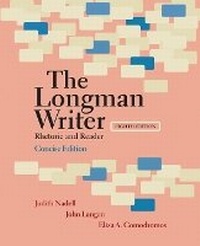
Longman Writer, The, Concise Edition
Rhetoric and Reader
8th Edition
Published on 17. December 2010
Book
Paperback/Softback
528 pages
978-0-205-79837-7 (ISBN)
Description
Clear, step-by-step writing instruction, ample annotated student essays, and extensive practice opportunities for writing have made The Longman Writer one of the most successful methods-of-development guides for college writing.
More details
Other editions
New editions
Judith Nadell | John Langan | Eliza A. Comodromos
Longman Writer, The, Brief Edition Plus Mylab Writing -- Access Card Package
Other
08/2014
9th Edition
Pearson
€122.76
Article is exhausted; no reprint
Previous edition
Judith Nadell | John Langan | Eliza A. Comodromos
Longman Writer, The, Concise Edition, MLA Update Edition
Rhetoric and Reader
Book
01/2010
7th Edition
Pearson
€73.22
Article exhausted; check for reprint
Content
I. THE READING PROCESS
1. Becoming a Strong Reader
Stage 1: Get an Overview of the Selection
Stage 2: Deepen Your Sense of the Selection
Stage 3: Evaluate the Selection
A Model Annotated Reading
Assessing Visuals in a Reading
Assessing an Image: An Example
Assessing a Graph: An Example
Ellen Goodman, "Family Counterculture"
II. THE WRITING PROCESS
2. Getting Started Through Prewriting
Use Prewriting to Get Started
Keep a Journal
The Pre-Reading Journal Entry
Understand the Boundaries of the Assignment
Determine Your Purpose, Audience, Tone, and Point of View
Discover Your Essay's Limited Subject
Generate Raw Material About Your Limited Subject
Organize the Raw Material
Activities: Getting Started Through Prewriting
3. Identifying a Thesis
What Is a Thesis?
Finding a Thesis
Writing an Effective Thesis
Tone and Point of View
Implied Pattern of Development
Including a Plan of Development
1. Don't Write a Highly Opinionated Statement
2. Don't Make an Announcement
3. Don't Make a Factual Statement
4. Don't Make a Broad Statement
Arriving at an Effective Thesis
Placing the Thesis in an Essay
Activities: Identifying a Thesis
4. Supporting the Thesis with Evidence
What Is Evidence?
How Do You Find Evidence?
How the Patterns of Development Help Generate Evidence
Characteristics of Evidence
The Evidence Is Relevant and Unified
The Evidence Is Specific
<
1. Becoming a Strong Reader
Stage 1: Get an Overview of the Selection
Stage 2: Deepen Your Sense of the Selection
Stage 3: Evaluate the Selection
A Model Annotated Reading
Assessing Visuals in a Reading
Assessing an Image: An Example
Assessing a Graph: An Example
Ellen Goodman, "Family Counterculture"
II. THE WRITING PROCESS
2. Getting Started Through Prewriting
Use Prewriting to Get Started
Keep a Journal
The Pre-Reading Journal Entry
Understand the Boundaries of the Assignment
Determine Your Purpose, Audience, Tone, and Point of View
Discover Your Essay's Limited Subject
Generate Raw Material About Your Limited Subject
Organize the Raw Material
Activities: Getting Started Through Prewriting
3. Identifying a Thesis
What Is a Thesis?
Finding a Thesis
Writing an Effective Thesis
Tone and Point of View
Implied Pattern of Development
Including a Plan of Development
1. Don't Write a Highly Opinionated Statement
2. Don't Make an Announcement
3. Don't Make a Factual Statement
4. Don't Make a Broad Statement
Arriving at an Effective Thesis
Placing the Thesis in an Essay
Activities: Identifying a Thesis
4. Supporting the Thesis with Evidence
What Is Evidence?
How Do You Find Evidence?
How the Patterns of Development Help Generate Evidence
Characteristics of Evidence
The Evidence Is Relevant and Unified
The Evidence Is Specific
<