

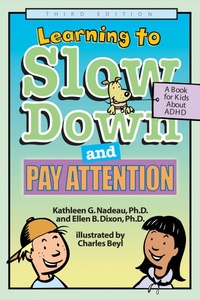
Learning to Slow Down and Pay Attention, 3rd Edition
A Book for Kids about ADHD
3rd Edition
Published on 31. August 2004
Book
Paperback/Softback
96 pages
978-1-59147-155-4 (ISBN)
Description
In this new, third edition of Learning to Slow Down and Pay Attention, the authors have made a number of changes to reflect changes in understanding of ADHD and in our approach to its treatment. For example, in response to growing research on the safety and efficacy of stimulant medication in treating ADHD, we explain more to the child about medication and how it works. Another important change in this edition is an increas in child-centered focus. While the majority of what's written about ADHD emphasizes behaviors that bother adults, this book emphasises those aspects of ADHD that are troublesome to the children, trying to look at the world more from their point of view.
More details
Edition
3rd edition
Language
English
Place of publication
Washington DC
United States
Target group
Children/juvenile
Primary & secondary/elementary & high school
US School Grade: From Third Grade to Sixth Grade, Reading Age: From 10 to 11 years, Interest Age: From 8 to 12 years
Product notice
Paperback (trade)
Illustrations
Illustrations, black and white
Dimensions
Height: 229 mm
Width: 161 mm
Thickness: 7 mm
Weight
218 gr
ISBN-13
978-1-59147-155-4 (9781591471554)
Copyright in bibliographic data and cover images is held by Nielsen Book Services Limited or by the publishers or by their respective licensors: all rights reserved.
Schweitzer Classification
Persons
Kathleen G. Nadeau, PhD, is a clinical psychologist who has specialized in working with kids and adults with AD/HD for many years. She is the founder and director of the Chesapeake ADHD Center in Silver Spring, MD, and the author of many books on AD/HD for kids, teens, adults, and professionals.
Dr. Ellen Dixon is a licensed clinical psychologist who has long specialized in the differential diagnosis and treatment of attention disorders and related neuropsychological conditions. Dr. Dixon practices in the Great Bridge area of Chesapeake, Virginia.
Charles Beyl creates humorous illustrations for books, magazines, and newspapers in his suburban Texas ranch house. Visit him at www.charlesbeyl.com and follow him on Instagram: ChuckBeyl
Dr. Ellen Dixon is a licensed clinical psychologist who has long specialized in the differential diagnosis and treatment of attention disorders and related neuropsychological conditions. Dr. Dixon practices in the Great Bridge area of Chesapeake, Virginia.
Charles Beyl creates humorous illustrations for books, magazines, and newspapers in his suburban Texas ranch house. Visit him at www.charlesbeyl.com and follow him on Instagram: ChuckBeyl
Content
Introduction To Parents and Other Adult Helpers
Just for Kids!
Part 1: A Checklist About Me
At School
With Other Kids
About Myself
At Home
What I Wish Other People Knew
Part 2: Things Other People Can Do to Help Me
People Who Help with School
People Who Help with Friends and Feelings
People Who Help My Parents Understand Me
Doctors Who Help with Medicine
Part 3: Things I Can Do to Help Myself
Ways to Remember
Getting Ready in the Morning
The Easy Way to Clean a Bedroom
Ways to Pay Better Attention at School
Things to Do If I Feel Fidgety
Help with Homework
Learning to Control My Anger
Learning to Ask for Help
Talking Out Problems at Home
Problem Solving
Learning Not to Interrupt
Ways to Make and Keep Friends
Things to Do When Someone Hurts My Feelings
Learning to Relax
When I Have Trouble Going to Sleep
Things I Want to Change
Ways to Feel Good About Me
Part 4: Special Projects with My Parents
Working on Changes Together
A Progress Chart
Notes to Parents
Rewarding Your Child
Special Time
Finding the Resources Your Child Needs
Helpful Websites
Suggested Reading for Parents
Suggested Reading for Kids
Just for Kids!
Part 1: A Checklist About Me
At School
With Other Kids
About Myself
At Home
What I Wish Other People Knew
Part 2: Things Other People Can Do to Help Me
People Who Help with School
People Who Help with Friends and Feelings
People Who Help My Parents Understand Me
Doctors Who Help with Medicine
Part 3: Things I Can Do to Help Myself
Ways to Remember
Getting Ready in the Morning
The Easy Way to Clean a Bedroom
Ways to Pay Better Attention at School
Things to Do If I Feel Fidgety
Help with Homework
Learning to Control My Anger
Learning to Ask for Help
Talking Out Problems at Home
Problem Solving
Learning Not to Interrupt
Ways to Make and Keep Friends
Things to Do When Someone Hurts My Feelings
Learning to Relax
When I Have Trouble Going to Sleep
Things I Want to Change
Ways to Feel Good About Me
Part 4: Special Projects with My Parents
Working on Changes Together
A Progress Chart
Notes to Parents
Rewarding Your Child
Special Time
Finding the Resources Your Child Needs
Helpful Websites
Suggested Reading for Parents
Suggested Reading for Kids