

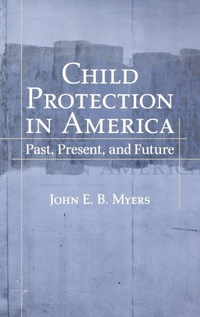
Child Protection in America
Past, Present, and Future
Published on 13. July 2006
Book
Hardback
320 pages
978-0-19-516935-5 (ISBN)
Description
Child abuse and neglect are intractable problems exacting a terrible toll on children and rending the very fabric of our society. What can be done to reduce the suffering? If there were simple solutions to abuse and neglect they would have been discovered long ago. There are no easy answers, but in this vivid history of child protection in America, John E.B. Myers introduces realistic policies that will reduce maltreatment and strengthen the system that protects our children.
Before it is possible to design viable improvements in today's system, it is necessary to understand how it evolved. The sweeping, beautifully written account of child protection in America traces its growth from colonial days to the present--from the rise and gradual disappearance of orphanages, the growth of foster care, the birth of organized child protection in 1874, and the rise of private societies to prevent cruelty, to the twentieth-century transition to government-operated child protection.
Myers goes on to describe the principal causes of child maltreatment, including intergenerational transmission of violence, poverty, substance abuse, cultural violence, excessive corporal punishment, sexual deviance, evolution, mental illness, and domestic violence. Once the causes of maltreatment are clear, it is possible to create solutions. Some of the proposals outlined have been in play for more than a century, while others are new. Policies to combat poverty, expand nurse home visiting programs, increase access to day care, strengthen a sense of community, outlaw corporal punishment, rethink our attitude toward alcohol, and lower the toxicity in popular culture are rooted in a deep understanding of the cycle of violence and challenge traditional ways of thinking.
Since it will never be possible to prevent all maltreatment, it is critical to strengthen the existing child protection system. Attainable reforms such as dealing with the lingering effects of racism in the child welfare, reworking funding mechanisms, refocusing leadership, creating a less adversarial system, strengthening foster care, and reinventing the juvenile court point to flaws in our system but demonstrate that progress is possible.
This provocative book will challenge all those concerned with children's welfare to move toward real solutions that will make life better for America's most vulnerable children.
Before it is possible to design viable improvements in today's system, it is necessary to understand how it evolved. The sweeping, beautifully written account of child protection in America traces its growth from colonial days to the present--from the rise and gradual disappearance of orphanages, the growth of foster care, the birth of organized child protection in 1874, and the rise of private societies to prevent cruelty, to the twentieth-century transition to government-operated child protection.
Myers goes on to describe the principal causes of child maltreatment, including intergenerational transmission of violence, poverty, substance abuse, cultural violence, excessive corporal punishment, sexual deviance, evolution, mental illness, and domestic violence. Once the causes of maltreatment are clear, it is possible to create solutions. Some of the proposals outlined have been in play for more than a century, while others are new. Policies to combat poverty, expand nurse home visiting programs, increase access to day care, strengthen a sense of community, outlaw corporal punishment, rethink our attitude toward alcohol, and lower the toxicity in popular culture are rooted in a deep understanding of the cycle of violence and challenge traditional ways of thinking.
Since it will never be possible to prevent all maltreatment, it is critical to strengthen the existing child protection system. Attainable reforms such as dealing with the lingering effects of racism in the child welfare, reworking funding mechanisms, refocusing leadership, creating a less adversarial system, strengthening foster care, and reinventing the juvenile court point to flaws in our system but demonstrate that progress is possible.
This provocative book will challenge all those concerned with children's welfare to move toward real solutions that will make life better for America's most vulnerable children.
Reviews / Votes
"This compelling work traces child protection efforts from early colonial America to the present...Social workers and social work educators will find this work valuable, especially in its explanation of various organizations and larger-than-life reformers...all pivotal to this subject's history."--Doody's"This compelling work traces child protection efforts from early colonial America to the present...Social workers and social work educators will find this work valuable, especially in its explanation of various organizations and larger-than-life reformers...all pivotal to this subject's history."--Doody's
More details
Language
English
Place of publication
New York
United States
Target group
Professional and scholarly
Illustrations
32 halftones
Dimensions
Height: 240 mm
Width: 161 mm
Thickness: 22 mm
Weight
646 gr
ISBN-13
978-0-19-516935-5 (9780195169355)
Copyright in bibliographic data and cover images is held by Nielsen Book Services Limited or by the publishers or by their respective licensors: all rights reserved.
Schweitzer Classification
Other editions
Additional editions
E-Book
06/2006
1st Edition
OUP eBook
€61.99
Available for download
E-Book
06/2006
1st Edition
OUP eBook
€61.99
Available for download
Person
John E.B. Myers is one of the nation's leading authorities on legal aspects of child abuse, domestic violence, and elder abuse.
Content
Part I The Road Traveled: The History of Child Protection in America ; 1. Child Protection from the Colonial Period to 1875 ; 2. Societies for the Prevention of Cruelty to Children ; 3. Child Protection from 1900 to 1962 ; 4. Child Protection from 1962 to Present ; 5. Child Sexual Abuse ; Part II The Road Ahead: Child Protection Today, Causes of Child Abuse and Neglect, Roadblocks to Progress, Reducing Maltreatment, Improving Child Protection ; 6. Causes of Child Abuse and Neglect ; 7. Reducing Abuse and Neglect ; 8. Improving the Child Protection System