

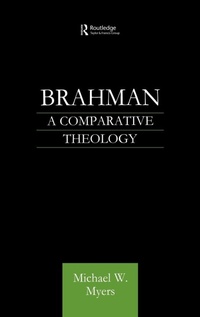
Brahman
A Comparative Theology
1st Edition
Published on 15. December 2000
Book
Hardback
282 pages
978-0-7007-1257-1 (ISBN)
Description
This book is a critique of western systematic theology. It borrows insights from India and other traditions; it is not a synthesis of religious traditions. The book includes two parts, method and systematics. It examines the traditional topics of systematic theology '- topics such as the existence and nature of God, revelation and reason, religious ethics and human practice, the relation of God to the world, Christology, and eschatology - and allows these topics to grow in conversation with India and to change according to dialogical insights. The book is prompted by a perceived need to cross the boundaries between western and Indian worldviews in a systematic and comprehensive way. The purpose of the book is to enable scholars worldwide to extend their theological resources and to look anew at the problems and prospects of a comparative, systematic theology.
More details
Language
English
Place of publication
London
United Kingdom
Publishing group
Taylor & Francis Ltd
Target group
College/higher education
Professional and scholarly
Dimensions
Height: 240 mm
Width: 161 mm
Thickness: 20 mm
Weight
593 gr
ISBN-13
978-0-7007-1257-1 (9780700712571)
Copyright in bibliographic data and cover images is held by Nielsen Book Services Limited or by the publishers or by their respective licensors: all rights reserved.
Schweitzer Classification
Other editions
Additional editions
Book
07/2016
1st Edition
Routledge
€71.70
Shipment within 10-20 days
E-Book
09/2013
1st Edition
Routledge
€64.49
Available for download
E-Book
09/2013
1st Edition
Routledge
€64.49
Available for download
Person
Michael Myers
Content
Chapter 1 Introduction; Chapter 2 Theological Worldviews: One-dimensional, Two-dimensional, or Holistic?; Chapter 3 Vedic Holism and Theology; Chapter 4 ?ruti: Revelation Through Sacred Text; Chapter 5 Is Brahman God?; Chapter 6 The World: Cosmic Order and the Problem of Evil; Chapter 7 Humanity, Comparative Christology and Eschatology;