


Confrontation and Compromise
Presidential and Congressional Leadership, 2001-2006
Published on 10. July 2007
Book
Hardback
282 pages
978-0-7425-4059-0 (ISBN)
Description
The authors examine the relationship between President George W. Bush and the U.S. Congress to explore political leadership in American politics. Six case studies make clear that individual leaders in both the Congress and the administration provide the direction, coherence, and energy that leadership requires. Two case studies concentrate on solutions devised to resolve long-standing policy issues that had been the center of controversy even before Bush's election: education reform and campaign finance reform. Two cases focus on issues that arose in the aftermath of 9/11: intelligence reform and creation of the Department of Homeland Security. Two are drawn from Bush's second term: the response to Hurricane Katrina and the failed effort to reform Social Security.
The authors draw several general conclusions. Direction, coherence and energy are provided by multiple national leaders, not just by the president. Like other presidents, Bush sought to dominate national policy-making but ultimately found it necessary to effect tactical and policy reversals, actions inconsistent with his image as an uncompromising man of principle. Legislative success often depended on the skills of Bush's allies and particularly on the efforts of bipartisan and sometimes bicameral "tandems" who forged compromises across party and institutional lines that made progress possible.
The authors draw several general conclusions. Direction, coherence and energy are provided by multiple national leaders, not just by the president. Like other presidents, Bush sought to dominate national policy-making but ultimately found it necessary to effect tactical and policy reversals, actions inconsistent with his image as an uncompromising man of principle. Legislative success often depended on the skills of Bush's allies and particularly on the efforts of bipartisan and sometimes bicameral "tandems" who forged compromises across party and institutional lines that made progress possible.
Reviews / Votes
Through their detailed examinations of the most important recent Washington battles, Mycoff and Pika illuminate how individual leadership and institutional frameworks shaped a critical set of political decisions. Students and instructors will appreciate the engaging case studies as well as the accessible, original synthesis of contemporary policy making. -- Scott R. Meinke, Bucknell University Mycoff and Pika have captured the nuts and bolts of Beltway decision-making. An informative read for undergraduates interested in policymaking and politics. -- Colleen J. Shogan, George Mason University These case studies are...quite useful as a supplement to texts that focus on one institution or the other, and might also be considered for use in courses on national policy making. The authors' attempt to explain leadership patterns and strategies that go beyond party leadership is very useful and might serve as the foundation of a research agenda that could produce a valuable scholarly contribution as well as a pedagogical tool. * APSA Legislative Studies Section Newsletter, Book Notes * Mycoff and Pika produce a thoughtful examination of contemporary presidential-congressional relations through the lens of leadership theory....The book is a useful contribution to the leadership study literature. Recommended. * Choice Reviews * Confrontation and Compromise shows what it is like to make law on difficult issues in a period of crisis politics and narrow party margins. The cases are well chosen; the lessons clearly set forth. It is text for our time. -- Charles O. Jones, Professor Emeritus, University of Wisconsin-MadisonMore details
Language
English
Place of publication
United States
Publishing group
Bloomsbury Publishing Plc
Dimensions
Height: 240 mm
Width: 161 mm
Thickness: 20 mm
Weight
590 gr
ISBN-13
978-0-7425-4059-0 (9780742540590)
Copyright in bibliographic data and cover images is held by Nielsen Book Services Limited or by the publishers or by their respective licensors: all rights reserved.
Schweitzer Classification
Other editions
Additional editions
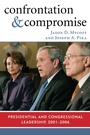
Jason D. Mycoff | Joseph A. Pika
Confrontation and Compromise
Presidential and Congressional Leadership, 2001-2006
E-Book
07/2007
1st Edition
Rowman & Littlefield Publishers
€43.49
Available for download
Persons
Jason D. Mycoff is assistant professor at the University of Delaware, teaches courses on American politics and research methods. His research focuses on congressional committees in the lawmaking process and institutional relationships between the legislative, executive, and judicial branches.
Joseph A. Pika is professor at the University of Delaware, teaches American politics with a research specialization in the presidency. Pika is co-author (with John Maltese) of The Politics of the Presidency and The Presidential Contest. In addition to his academic career, Pika has served on numerous state committees and task forces including eight years on the Delaware State Board of Education, four as president of the Board.
Joseph A. Pika is professor at the University of Delaware, teaches American politics with a research specialization in the presidency. Pika is co-author (with John Maltese) of The Politics of the Presidency and The Presidential Contest. In addition to his academic career, Pika has served on numerous state committees and task forces including eight years on the Delaware State Board of Education, four as president of the Board.
Content
Part 1 The Search for Leadership
Chapter 2 The Institutional Balance in 2001
Part 3 No Child Left Behind
Chapter 4 Background: Previous Education Reform Efforts
Chapter 5 Bush's Early Proposal-Taking the Initiative
Chapter 6 The Early Legislative Process
Chapter 7 Passage on the House and Senate Floor
Chapter 8 Themes of Individual Leadership on Eucation Reform
Part 9 Intelligence Redesign and Reform
Chapter 10 Background: The September 11th Terrorist Attacks
Chapter 11 Early Efforts to Launch a 9/11 Inquiry
Chapter 12 Establishing the 9/11 Commission
Chapter 13 The Commission's Final Report
Chapter 14 Pre-Election Efforts to Act on the COmmission's Report
Chapter 15 Post-Election Efforts to Act on the Commission's Report
Chapter 16 Themes of Individual Leadership on Intelligence Reform
Part 17 Campaign Finance Reform
Chapter 18 Background: Previous Campaign Finance Reform Efforts
Chapter 19 The 1996 Presidential Election
Chapter 20 The Bi-Partisan Campaign Reform Act: 1997-2000
Chapter 21 BCRA, President Bush and Enron: Changing the Political Dynamic
Chapter 22 Themes of Individual Leadership
Part 23 Creating the Department of Homeland Security
Chapter 24 Background: The Homeland Security Network
Chapter 25 The September 11th Terrorist Attacks
Chapter 26 The Debate Over Department Status
Chapter 27 House Passage
Chapter 28 Senate Passage
Chapter 29 Final Passage
Chapter 30 Themes of Individual Leadership on Homland Security
Part 31 Hurricane Katrina
Chapter 32 Background: The Emergency Management System
Chapter 33 Preparing for and Responding to Hurricane Katrina
Chapter 34 Themes of Individual Leadership on Katrina
Part 35 Social Security Reform and Leadership in American Government
Chapter 36 Background: Program Design and Early Reform Effirts
Chapter 37 Social Security: FDR through Regan
Chapter 38 President Bush Enters the Fray
Chapter 39 Action in Congress
Chapter 40 Individual Leadership on Social Security Reform
Chapter 41 Origins of Leadership: Evidence from Six Cases
Chapter 42 Leadership Themes
Chapter 43 Leadership in American National Government
Chapter 2 The Institutional Balance in 2001
Part 3 No Child Left Behind
Chapter 4 Background: Previous Education Reform Efforts
Chapter 5 Bush's Early Proposal-Taking the Initiative
Chapter 6 The Early Legislative Process
Chapter 7 Passage on the House and Senate Floor
Chapter 8 Themes of Individual Leadership on Eucation Reform
Part 9 Intelligence Redesign and Reform
Chapter 10 Background: The September 11th Terrorist Attacks
Chapter 11 Early Efforts to Launch a 9/11 Inquiry
Chapter 12 Establishing the 9/11 Commission
Chapter 13 The Commission's Final Report
Chapter 14 Pre-Election Efforts to Act on the COmmission's Report
Chapter 15 Post-Election Efforts to Act on the Commission's Report
Chapter 16 Themes of Individual Leadership on Intelligence Reform
Part 17 Campaign Finance Reform
Chapter 18 Background: Previous Campaign Finance Reform Efforts
Chapter 19 The 1996 Presidential Election
Chapter 20 The Bi-Partisan Campaign Reform Act: 1997-2000
Chapter 21 BCRA, President Bush and Enron: Changing the Political Dynamic
Chapter 22 Themes of Individual Leadership
Part 23 Creating the Department of Homeland Security
Chapter 24 Background: The Homeland Security Network
Chapter 25 The September 11th Terrorist Attacks
Chapter 26 The Debate Over Department Status
Chapter 27 House Passage
Chapter 28 Senate Passage
Chapter 29 Final Passage
Chapter 30 Themes of Individual Leadership on Homland Security
Part 31 Hurricane Katrina
Chapter 32 Background: The Emergency Management System
Chapter 33 Preparing for and Responding to Hurricane Katrina
Chapter 34 Themes of Individual Leadership on Katrina
Part 35 Social Security Reform and Leadership in American Government
Chapter 36 Background: Program Design and Early Reform Effirts
Chapter 37 Social Security: FDR through Regan
Chapter 38 President Bush Enters the Fray
Chapter 39 Action in Congress
Chapter 40 Individual Leadership on Social Security Reform
Chapter 41 Origins of Leadership: Evidence from Six Cases
Chapter 42 Leadership Themes
Chapter 43 Leadership in American National Government