

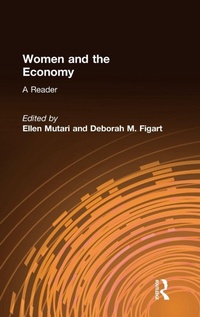
Women and the Economy: A Reader
A Reader
1st Edition
Published on 31. May 2003
Book
Hardback
368 pages
978-0-7656-0995-3 (ISBN)
Description
This reader is designed for use as a primary or supplementary text for courses on women's role in the economy. Both interdisciplinary and heterodox in its approach, it showcases feminist economic analyses that utilize insights from institutionalism as well as neoclassical economics. Including both classic and newer selections from a broad range of areas, each section includes an introduction with background material, as well as discussion questions, exercises, and lists of key terms an further readings.
More details
Language
English
Place of publication
London
United Kingdom
Publishing group
Taylor & Francis Ltd
Target group
College/higher education
Professional and scholarly
Illustrations
study questions, further reading, index
Dimensions
Height: 240 mm
Width: 161 mm
Thickness: 24 mm
Weight
719 gr
ISBN-13
978-0-7656-0995-3 (9780765609953)
Copyright in bibliographic data and cover images is held by Nielsen Book Services Limited or by the publishers or by their respective licensors: all rights reserved.
Schweitzer Classification
Other editions
Additional editions
E-Book
03/2015
Routledge
€59.49
Available for download
E-Book
03/2015
Routledge
€59.49
Available for download
Book
05/2003
1st Edition
Routledge
€72.30
Shipment within 15-20 days
Persons
Ellen Mutari, Deborah M. Figart
Content
1: Methodologies for Studying Women and the Economy; 1: Rethinking Economics Through a Feminist Lens; 2: Revisiting Class; 3: Feminist Economics; 2: The Rise and Fall of Separate Spheres; 4: Breadwinners and Other Workers; 5: Industrialization, Female Labor Force Participation, and the Modern Division of Labor by Sex; 6: Men and Monotony; 7: Exploring "Present Through the Past"; 8: Marriage, Children, and Women's Employment; 3: Households and Social Reproduction; 9: The Economic Risks of Being a Housewife; 10: For Love or Money-Or Both?; 11: Student Attitudes Toward Roles of Women and Men; 12: The Household as a Focus for Research; 4: Mainstream Approaches to Labor Market Outcomes; 13: The Earnings Gap and Family Choices; 14: Race and Gender Wage Gaps in the Market for Recent College Graduates; 15: Motor Bus Deregulation and the Gender Wage Gap; 16: "That Single-Mother Element"; 5: Heterodox Approaches to Labor Market Outcomes; 17: The Political Economy of Labor Market Discrimination; 18: Black Women's Breakthrough into Clerical Work; 19: Gender as More Than a Dummy Variable; 20: Just Checking It Out; 6: Policies Affecting Women, Work, and Families; 21: Single, with Children; 22: The Minimum Wage Increase; 23: The Challenge of Comparable Worth; 24: Curing Child Poverty in the United States; 25: Why Americans Need Family Leave Benefits and How They Can Get Them; 7: The Gendered Impact of Economic Development and Globalization; 26: Gender and International Labor Standards in the World Economy; 27: Globalization, Gender, and the Davos Man; 28: Development, Gender, and the Environment; 29: Convention on the Elimination of All Forms of Discrimination Against Women