

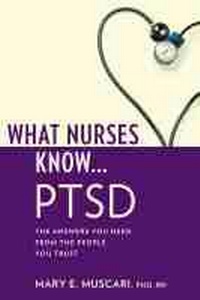
What Nurses Know...PTSD
Published on 12. April 2012
Book
Paperback/Softback
192 pages
978-1-936303-06-9 (ISBN)
Description
An estimated 7.8% of all Americans will experience Post-Traumatic Stress Disorder (PTSD) at some point in their lives. Roughly 5.2 million people have PTSD during the course of a given year. PTSD can affect anyone - from war veterans and abuse victims to persons directly or indirectly traumatised by other catastrophes including crime, natural disasters and serious accidents.
Getting treatment as soon as possible after PTSD symptoms develop may help prevent PTSD from developing into a long-term condition. Treatment may take the form of medication, pychotherpay or alternative medicine.
What Nurses Know.PTSD - Covers all the treatments available today
- Examines the causes of the PTSD, describes the symptoms and the effects of PTSD on individuals with the condition and their families
- Looks at associated problems such as substance abuse
- Explains what makes PTSD different in children and adolescents
- Shows how to manage stress
- Shows how to talk to your health care provider
- Shows how to get help - from both traditional and nontraditional sources
About the series:
Nurses hold a critical role in modern health care that goes beyond their day-to-day duties. They share more information with patients than any other provider group and are alongside patients twenty-four hours a day, seven days a week, offering understanding of complex health issues, holistic approaches to ailments and advice for the patient that extends to the family.
Nurses themselves are a powerful tool in the healing process. What Nurses Know gives down-to-earth information, addresses consumers as equal partners in their care and explains clearly what readers need and want to know to understand their condition and move forward with their lives.
Getting treatment as soon as possible after PTSD symptoms develop may help prevent PTSD from developing into a long-term condition. Treatment may take the form of medication, pychotherpay or alternative medicine.
What Nurses Know.PTSD - Covers all the treatments available today
- Examines the causes of the PTSD, describes the symptoms and the effects of PTSD on individuals with the condition and their families
- Looks at associated problems such as substance abuse
- Explains what makes PTSD different in children and adolescents
- Shows how to manage stress
- Shows how to talk to your health care provider
- Shows how to get help - from both traditional and nontraditional sources
About the series:
Nurses hold a critical role in modern health care that goes beyond their day-to-day duties. They share more information with patients than any other provider group and are alongside patients twenty-four hours a day, seven days a week, offering understanding of complex health issues, holistic approaches to ailments and advice for the patient that extends to the family.
Nurses themselves are a powerful tool in the healing process. What Nurses Know gives down-to-earth information, addresses consumers as equal partners in their care and explains clearly what readers need and want to know to understand their condition and move forward with their lives.
More details
Language
English
Place of publication
New York, NY
United States
Weight
456 gr
ISBN-13
978-1-936303-06-9 (9781936303069)
Copyright in bibliographic data and cover images is held by Nielsen Book Services Limited or by the publishers or by their respective licensors: all rights reserved.
Schweitzer Classification
Person
Mary E. Muscari, PhD, RN, is a specialist in child health, mental health, and forensics. She is an Associate Professor at the Decker School of Nursing, Binghamton, NY, and Affiliate Faculty in the Department of Criminology, Regis University, CO. Mary received degrees from Adelphi University, Duquesne University, and Columbia University. In addition to her research and teaching, she has published widely both professionally and with several books for consumers, including <i>Not My Kid: 21 Steps to Raising a Nonviolent Child</i>, <i>Not My Kid 2: Protecting Your Children from the 21 Threats of the 21st Century</i>, and <i>Let Kids Be Kids: Rescuing Childhood</i>. Mary has been interviewed by publications as diverse as <i>Parents Magazine</i>, <i>Family Circle</i>, <i>The Christian Science Monitor</i>, <i>Better Homes & Gardens</i>, <i>The Futurist</i>, <i>USA Today</i>, <i>The Philadelphia Inquirer</i>, and the <i>Los Angeles Times</i>. She has been interviewed on NPR and other national and international media sources such as the well-known radio program ""Ask Heloise."" She currently lives in Hawley, PA.
Content
1. PTSD: What it is and isn't; 2. Why Me? Understanding How You Developed PTSD; 3. Symptoms: When Yesterday is Everyday; 4. Collateral Damage: The Long-term Effects of PTSD; 5 The Usual Suspects: Traditional Treatments for PTSD; 6. Different Strokes: Alternative Treatments for PTSD; 7. Partners: Helping Your Healhtcare Provider Help You; 8. Stress: The Good, the Bad and dealing With it All; 9. Broken Bonds: When Your Spouse/Partner has PTSD; 10. Kid Stuff: When Your Child has PTSD