

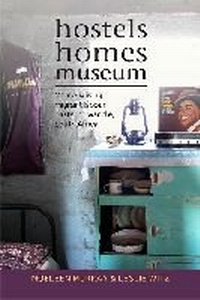
Hostels, homes, museum
Memorialising Migrant Labour Pasts in Lwandle, South Africa
Published on 30. May 2014
Book
Paperback/Softback
208 pages
978-1-77582-077-2 (ISBN)
Description
During the apartheid years in South Africa, hostels and compounds were built to house migrant labour. One such hostel was Lwandle, some 40 kilometres outside Cape Town. Literally translated from isiXhosa as `the sea', because it was built in sight of the Atlantic Ocean, Lwandle was conceptualised as a temporary labour camp laid out by town planners and engineers in the form of diagonal, parallel blocks of barracks around a central open space. Administered as a compound, the labourers' lives were regulated and policed through apartheid legislation around population influx control, the pass system and the policy of Coloured Labour Preference.
In the 1990s, as part of the post-apartheid `hostels to homes' scheme, such hostels were reconfigured and refurbished into homes for family accommodation. A steering committee in Lwandle decided to preserve one dormitory, block 6, hostel 33, as a museum. Officially opened in May 2000, the primary purpose of the Lwandle Migrant Labour Museum was to serve as a reminder of the system of migrant labour, single-sex hostels and the control of black workers through that infamous identity document - the pass book.
This book explores the museum's makings, the creation of histories through the oral and the visual and the rehabilitation of structures as museums, ending with the celebration - and discomfort - of the museum's tenth birthday in 2010.
Recommended for: General readers and scholars interested in post-apartheid history, museums, migrancy, restoration architecture, community development, urban studies and design.
In the 1990s, as part of the post-apartheid `hostels to homes' scheme, such hostels were reconfigured and refurbished into homes for family accommodation. A steering committee in Lwandle decided to preserve one dormitory, block 6, hostel 33, as a museum. Officially opened in May 2000, the primary purpose of the Lwandle Migrant Labour Museum was to serve as a reminder of the system of migrant labour, single-sex hostels and the control of black workers through that infamous identity document - the pass book.
This book explores the museum's makings, the creation of histories through the oral and the visual and the rehabilitation of structures as museums, ending with the celebration - and discomfort - of the museum's tenth birthday in 2010.
Recommended for: General readers and scholars interested in post-apartheid history, museums, migrancy, restoration architecture, community development, urban studies and design.
More details
Language
English
Place of publication
Kenwyn
South Africa
Publishing group
Juta & Company Ltd
Target group
College/higher education
Professional and scholarly
Dimensions
Height: 228 mm
Width: 152 mm
ISBN-13
978-1-77582-077-2 (9781775820772)
Copyright in bibliographic data and cover images is held by Nielsen Book Services Limited or by the publishers or by their respective licensors: all rights reserved.
Schweitzer Classification
Persons
Leslie Witz is a Professor in the History Department at the University of the Western Cape, South Africa. His major research centres around how different histories are created and represented in the public domain through memorials, museums, festivals and tourism. His books include Apartheid's Festival: Contesting South Africa's National Pasts (Indiana University Press, 2003).
Noeleen Murray holds a joint appointment between the Centre for Humanities Research and the Department of Geography and Environmental Studies. Her research offers a reading of architecture and urban planning under and after apartheid. She was the principal editor of Desire Lines - Space, Memory and Identity in the Postapartheid City (2007).
Noeleen Murray holds a joint appointment between the Centre for Humanities Research and the Department of Geography and Environmental Studies. Her research offers a reading of architecture and urban planning under and after apartheid. She was the principal editor of Desire Lines - Space, Memory and Identity in the Postapartheid City (2007).