

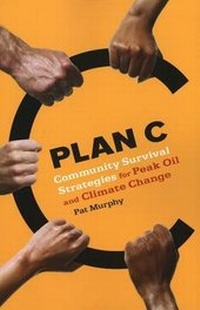
Plan C
Community Survival Strategies for Peak Oil and Climate Change
Published on 1. June 2008
Book
Paperback/Softback
304 pages
978-0-86571-607-0 (ISBN)
Description
Library Journal This book goes further than any of the other titles considered here, both in terms of the deep societal ills it examines and the radical solutions it proposes. It is not just peak oil, but peak America Murphy takes as his subject. His plan is based on "curtailment" - we must not only make drastic cuts in our use of fossil fuels, but also cut our rates of consumption, buy less, use less, want less, waste less, watch less televsion, eat better foods, give up driving private cars, and become, in short, "a nation with new values." Murphy's work is perhaps easy to dismiss - i.e. fringe, hairshirted- but if, as the best scientific evidence suggests, the world is already in a dangerous state of overshoot, then its message may not be that far out after all. Reviewed by Robert Eagan Canadian Moneysaver Plan C is an indispensable resource for anyone interested in living a lower energy, saner, more sustainable lifestyle. If you accept the plethora of research supporting energy depletion (oil, gas and coal) and climate change globally, you must read this book. Written without big business or a political bias, this objective author provides the framework for future development.
Shrewd investors beware. Reviewed by Dale Ennis Concerns over climate change and energy depletion are increasing exponentially. Mainstream solutions still assume a panacea that will cure our climate ills without requiring any serious modification to our way of life. Plan C explores the risks inherent in trying to continue our energy-intensive lifestyle. Using dirtier fossil fuels (Plan A) or switching to renewable energy sources (Plan B) allows people to remain complacent in the face of potential global catastrophe. Dramatic lifestyle change is the only way to begin to create a sustainable, equitable world. The converging crises of Peak Oil, climate change, and increasing inequity are presented in a clear, concise manner, as are the twin solutions of community (where cooperation replaces competition) and curtailment (deliberately reducing consumption of consumer goods). Plan C shows how each person's individual choices can dramatically reduce CO2 emissions. It offers specific strategies in the areas of food, transportation, and housing.
One chapter analyzes the decimation of the Cuban economy when the USSR stopped oil exports in 1990 and provides an inspiring vision for a low-energy way of living. Plan C is an indispensable resource for anyone interested in living a lower-energy, saner, and more sustainable lifestyle. Pat Murphy is the executive director of The Community Solution. He co-wrote and co-produced the award-winning documentary The Power of Community: How Cuba Survived Peak Oil, has initiated four major Peak Oil conferences, and has given numerous presentations and workshops on the subject. He has extensive construction experience and developed low-energy buildings during the nation's first oil crisis.
Shrewd investors beware. Reviewed by Dale Ennis Concerns over climate change and energy depletion are increasing exponentially. Mainstream solutions still assume a panacea that will cure our climate ills without requiring any serious modification to our way of life. Plan C explores the risks inherent in trying to continue our energy-intensive lifestyle. Using dirtier fossil fuels (Plan A) or switching to renewable energy sources (Plan B) allows people to remain complacent in the face of potential global catastrophe. Dramatic lifestyle change is the only way to begin to create a sustainable, equitable world. The converging crises of Peak Oil, climate change, and increasing inequity are presented in a clear, concise manner, as are the twin solutions of community (where cooperation replaces competition) and curtailment (deliberately reducing consumption of consumer goods). Plan C shows how each person's individual choices can dramatically reduce CO2 emissions. It offers specific strategies in the areas of food, transportation, and housing.
One chapter analyzes the decimation of the Cuban economy when the USSR stopped oil exports in 1990 and provides an inspiring vision for a low-energy way of living. Plan C is an indispensable resource for anyone interested in living a lower-energy, saner, and more sustainable lifestyle. Pat Murphy is the executive director of The Community Solution. He co-wrote and co-produced the award-winning documentary The Power of Community: How Cuba Survived Peak Oil, has initiated four major Peak Oil conferences, and has given numerous presentations and workshops on the subject. He has extensive construction experience and developed low-energy buildings during the nation's first oil crisis.
More details
Language
English
Place of publication
Gabriola Island
United States
Product notice
Paperback (trade)
Dimensions
Height: 229 mm
Width: 153 mm
Weight
497 gr
ISBN-13
978-0-86571-607-0 (9780865716070)
Copyright in bibliographic data and cover images is held by Nielsen Book Services Limited or by the publishers or by their respective licensors: all rights reserved.
Schweitzer Classification
Other editions
Additional editions
E-Book
09/2021
New Society Publishers
€18.18
Available for download
Person
Pat Murphy is the executive director of The Community Solution (aka Community Service, Inc.). He co-wrote and co-produced the award-winning documentary The Power of Community: How Cuba Survived Peak Oil, has initiated four major U.S. conferences on solutions to peak oil, and has given numerous presentations and workshops on the subject.
Content
Preface; Fossil Fuel Depletion and Climate Change; Peak Oil -- Peak Economy; Peak Oil -- Peak Empire; Peak America -- Is Our Time Up?; Peak Technology and the Private Car; Peak Technology and Electric Power; Corporations, Media and Disinformation; Plan C -- Curtailment and Community; Post-Peak -- Change Starts with Us; The Energy Impact of Buildings; The Smart Jitney -- Rapid, Realistic Transport; Food, Feed, Fuel and CO2; Food, Health and Survival; Changing Practices; Kicking the Media Habit; Localisation; Reviving and Renewing Community; Conclusion; Index.