

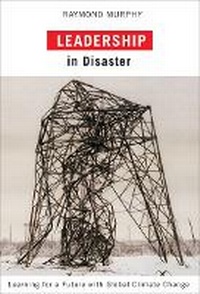
Leadership in Disaster
Learning for a Future with Global Climate Change
Will be published approx. on 1. April 2009
Book
Hardback
480 pages
978-0-7735-3524-4 (ISBN)
Description
Murphy explores whether technological development inadvertently constructed new vulnerabilities, thereby manufacturing a natural disaster. As the extreme weather in the ice storm may foreshadow what will occur with global warming, Leadership in Disaster also explores the politics, economics, ethics, and cultural predispositions involved in climate change, investigating how modern societies create both the risks they assume are acceptable and the burden of managing them. An innovative comparison with Amish communities, where the same extreme weather had trivial consequences, is instructive for avoiding future socio-economic catastrophes.
Reviews / Votes
"Leadership in Disaster is beautifully written and deserving of a wide readership." Peter Dickens, University of Cambridge "A welcome addition to the field of disaster research which draws together classical and modern theories to argue for an epistemological expansion of the social sciences." Canadian Journal of SociologyMore details
Language
English
Place of publication
Montreal
Canada
Target group
College/higher education
Professional and scholarly
Illustrations
3 b&w photos
Dimensions
Height: 229 mm
Width: 152 mm
Weight
880 gr
ISBN-13
978-0-7735-3524-4 (9780773535244)
Copyright in bibliographic data and cover images is held by Nielsen Book Services Limited or by the publishers or by their respective licensors: all rights reserved.
Schweitzer Classification
Other editions
Additional editions
E-Book
04/2009
MQUP
€76.49
Available for download
E-Book
04/2009
McGill-Queen's University Press
€41.99
Available for download
Person
Raymond Murphy is emeritus professor of sociology, University of Ottawa, president of the Environment and Society Research Committee of the International Sociological Association, and the author of numerous books, including Social Closure and Rationality and Nature.