

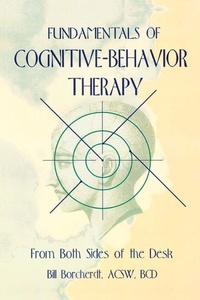
Fundamentals of Cognitive-Behavior Therapy
From Both Sides of the Desk
1st Edition
Published on 10. November 1999
Book
Paperback/Softback
262 pages
978-0-7890-0944-9 (ISBN)
Description
A central premise of cognitive-behavior therapy is that individuals bring themselves to their emotions and behavior by how they think. Fundamentals of Cognitive-Behavior Therapy helps therapists and counselors address the important questions of cognitive-behavior therapy--what to ask, how to respond to difficult exchanges with clients, and why to make chosen responses--and helps them get at the cognitive base of clients'emotional disturbances more quickly. The book is unique in that it presents more than a textbook approach to problemsolving; it provides a wealth of data and philosophy that enables clinicians to respond more helpfully to client problems. Readers of Fundamentals of Cognitive-Behavior Therapy learn what therapeutic questions to ask and what responses to give to psychotherapy clients'common difficult questions and statements in ways that better contribute to the long-range happiness and survival of the client. This insightful book encourages therapists to help clients help themselves by showing therapists effective, detailed, responses that help clients answer their own questions and come to their own conclusions about why they react certain ways to specific situations. Among the 164 troublesome client questions and statements to which Borcherdt offers rational responses are:
"But I don't feel like it."
"I can't make a decision, because I don't know if it is the right one."
"Why won't things work out for me?"
"I can't help it."
"I have so many problems and feelings that I don't know where to begin dealing with them."
"Why don't I change? Why do I keep goofing up?"
"Whose side are you on anyway?"Through this detailed look at the therapist's role in heightening client awareness of self, Author Bill Borcherdt, who has thirty years'experience as a therapist, provides a storehouse of practical, hands-on tact and tactics which encourages a problem-solving focus while preventing conversational drifting. He gives readers insights on:
basic principles of emotional reeducation and well-being
psychotherapy as teaching
overcoming emotional disturbance tendencies
getting individuals to answer their own questions so they can expose their own potential solutions
understanding and overcoming clients'resistance to change
a client-centered method of problem-solving interviewingThe book illustrates that the primary medium of the therapist's influence is funneled through both direct questions asked of the client and through the therapist's responses to client questions and commentary. Suggested questions and responses in the book help practitioners prepare for interviews and better understand clients'resistance to change. Designed for students in training as well as the beginning or seasoned practitioner, Fundamentals of Cognitive-Behavior Therapy includes 172 rational questions and 164 rational responses, each with commentary that shows the clinical justifications for asking these questions and offering these responses.Social workers, psychologists, guidance counselors, psychiatrists, nurses in mental health settings, marital/family counselors, alcohol and other drug abuse counselors, and other human service professionals will find Fundamentals of Cognitive-Behavior Therapy filled with practical and insightful guidelines for better helping their psychotherapy clients.
"But I don't feel like it."
"I can't make a decision, because I don't know if it is the right one."
"Why won't things work out for me?"
"I can't help it."
"I have so many problems and feelings that I don't know where to begin dealing with them."
"Why don't I change? Why do I keep goofing up?"
"Whose side are you on anyway?"Through this detailed look at the therapist's role in heightening client awareness of self, Author Bill Borcherdt, who has thirty years'experience as a therapist, provides a storehouse of practical, hands-on tact and tactics which encourages a problem-solving focus while preventing conversational drifting. He gives readers insights on:
basic principles of emotional reeducation and well-being
psychotherapy as teaching
overcoming emotional disturbance tendencies
getting individuals to answer their own questions so they can expose their own potential solutions
understanding and overcoming clients'resistance to change
a client-centered method of problem-solving interviewingThe book illustrates that the primary medium of the therapist's influence is funneled through both direct questions asked of the client and through the therapist's responses to client questions and commentary. Suggested questions and responses in the book help practitioners prepare for interviews and better understand clients'resistance to change. Designed for students in training as well as the beginning or seasoned practitioner, Fundamentals of Cognitive-Behavior Therapy includes 172 rational questions and 164 rational responses, each with commentary that shows the clinical justifications for asking these questions and offering these responses.Social workers, psychologists, guidance counselors, psychiatrists, nurses in mental health settings, marital/family counselors, alcohol and other drug abuse counselors, and other human service professionals will find Fundamentals of Cognitive-Behavior Therapy filled with practical and insightful guidelines for better helping their psychotherapy clients.
More details
Language
English
Place of publication
New York
United States
Publishing group
Taylor & Francis Inc
Target group
College/higher education
Professional and scholarly
Dimensions
Height: 229 mm
Width: 152 mm
Thickness: 14 mm
Weight
388 gr
ISBN-13
978-0-7890-0944-9 (9780789009449)
Copyright in bibliographic data and cover images is held by Nielsen Book Services Limited or by the publishers or by their respective licensors: all rights reserved.
Schweitzer Classification
Other editions
Additional editions
Carlton Munson | Bill Borcherdt
Fundamentals of Cognitive-Behavior Therapy
From Both Sides of the Desk
E-Book
04/2014
1st Edition
Routledge
€63.49
Available for download
Carlton Munson | Bill Borcherdt
Fundamentals of Cognitive-Behavior Therapy
From Both Sides of the Desk
E-Book
04/2014
1st Edition
Routledge
€63.49
Available for download
Carlton Munson | Bill Borcherdt
Fundamentals of Cognitive-Behavior Therapy
From Both Sides of the Desk
Book
07/1996
1st Edition
Routledge
€200.56
Article not available at the moment
Persons
Munson, Carlton; Borcherdt, Bill
Content
Contents
Section I: Asking Rational Questions and Getting Therapeutic Answers: A Cognitive Behavior Interviewing Guide
(Part I) Introduction
(Part II) "You" Questions: Rational Inquiries That Active-Directly Seek Out the Client's View
Advantages of "You" Questions
Samples of "You" Questions
Conclusion
Section II: Rational Rebuttles: Fielding Client Curve Balls With Lesser Margin for Error
(Part I) Introduction
Eleven Irrational Ideas
Eleven Counter Ideas
(Part II) How to Handle Troublesome Questions and Statements
Seventeen Factors to Consider When Faced With Difficult Questions/Statements
Typical Troublesome Scenarios
Conclusion
Index
Section I: Asking Rational Questions and Getting Therapeutic Answers: A Cognitive Behavior Interviewing Guide
(Part I) Introduction
(Part II) "You" Questions: Rational Inquiries That Active-Directly Seek Out the Client's View
Advantages of "You" Questions
Samples of "You" Questions
Conclusion
Section II: Rational Rebuttles: Fielding Client Curve Balls With Lesser Margin for Error
(Part I) Introduction
Eleven Irrational Ideas
Eleven Counter Ideas
(Part II) How to Handle Troublesome Questions and Statements
Seventeen Factors to Consider When Faced With Difficult Questions/Statements
Typical Troublesome Scenarios
Conclusion
Index