

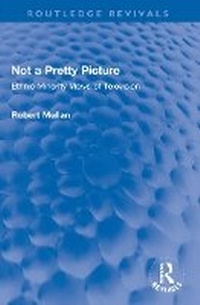
Not a Pretty Picture
Ethnic Minority Views of Television
1st Edition
Published on 24. August 2023
Book
Paperback/Softback
124 pages
978-1-032-23464-9 (ISBN)
Description
Originally published in 1996, ethnic minorities in the UK made up over 5% of the population yet were hardly represented in the hundreds of hours of terrestrial broadcast television each week. The blatant racism of The Black and White Minstrel Show was over, but more subtle forms of racism were piped into our living rooms in an endless stream of white-dominated programming. 'Comedies' and soaps presented non-whites as a sort of joke humanity - stereotypical, simple and amusingly childish. Serious programmes swelled on the negative aspects of ethnicity: race as a problem, cultural clashes and language barriers. Above all - not white equals not normal.
For many years critics of popular television argued that such imbalance was harmful. The lack of positive non-white TV role models for children to identify with was leading to growing alienation and disaffection. Ethnic minorities increasingly defined themselves in opposition to white institutions. They were turning towards separate channels - narrow-casting - provided to meet their own TV needs.
Based on both extensive survey research and interviews with actual viewers, Not a Pretty Picture investigates the whole issue of TV and ethnic minority viewers at the time: their viewing choices, their criticisms, their feeling about the way they are portrayed. The conclusions are damning: for most of Britain's ethnic minority communities TV was a white medium, predominantly controlled by whites, portraying white culture and denying non-whites a voice. Not a Pretty Picture, however, provides a voice for these views and a valuable insight into the way ethnic minorities see TV. Today it can be read in its historical context, to see how far we have come, as well as what still needs to be done.
For many years critics of popular television argued that such imbalance was harmful. The lack of positive non-white TV role models for children to identify with was leading to growing alienation and disaffection. Ethnic minorities increasingly defined themselves in opposition to white institutions. They were turning towards separate channels - narrow-casting - provided to meet their own TV needs.
Based on both extensive survey research and interviews with actual viewers, Not a Pretty Picture investigates the whole issue of TV and ethnic minority viewers at the time: their viewing choices, their criticisms, their feeling about the way they are portrayed. The conclusions are damning: for most of Britain's ethnic minority communities TV was a white medium, predominantly controlled by whites, portraying white culture and denying non-whites a voice. Not a Pretty Picture, however, provides a voice for these views and a valuable insight into the way ethnic minorities see TV. Today it can be read in its historical context, to see how far we have come, as well as what still needs to be done.
More details
Series
Language
English
Place of publication
London
United Kingdom
Publishing group
Taylor & Francis Ltd
Target group
College/higher education
Professional and scholarly
Postgraduate, Professional, and Undergraduate
Dimensions
Height: 234 mm
Width: 156 mm
Weight
400 gr
ISBN-13
978-1-032-23464-9 (9781032234649)
Copyright in bibliographic data and cover images is held by Nielsen Book Services Limited or by the publishers or by their respective licensors: all rights reserved.
Schweitzer Classification
Other editions
Additional editions
Book
02/2022
1st Edition
Routledge
€141.35
Shipment within 10-20 days
E-Book
02/2022
1st Edition
Routledge
€41.99
Available for download
E-Book
02/2022
1st Edition
Routledge
€41.99
Available for download
Person
Robert Mullan
Content
Introduction. Part 1: Mass Media and Ethnic Relations 1. Background Part 2: The Survey 2. Television in the Home 3. Questions of Impartiality and Bias 4. Offence and Regulation 5. The Importance of Television Part 3: The Future of Television and Ethnic Relations 6. Alternative Television. Bibliography.