

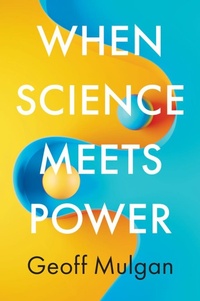
When Science Meets Power
Published on 24. November 2023
Book
Hardback
261 pages
978-1-5095-5306-8 (ISBN)
Description
Science and politics have collaborated throughout human history and science is repeatedly invoked today in political debates, from pandemic management to climate change.
Leading policy analyst Geoff Mulgan here calls attention to the growing frictions caused by the expanding - and unsolicited - authority being heaped upon science. As science increasingly competes with politics, a defined plan of cooperation is urgently needed.
Mulgan outlines science and politics as two distinct, imperfect forms of collective intelligence. Whereas science is ordered around what we know and what is, politics engages what we feel and what matters. Politics functions because it recognises the limits of power, the need for delegation and expert advice. The intellectual logic of science, on the other hand, focuses on detail and depth, struggling to place its knowledge in wider contexts. The crux of the matter, Mulgan argues, is how can we ensure that crucial decisions taken in democracies are both well informed and legitimate?
Rooted in understanding that science and politics are not just fields of ideas but also fields of action, this book proposes ways to ensure that the two work effectively together.
Science and politics have collaborated throughout human history and science is repeatedly invoked today in political debates, from pandemic management to climate change.
Leading policy analyst Geoff Mulgan here calls attention to the growing frictions caused by the expanding - and unsolicited - authority being heaped upon science. As science increasingly competes with politics, a defined plan of cooperation is urgently needed.
Mulgan outlines science and politics as two distinct, imperfect forms of collective intelligence. Whereas science is ordered around what we know and what is, politics engages what we feel and what matters. Politics functions because it recognises the limits of power, the need for delegation and expert advice. The intellectual logic of science, on the other hand, focuses on detail and depth, struggling to place its knowledge in wider contexts. The crux of the matter, Mulgan argues, is how can we ensure that crucial decisions taken in democracies are both well informed and legitimate?
Rooted in understanding that science and politics are not just fields of ideas but also fields of action, this book proposes ways to ensure that the two work effectively together.
Leading policy analyst Geoff Mulgan here calls attention to the growing frictions caused by the expanding - and unsolicited - authority being heaped upon science. As science increasingly competes with politics, a defined plan of cooperation is urgently needed.
Mulgan outlines science and politics as two distinct, imperfect forms of collective intelligence. Whereas science is ordered around what we know and what is, politics engages what we feel and what matters. Politics functions because it recognises the limits of power, the need for delegation and expert advice. The intellectual logic of science, on the other hand, focuses on detail and depth, struggling to place its knowledge in wider contexts. The crux of the matter, Mulgan argues, is how can we ensure that crucial decisions taken in democracies are both well informed and legitimate?
Rooted in understanding that science and politics are not just fields of ideas but also fields of action, this book proposes ways to ensure that the two work effectively together.
Science and politics have collaborated throughout human history and science is repeatedly invoked today in political debates, from pandemic management to climate change.
Leading policy analyst Geoff Mulgan here calls attention to the growing frictions caused by the expanding - and unsolicited - authority being heaped upon science. As science increasingly competes with politics, a defined plan of cooperation is urgently needed.
Mulgan outlines science and politics as two distinct, imperfect forms of collective intelligence. Whereas science is ordered around what we know and what is, politics engages what we feel and what matters. Politics functions because it recognises the limits of power, the need for delegation and expert advice. The intellectual logic of science, on the other hand, focuses on detail and depth, struggling to place its knowledge in wider contexts. The crux of the matter, Mulgan argues, is how can we ensure that crucial decisions taken in democracies are both well informed and legitimate?
Rooted in understanding that science and politics are not just fields of ideas but also fields of action, this book proposes ways to ensure that the two work effectively together.
More details
Edition
1
Language
English
Place of publication
Oxford
United Kingdom
Publishing group
John Wiley and Sons Ltd
Dimensions
Height: 232 mm
Width: 161 mm
Thickness: 31 mm
Weight
560 gr
ISBN-13
978-1-5095-5306-8 (9781509553068)
Copyright in bibliographic data and cover images is held by Nielsen Book Services Limited or by the publishers or by their respective licensors: all rights reserved.
Schweitzer Classification
Other editions
Additional editions
Person
Geoff Mulgan is Professor of Collective Intelligence, Social Innovation and Public Policy at University College London.
<b>Geoff Mulgan</b> is Professor of Collective Intelligence, Social Innovation and Public Policy at University College London.
<b>Geoff Mulgan</b> is Professor of Collective Intelligence, Social Innovation and Public Policy at University College London.
Content
Introduction: The science politics paradox
<b>PART I. HOW SCIENCE MEETS POWER</b>
Chapter 1: Uneasy interdependence
Chapter 2: What is science and how does it connect to power?
<b>PART II. HOW STATES HAVE USED SCIENCE</b>
Chapter 3: The ages of techne and episteme
Chapter 4: Science bites back
Chapter 5: The scientist's view of politics as corruptor
<b>PART III. THE PROBLEM OF TRUTHS AND LOGICS</b>
Chapter 6: Master, servant and multiple truths
Chapter 7: Clashing logics
<b>PART IV. THE PROBLEM OF INSTITUTIONS: SOLVING THE SCIENCE-POLITICS PARADOX</b>
Chapter 8: Split sovereignty, or the role of knowledge in corroding the supremacy of politics
Chapter 9: Democracy meets science
Chapter 10: The flawed reasoning of democracy and its remedies
<b>PART V. THE PROBLEM OF SCALES: BORDERLESS SCIENCE IN A WORLD OF BORDERS</b>
Chapter 11: The clash between global and national interest
Chapter 12: Governing global science and technology
<b>PART VI. THE PROBLEMS OF MEANING: SYNTHESIS, WISDOM AND JUDGEMENT</b>
Chapter 13: Science, synthesis and metacognition
Chapter 14: The dialectics of what is and what matters
<b>PART I. HOW SCIENCE MEETS POWER</b>
Chapter 1: Uneasy interdependence
Chapter 2: What is science and how does it connect to power?
<b>PART II. HOW STATES HAVE USED SCIENCE</b>
Chapter 3: The ages of techne and episteme
Chapter 4: Science bites back
Chapter 5: The scientist's view of politics as corruptor
<b>PART III. THE PROBLEM OF TRUTHS AND LOGICS</b>
Chapter 6: Master, servant and multiple truths
Chapter 7: Clashing logics
<b>PART IV. THE PROBLEM OF INSTITUTIONS: SOLVING THE SCIENCE-POLITICS PARADOX</b>
Chapter 8: Split sovereignty, or the role of knowledge in corroding the supremacy of politics
Chapter 9: Democracy meets science
Chapter 10: The flawed reasoning of democracy and its remedies
<b>PART V. THE PROBLEM OF SCALES: BORDERLESS SCIENCE IN A WORLD OF BORDERS</b>
Chapter 11: The clash between global and national interest
Chapter 12: Governing global science and technology
<b>PART VI. THE PROBLEMS OF MEANING: SYNTHESIS, WISDOM AND JUDGEMENT</b>
Chapter 13: Science, synthesis and metacognition
Chapter 14: The dialectics of what is and what matters