

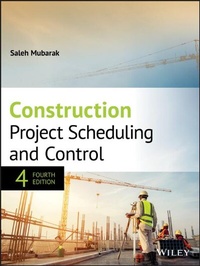
Construction Project Scheduling and Control
4th Edition
Published on 19. September 2019
Book
Hardback
608 pages
978-1-119-49983-1 (ISBN)
Description
Ensure successful construction projects through effective project scheduling and control
The success of a construction project is dependent on a schedule that is well-defined yet flexible to allow for inevitable delays or changes. Without an effective schedule, projects often run over budget and deadlines are missed which can jeopardize the success of the project. The updated Construction Project Scheduling and Control, Fourth Edition is a comprehensive guide that examines the analytical methods used to devise an efficient and successful schedule for construction projects of all sizes. This Fourth Edition describes the tools and methods that make projects run smoothly, with invaluable information from a noted career construction professional.
Construction Project Scheduling and Control, Fourth Edition offers construction professionals a redefined Critical Path Method (CPM) and updated information on Building Information Modeling (BIM) and how it impacts project control. This Fourth Edition includes worked problems and scheduling software exercises that help students and practicing professionals apply critical thinking to issues in construction scheduling. This updated edition of Construction Project Scheduling and Control:
* Includes a revised chapter on the Critical Path Method (CPM) and an all-new chapter on project scheduling and control as viewed through the owner's perspective
* Provides numerous worked problems and construction scheduling exercises
* Includes an expanded glossary and list of acronyms
* Offers updated instructor materials including PowerPoint lecture slides and an instructor's manual
Written for undergraduate and graduate students in construction management, civil engineering, and architecture, as well as practicing construction management professionals, Construction Project Scheduling and Control, Fourth Edition is updated to reflect the latest practices in the field.
More details
Other editions
New editions
Saleh A. Mubarak
Construction Project Scheduling and Control
Book
08/2025
5th Edition
Wiley
€146.50
Shipment within 15-20 days
Additional editions
Saleh A. Mubarak
Construction Project Scheduling and Control
E-Book
07/2019
4th Edition
Wiley
€123.99
Available for download
Saleh A. Mubarak
Construction Project Scheduling and Control
E-Book
07/2019
4th Edition
Wiley
€117.99
Available for download
Previous edition
Saleh A. Mubarak
Construction Project Scheduling and Control
Book
04/2015
3rd Edition
Wiley
€135.00
Article exhausted; check for reprint
Person
SALEH MUBARAK, PHD, is an independent consultant in the field of construction project management, based in Tampa, Florida, focusing on training, writing, public speaking, and consulting. He is a former professor at a number of universities and an active member of PMI and AACE International. He served on the PMI committee that created the professional scheduler certification exam, PMI-SP. He has 30 years of diversified and international experience including academia and industry; private and public sectors. He is also the author of How to Estimate with RSMeans Data, published by Wiley.
Content
Preface
Preface to the First Edition
Chapter 1: Introduction
Planning and Scheduling
What is a project?
Project Management Plan
Project Control
Why Schedule Projects?
The Scheduler
Scheduling and Project Management
Chapter 1 Exercises
Chapter 2: Bar (Gantt) Charts
Definition and Introduction
Advantages of Bar Charts
Disadvantages of Bar Charts
Chapter 2 Exercises
Chapter 3: Basic Networks
Definition and Introduction
Arrow Networks
Node Networks
Lags and Leads
Recommendation for Proper Node Diagram Drawing
Comparison of Arrow and Node Networks
Networks versus Bar Charts
Time-Scaled Logic Diagrams
Chapter 3 Exercises
Chapter 4: The Critical Path Method (CPM)
Introduction
Steps Required to Schedule a Project
Supplemental Steps
Resource Allocation and Leveling
Beginning-of-Day or End-of-Day Convention
The CPM Explained through Examples
The Critical Path
Definitions
Lags and Leads in CPM Networks
Further Discussion of Float
Project Schedule "Health Check"
Effect of the Imposed Finish Date on the Schedule
Logic and Constraints
The "Hub" Concept
Chapter 4 Exercises
Chapter 5: Precedence Networks
Definition and Introduction
The Four Types of Relationships
The Percent Complete Approach
Fast-Track Projects
A Parallel Predecessor?
CPM Calculations for Precedence Diagrams
Interruptible Activities
The Simplistic Approach
The Detailed Approach
Contiguous (Uninterruptible) Activities
Multi-Stage Activities
Types of Lags
Final Discussion
Chapter 5 Exercises
Chapter 6: Resource Allocation and Resource Leveling
Introduction
The Three Categories of Resources
What Is Resource Allocation?
Resource Leveling
Do All Resources Need to be Leveled?
Multi-project Resource Leveling
Leveling Resources in a Project (Examples)
Resource Leveling from the General Contractor's Perspective
Resource Calendars
Resource Smoothing
Work Space as a Resource
Materials Management
Chapter 6 Exercises
Chapter 7: Schedule Updating and Project Control
Introduction
The Need for Schedule Updating
Project Control Defined
Schedule Updating
Updating Schedules and Pay Requests
Steps for Updating a Schedule
Change in the Critical Path
Project Control
Measuring Work Progress
Methods for Determining Percent Complete for Individual Activities
Methods for Determining Percent Complete for the Entire Project
Percent Complete for a Work Package
Progress Payments and Percent Complete
Earned Value Analysis
Chapter 7 Exercises
Chapter 8: Schedule Compression and Time-Cost Trade-Off
Introduction
How Important is it to Finish on Schedule?
Setting Priorities
Accelerating a Project
How Can the Duration of a Project Be Shortened?
Construction and Modularization
How Does Accelerating a Project Work?
Direct and Indirect Costs
How to Choose the Best Method for Project Acceleration?
Effect of Acceleration on Direct Cost
Effect of Acceleration on Indirect Cost
Effect of Acceleration on Total Cost
Issues to Be Considered When Accelerating a Project
Recovery Schedules
Accelerating Projects Using Computers
Potential Issues with Uncoordinated Project Acceleration
Optimum Project Scheduling
Chapter 8 Exercises
Chapter 9: Reports and Presentations
Introduction
The Difference between Reports and Presentations
Skills Necessary for Giving Good Presentations
The Power of Presentations
Reviewing Reports before and after Printing
General Tips on Printing Reports
Summary Reports
Paper or Electronic Reports?
E-Reports
Communications in the International Environment
Chapter 9 Exercises
Chapter 10: Scheduling as Part of the Project Management Effort
Introduction
Project Objectives
Defining and Measuring Project Success
Scheduling and Estimating
Evolution of a Cost Estimate and a Schedule for a Project
Estimate-Generated Schedules
Cost-Loaded Schedules
Estimating and Accounting
Scheduling and Accounting
Scheduling and Change Orders
Paperless Project Management
Procurement Management
Management of Submittals
The Master Schedule and Subschedules
Multiproject Management
Time Contingency and Management Options
Chapter 10 Exercises
Chapter 11: Other Scheduling Methods
Introduction
Program Evaluation and Review Technique (PERT)
Graphical Evaluation and Review Technique (GERT)
Linear Scheduling Method (LSM)
LSM and Project Schedule Acceleration
Graphical Path Method (GPM)
Relationship Diagramming Method (RDM)
The Critical Path Segments (CPS) Scheduling Technique
Chapter 11 Exercises
Chapter 12: Dynamic Minimum Lag Relationship
Introduction
Similarity between the DML Concept and the Linear Scheduling Method (LSM)
How Does DML Work?
DML Relationship in CPM Calculations
Conclusion
Chapter 12 Exercises
Chapter 13: The Critical Path Definition: Revisited
Introduction
What is the "Longest Path"?
The Critical Path through Examples
Resource Allocation and Resource Leveling
The AACE Recommended Practices No. 49R-06 and 92R-17
Proposed Definition of the Critical Path
Chapter 14: Construction Delays and Other Claims
Preface
Introduction
Delay Claims
Reasons for Claims
Force Majeure
Types of Delays
Scheduling Mistakes Related to Delay Claims
Project Documentation
Delay Claims Resolution
The Importance of CPM Schedules in Delay Claims
Methods of Schedule Analysis
As-built schedule
Updated Impact Schedule
As-Planned Schedule
Comparison Schedule
Accelerated Schedule
Who Owns the Float
Chapter 14 Exercises
Chapter 15: Schedule Risk Management
Introduction
Types of Risk in Construction Projects
Schedule Risk Types
Definition of Risk Terms
Importance of Good Planning for Risk Management
Importance of Good CPM Scheduling Practices for Risk Assessment
Risk Shifting in Contracts
Schedule Risk Management Steps
Expected Value
Application in Scheduling
Examples of Risk Adjustment
Conclusion
Chapter 15 Exercises
Chapter 16: BIM-Based 4D Modeling and Scheduling
Overview of the Building Information Modeling (BIM)
Differences between BIM and CAD
Definition and Benefits of 3D Modeling
Definition and Benefits of 4D Modeling
Steps for Creating 4D Models
Definition and Benefits of 5D ModelingCase Study
Lean Construction
Chapter 16 Exercises
Chapter 17: Project Scheduling for Owners
Introduction
Types of Owners
Project Initiation Process
Project Cost to an Owner
The Owner's Organization
Project Planning
Using Available Tools
Best Value
The Evolution of the Schedule
Choosing the Contract Type and Delivery Method
Contract Templates
Owner-Contractor Trust Relationship
Project Financing
Requiring and Approving a Schedule
Owning and Managing Float
Managing the Contractor
Managing Scope / Changes
Schedule Updating and Percent Complete
Delay Claims: Avoidance and Resolution
Chapter 17 Exercises
Appendix A: Computer Project
General Guidelines
Cost Loading
Updating the Project
Change Order
Resource Leveling
Schedule Compression
Schedule Compression 2
Delay Claim 1: Unforeseen Conditions
Delay Claim 2: Change in the Owner's Requirements
Appendix B: Sample Reports
Tabular Reports
Graphic Reports
Abbreviations
Glossary
References
Bibliography
Index