

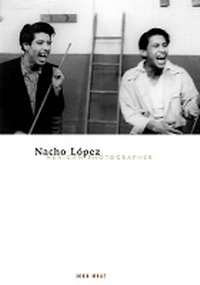
Nacho Lopez, Mexican Photographer
Will be published approx. on 7. February 2003
Book
Paperback/Softback
272 pages
978-0-8166-4048-5 (ISBN)
Description
Reveals the career of an influential but under-appreciated photojournalist
Photographer Nacho LOpez was Mexico's Eugene Smith, fusing social commitment with searing imagery to dramatize the plight of the helpless, the poor, and the marginalized in the pages of glossy illustrated magazines. Even today, LOpez's photographs forcefully belie the picturesque exoticism that is invariably presented as the essence of Mexico.
In Nacho LOpez, Mexican Photographer, John Mraz offers the first full-length study in English of this influential photojournalist and provides a close visual analysis of more than fifty of LOpez's most important photographs. Mraz first sets LOpez's work in the historical and cultural context of the authoritarian presidentialism that characterized Mexican politics in the 1950s, the cult of wealth and celebrity promoted by Mexico's professional photographers, and the government's attempts to modernize and industrialize Mexico at almost any cost. Mraz skillfully explores the implications of LOpez's imagery in this setting: the extent to which his photographs might constitute further victimization of his downtrodden subjects, the relationship between them and the middle-class readers of the magazines for which LOpez worked, and the success with which his photographs challenged Mexico's economic and political structures.
Mraz contrasts the photos LOpez took with those that were selected by his editors for publication. He also compares LOpez's images with his theories about documentary photography, and considers LOpez's photographs alongside the work of Robert Capa, Dorothea Lange, Henri Cartier-Bresson, and SebastiAo Salgado. LOpez's imagery is further analyzed in relation to the Mexican Golden Age cinema inspired by Sergei Eisenstein, the pioneering digital imagery of Pedro Meyer, and the work of Manuel Alvarez Bravo, who Mraz provocatively argues was the first Mexican photographer to take an anti-picturesque stance.
The definitive English-language assessment of Nacho LOpez's career, this volume also explores such broader topics as the nature of the photographic essay and the role of the media in effecting social change.
Photographer Nacho LOpez was Mexico's Eugene Smith, fusing social commitment with searing imagery to dramatize the plight of the helpless, the poor, and the marginalized in the pages of glossy illustrated magazines. Even today, LOpez's photographs forcefully belie the picturesque exoticism that is invariably presented as the essence of Mexico.
In Nacho LOpez, Mexican Photographer, John Mraz offers the first full-length study in English of this influential photojournalist and provides a close visual analysis of more than fifty of LOpez's most important photographs. Mraz first sets LOpez's work in the historical and cultural context of the authoritarian presidentialism that characterized Mexican politics in the 1950s, the cult of wealth and celebrity promoted by Mexico's professional photographers, and the government's attempts to modernize and industrialize Mexico at almost any cost. Mraz skillfully explores the implications of LOpez's imagery in this setting: the extent to which his photographs might constitute further victimization of his downtrodden subjects, the relationship between them and the middle-class readers of the magazines for which LOpez worked, and the success with which his photographs challenged Mexico's economic and political structures.
Mraz contrasts the photos LOpez took with those that were selected by his editors for publication. He also compares LOpez's images with his theories about documentary photography, and considers LOpez's photographs alongside the work of Robert Capa, Dorothea Lange, Henri Cartier-Bresson, and SebastiAo Salgado. LOpez's imagery is further analyzed in relation to the Mexican Golden Age cinema inspired by Sergei Eisenstein, the pioneering digital imagery of Pedro Meyer, and the work of Manuel Alvarez Bravo, who Mraz provocatively argues was the first Mexican photographer to take an anti-picturesque stance.
The definitive English-language assessment of Nacho LOpez's career, this volume also explores such broader topics as the nature of the photographic essay and the role of the media in effecting social change.
More details
Series
Language
English
Place of publication
Minnesota
United States
Target group
College/higher education
Dimensions
Height: 254 mm
Width: 178 mm
Thickness: 15 mm
ISBN-13
978-0-8166-4048-5 (9780816640485)
Copyright in bibliographic data and cover images is held by Nielsen Book Services Limited or by the publishers or by their respective licensors: all rights reserved.
Schweitzer Classification
Person
John Mraz is research professor at the Instituto de Ciencias Sociales y Humanidades at the Universidad AutOnoma de Puebla in Mexico.