

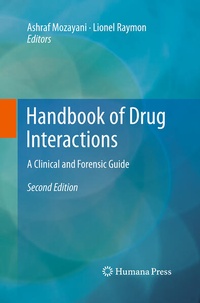
Handbook of Drug Interactions
Description
Existing chapters from the first edition have in most cases been updated and reworked to reflect new data or incorporate better tables and diagrams, as well as to include recent drugs and formulations. Recent references have been inserted too. The handbook features extra material on illicit drug use, with a new chapter tackling the subject that covers cocaine, amphetamines and cannabis, among others. The section on the central nervous system also deals with a number of drugs that are abused illicitly, such as benzodiazepines, opiates flunitrazepam and GHB, while so-called 'social' drugs such as alcohol and nicotine are still discussed in the book's section on environmental and social pharmacology. Focusing as before on detailed explanation and incorporating both pharmacokinetic and pharmacodynamic drug interactions, this book will continue to be a lodestar for health and forensic professionals as well as students.
Reviews / Votes
From the reviews of the second edition:
"This second edition outlines the most current information and highlights drugs of abuse while providing detailed information on the mechanisms of drug-drug interactions from a forensic toxicology perspective. . Any health or forensic professional could use this book to explain the underlying pharmacology of drug-drug interactions. . laboratory scientists conducting forensic analysis of drug interactions could use it to find thorough explanations of these interactions. . the book is an excellent reference for those professionals searching for underlying mechanisms of drug-drug interactions." (Melissa M. Ranieri, Doody's Book Reviews, March, 2012)More details
Other editions
Additional editions
Content
Pharmacogenetics in Clinical and Forensic Toxicology: Overdoses and Deaths.- Drug Interactions with Benzodiazepines: Epidemiologic Correlates with Other CNS Depressants and In Vitro Correlates with Inhibitors and Inducers of Cytochrome P450 3A4.- Antiepileptic Drugs.- Opioids and Opiates.- Tricyclic Antidepressant Drug Interactions.- Selective Serotonin Reuptake Inhibitors.- Antipsychotic Drugs and Interactions: Implications for Criminal and Civil Litigation.- Drugs of Abuse.- Cardiovascular Drugs.- Antimicrobial Drugs.- Nonsteroidal Anti-inflammatory Drugs, Disease-Modifying Antirheumatic Drugs, and Agents Used in Gout.- Food and Drug Interactions.- Pharmacokinetic and Pharmacodynamic Interactions Between Alcohol and Other Drugs.- Nicotine and Tobacco.- Anabolic Doping Agents.- Drug Interaction Litigation.- Psychotropic Medications and Crime: The Seasoning of the Prozac Defense.