

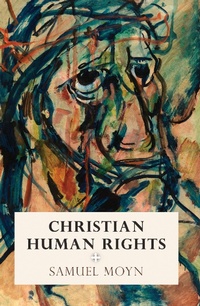
Christian Human Rights
Published on 14. September 2015
Book
Hardback
264 pages
978-0-8122-4818-0 (ISBN)
Description
In Christian Human Rights, Samuel Moyn asserts that the rise of human rights after World War II was prefigured and inspired by a defense of the dignity of the human person that first arose in Christian churches and religious thought in the years just prior to the outbreak of the war. The Roman Catholic Church and transatlantic Protestant circles dominated the public discussion of the new principles in what became the last European golden age for the Christian faith. At the same time, West European governments after World War II, particularly in the ascendant Christian Democratic parties, became more tolerant of public expressions of religious piety. Human rights rose to public prominence in the space opened up by these dual developments of the early Cold War.
Moyn argues that human dignity became central to Christian political discourse as early as 1937. Pius XII's wartime Christmas addresses announced the basic idea of universal human rights as a principle of world, and not merely state, order. By focusing on the 1930s and 1940s, Moyn demonstrates how the language of human rights was separated from the secular heritage of the French Revolution and put to use by postwar democracies governed by Christian parties, which reinvented them to impose moral constraints on individuals, support conservative family structures, and preserve existing social hierarchies. The book ends with a provocative chapter that traces contemporary European struggles to assimilate Muslim immigrants to the continent's legacy of Christian human rights.
Moyn argues that human dignity became central to Christian political discourse as early as 1937. Pius XII's wartime Christmas addresses announced the basic idea of universal human rights as a principle of world, and not merely state, order. By focusing on the 1930s and 1940s, Moyn demonstrates how the language of human rights was separated from the secular heritage of the French Revolution and put to use by postwar democracies governed by Christian parties, which reinvented them to impose moral constraints on individuals, support conservative family structures, and preserve existing social hierarchies. The book ends with a provocative chapter that traces contemporary European struggles to assimilate Muslim immigrants to the continent's legacy of Christian human rights.
Reviews / Votes
"Samuel Moyn has emerged as the most important voice on the history of human rights in the twentieth century, and his book Christian Human Rights will be of interest to anyone who cares about human rights in general and the often forgotten context of the run-up to the Universal Declaration in particular." (Jan-Werner Mueller, Princeton University) "Christian Human Rights is consistently and stimulatingly opinionated. Samuel Moyn maintains throughout his book an excellent and authentic vigor, demonstrating that the genesis of modern human-rights rhetoric can be found in a largely conservative Christian worldview that took shape in Western Europe (as well as in North America) in the 1940s." (Martin Conway, University of Oxford)More details
Series
Language
English
Place of publication
Pennsylvania
United States
Product notice
Paper over boards
Dimensions
Height: 223 mm
Width: 148 mm
Thickness: 25 mm
Weight
488 gr
ISBN-13
978-0-8122-4818-0 (9780812248180)
Copyright in bibliographic data and cover images is held by Nielsen Book Services Limited or by the publishers or by their respective licensors: all rights reserved.
Schweitzer Classification
Other editions
Additional editions
Samuel Moyn
Christian Human Rights
E-Book
09/2015
1st Edition
University of Pennsylvania Press
€28.99
Available for download
Person
Samuel Moyn is Professor of Law and History at Harvard University and author of The Last Utopia: Human Rights in History. He is coeditor, with Jan Eckel, of The Breakthrough: Human Rights in the 1970s, also available from University of Pennsylvania Press.
Content
Introduction
Chapter 1. The Secret History of Human Dignity
Chapter 2. The Human Person and the Reformulation of Conservatism
Chapter 3. The First Historian of Human Rights
Chapter 4. From Communist to Muslim: Religious Freedom and Christian Legacies
Epilogue
Notes
Index
Acknowledgments
Chapter 1. The Secret History of Human Dignity
Chapter 2. The Human Person and the Reformulation of Conservatism
Chapter 3. The First Historian of Human Rights
Chapter 4. From Communist to Muslim: Religious Freedom and Christian Legacies
Epilogue
Notes
Index
Acknowledgments