

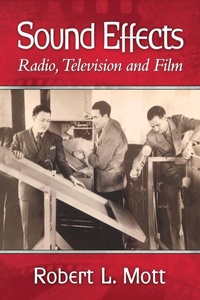
Sound Effects
Radio, Television and Film
Published on 11. July 2014
Book
Paperback/Softback
240 pages
978-0-7864-9471-2 (ISBN)
Description
This work, first published in 1989, includes discussions of the history of sound effects, the different types of sound effects, creating sound effects from scratch, recording sounds in the studio and field, the advantages of live sounds over tape, knowing why and when to use sound effects, the difference between radio, TV and film sounds, Foleying and the Foley stage, and recording and editing equipment.
Reviews / Votes
"Provides the first comprehensive treatment of sound effects...their history, make-up, equipment, and applications in radio, TV, and film"-Line Up; "newcomers to the field of audio/sound production, or producers, directors and other production personnel who need background on sound effects, could find no better resource than this book"-Lighting and Sound International; "Here's your chance to grab a slice of broadcasting history from a bygone era...contains everything from a vintage adding machine to a factory 'quittin time' whistle"-Sound Ideas.More details
Language
English
Place of publication
Jefferson, NC
United States
Target group
Interest Age: From 18 years
Product notice
Paperback (trade)
Illustrations
47 photos, glossary, bibliography, index
Dimensions
Height: 229 mm
Width: 152 mm
Thickness: 14 mm
Weight
396 gr
ISBN-13
978-0-7864-9471-2 (9780786494712)
Copyright in bibliographic data and cover images is held by Nielsen Book Services Limited or by the publishers or by their respective licensors: all rights reserved.
Schweitzer Classification
Person
The late Robert L. Mott had a long career doing sound effects for films, cartoons, theater, commercials-and for radio (such as Gangbusters, Philip Morris Playhouse and Perry Mason), and television (including Ed Sullivan, Jackie Gleason, The Tonight Show, Playhouse 90, Captain Kangaroo and Bob Hope). Twice nominated for Emmy awards for Days of Our Lives, he also wrote for Dick Van Dyke and Red Skelton. The Academy of Television Arts and Science selected him for their website honoring the legends of live television.