

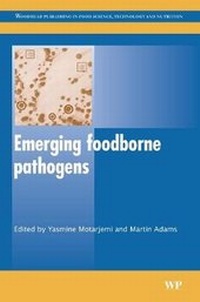
Emerging Foodborne Pathogens
Published on 30. May 2006
Book
Hardback
656 pages
978-1-85573-963-5 (ISBN)
Description
Developments such as the increasing globalisation of the food industry, new technologies and products, and changes in the susceptibility of populations to disease, have all highlighted the problem of emerging pathogens. Pathogens may be defined as emerging in a number of ways. They can be newly-discovered, linked for the first time to disease in humans or to a particular food. A pathogen may also be defined as emerging when significant new strains emerge from an existing pathogen, or if the incidence of a pathogen increases dramatically. This important book discusses some of the major emerging pathogens and how they can be identified, tracked and controlled so that they do not pose a risk to consumers.
After an introductory chapter, Emerging foodborne pathogens is split into two parts. The first part deals with how pathogens evolve, surveillance methods in the USA and Europe, risk assessment techniques and the use of food safety objectives. The second part of the book looks at individual pathogens, their characteristics, methods of detection and methods of control. These include: Arcobacter; Campylobacter; Trematodes and helminths; emerging strains of E. coli; Hepatitis viruses; Prion diseases; Vibrios; Yersinia; Listeria; Helicobacter pylori; Enterobacteriaceae; Campylobacter; Mycobacterium paratuberculosis; and enterocci.
Emerging foodborne pathogens is a standard reference for microbiologists and QA staff in the food industry, and food safety scientists working in governments and the research community.
After an introductory chapter, Emerging foodborne pathogens is split into two parts. The first part deals with how pathogens evolve, surveillance methods in the USA and Europe, risk assessment techniques and the use of food safety objectives. The second part of the book looks at individual pathogens, their characteristics, methods of detection and methods of control. These include: Arcobacter; Campylobacter; Trematodes and helminths; emerging strains of E. coli; Hepatitis viruses; Prion diseases; Vibrios; Yersinia; Listeria; Helicobacter pylori; Enterobacteriaceae; Campylobacter; Mycobacterium paratuberculosis; and enterocci.
Emerging foodborne pathogens is a standard reference for microbiologists and QA staff in the food industry, and food safety scientists working in governments and the research community.
Reviews / Votes
"...this collection will prove invaluable for public health policy and decision makers." --Food and Drink Network UK"...covers some of the most important emerging pathogens and how they can be identified, traced and controlled." --Industrie Alimentari
"...highly informative, up-to-date and easy to read, providing essential information for all food microbiologists as well as food scientists with an interest in food safety. All scientists working with food pathogens or involved with food safety would benefit from having access to a copy." --Society for General Microbiology
More details
Series
Language
English
Place of publication
Cambridge
United Kingdom
Publishing group
Elsevier Science & Technology
Target group
College/higher education
Professional and scholarly
Dimensions
Height: 234 mm
Width: 156 mm
Weight
1100 gr
ISBN-13
978-1-85573-963-5 (9781855739635)
Copyright in bibliographic data and cover images is held by Nielsen Book Services Limited or by the publishers or by their respective licensors: all rights reserved.
Schweitzer Classification
Other editions
Additional editions
Y. Motarjemi | M. Adams
Emerging Foodborne Pathogens
E-Book
05/2006
Woodhead Publishing
€245.00
Available for download
Persons
Yasmine Motarjemi is Corporate Food Safety Manager in the Quality Department at Nestec Ltd, Switzerland . Martin Adams is Professor of Food Microbiology at Surrey University, UK.
Content
Part 1 Identification issues: How bacterial pathogens evolve; Surveillance for emerging pathogens in the United States; Surveillance of emerging pathogens in Europe; Tracking emerging pathogens: The case of noroviruses; Industrial food microbiology and emerging foodborne pathogens; Microbiological risk assessment for emerging pathogens; The role of food safety objectives in dealing with emerging pathogens. Part 2 Individual pathogens: Acrobacter; Foodborne trematodes and helminths; Emerging strains of E.coli; Hepatitis viruses; Prion diseases; Vibrios; Yersinia enterocolitica; Helicobacter pylori; Enterobacteriaceae; Campylobacter; Mycobacterium paratuberculosis; Enterocci.